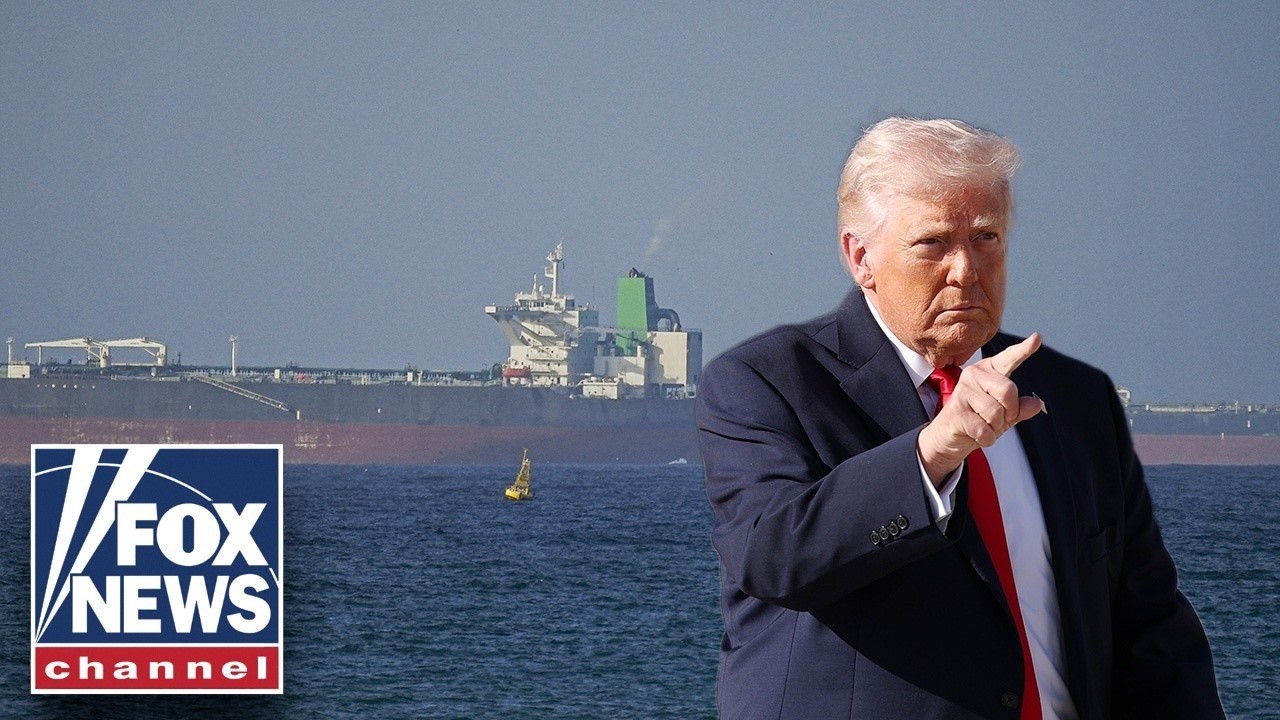

What Is Happening in the Strait of Hormuz Right Now?
The Strait of Hormuz is at the center of a rapidly escalating military conflict between the United States and Iran. Over the weekend, US Central Command released footage showing a massive new wave of American strikes hitting more than 300 Iranian regime targets, including missile and drone launch sites, naval assets, and ammunition depots. The strikes are the latest in a series of four rounds of US military action inside Iran since Tuesday — and the situation shows no signs of cooling down. President Trump declared flatly: "The Hormuz Strait is open and it will remain open, with or without Iran." This is not a ceasefire. This is an active, escalating confrontation over one of the most strategically critical waterways on earth.
 00:12
US Central Command video showing American forces launching strikes on over 300 Iranian targets including missile sites and naval assets
Watch at 00:12 →
00:12
US Central Command video showing American forces launching strikes on over 300 Iranian targets including missile sites and naval assets
Watch at 00:12 →
Approximately 20 percent of all global cargo ship traffic passes through the Strait of Hormuz, making it an economic jugular vein for world energy markets. Iran has responded to US strikes by firing at targets in neighboring countries including Bahrain, Jordan, Kuwait, and Oman — though Iranian officials insist they were targeting US military installations in those nations, not the countries themselves. Iran has also struck four civilian commercial vessels since Tuesday, targeting ships traveling outside routes designated by the Islamic Republic.
Why Did the US Launch Over 300 Strikes on Iran?
The US military escalation is a direct response to Iran's aggression in and around the Strait of Hormuz. Iran's regime has been threatening to interfere with commercial shipping and has already followed through by attacking civilian merchant vessels. According to military analyst and decorated F-18 fighter pilot Matthew Buckley, the people on those ships are not abstractions — they are real civilian mariners from countries around the world, and some of them have been killed.
The targets hit in the latest wave of strikes included:
02:45
Iranian military commander vowing to prevent US interference in the management of the Strait of Hormuz
Watch at 02:45 →
- Missile and drone launch sites used to threaten commercial and military shipping
- Naval assets that Iran uses to control or disrupt traffic in the strait
- Ammunition depots supplying Iran's broader military campaign
- Port facilities, including a ship repair facility and a submarine
Buckley noted that ceasefire pauses have not led to Iranian reflection or de-escalation. Instead, Iran has used those windows to rearm — reportedly receiving support and intelligence from Russia and China — and to improve targeting capabilities against US headquarters in Bahrain, Kuwait, and Saudi Arabia. The US response has shifted from reactive to proactive. As Buckley put it: "As a fighter pilot, you drive the fight. You don't react to somebody else."
What Is the US Iranian Blockade and How Does It Work?
President Trump announced the reinstatement of what he is calling the Iranian Blockade — a measure specifically designed to prevent Iranian ships and Iranian customers from entering or leaving the strait, while allowing all other nations free and open passage. The distinction is critical: this is not a general blockade of the strait itself, but a targeted economic squeeze on Iran.
Trump also floated the idea of the United States becoming the official "Guardian of the Strait" — or as he put it, the "Guardian Angel of the Strait" — and suggested that wealthy allied nations who benefit from safe passage should reimburse the US for providing that security. He specifically mentioned charging a toll equivalent to 20 percent of cargo ship value as reimbursement for security services rendered.
05:10
President Trump on Fox and Friends explaining the US blockade strategy and the idea of becoming Guardian of the Strait
Watch at 05:10 →
Iran's military has made clear it will not accept this arrangement. Iranian commanders stated: "We will in no circumstances allow the United States to interfere in the management of the Strait of Hormuz." Iran's armed forces also threatened to deal forcefully with any disruption to commercial vessels operating under Iranian-designated routes — framing US military presence as piracy.
Is Iran Threatening to Close the Strait of Hormuz?
Yes — and analysts say Iran means it. Mark Wallace, founder of the think tank United Against a Nuclear Iran, explained that controlling the Strait of Hormuz has become Iran's last meaningful source of regional leverage. With proxy forces weakened, other tools of influence degraded, and its economy under severe pressure from US sanctions, the strait is what Iran has left.
Wallace said: "The Strait of Hormuz is their last hope as the other tools are gone." Iran is not bluffing when it threatens to restrict or shut down shipping through the strait — it is fighting for its remaining geopolitical relevance. The regime has already demonstrated willingness to strike civilian ships to enforce its position, which is why US military officials and analysts are calling this an ongoing war rather than a manageable standoff.
What Are the US Sea Drones Used in Combat for the First Time?
In a historic first, US Central Command confirmed that sea drones were used offensively against an enemy for the first time in US military history. These one-way attack drones — unmanned surface or underwater vehicles — were deployed to strike an Iranian port, hitting a ship repair facility and a submarine.
The sea drones are manufactured by a company based in the Texas-Louisiana area and were previously known for their use in search and rescue operations, including recovering downed pilots. Their transition into offensive combat roles marks a significant evolution in US military doctrine and signals that unmanned systems are now front-line weapons, not just support tools.
This development has wide-ranging implications. Unmanned attack platforms reduce risk to US personnel, can be deployed in large numbers at lower cost than manned systems, and are difficult for adversaries to counter using conventional air defense systems.
Is There a Real Iranian Assassination Plot Against Trump?
The US Secret Service responded to Fox News inquiries about a reported Iranian assassination plot targeting President Trump. Their official statement confirmed they do not comment on specific intelligence matters but emphasized that they "consume information on a global level" to protect the president and all protectees.
Buckley noted that President Trump is likely at or near the top of target lists for multiple adversarial governments, and praised the Secret Service for its performance under extraordinary pressure. He also raised concerns about media outlets publishing details about security arrangements for Air Force One — a controversy that reportedly forced the president to use a backup aircraft. In an active conflict environment with state-level adversaries, operational security around the president is not a partisan issue — it is a matter of life and death.
Are Iranian-Linked Drones Near Cuba a Threat to the US?
Buckley raised a concern that is not getting enough mainstream attention: hundreds of drones reportedly based in Cuba, just 90 miles from Key West, Florida. While the primary conflict is unfolding in the Middle East, Buckley — who was previously based at Naval Air Station Key West and is familiar with the strategic picture in the region — warned that adversaries like China and Russia would welcome an opportunity to enable Cuba to create a second front or distraction.
US Southern Command and installations like Homestead Air Force Reserve Base would be in the potential threat envelope of any drone capability staged from Cuba. Secretary of State Marco Rubio is currently leading US economic pressure on Havana, but the drone presence represents a separate and potentially urgent military concern that deserves attention alongside the Iran conflict.
The bottom line: the United States is now fighting on multiple strategic fronts simultaneously — the Strait of Hormuz, the broader Middle East theater, and potentially the Western Hemisphere backyard. How the US manages these overlapping pressures will define the next phase of American foreign and military policy.