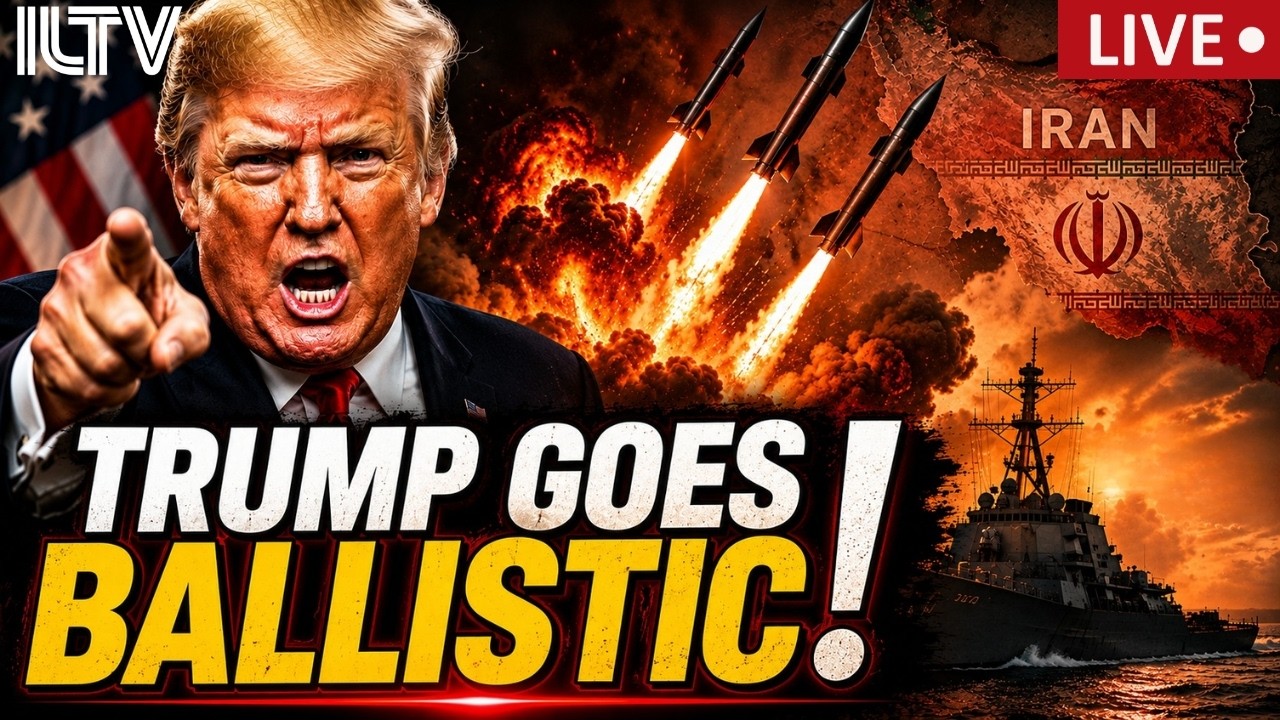

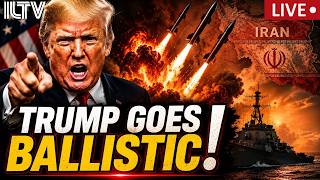
The interim ceasefire between the United States and Iran is over — at least according to President Donald Trump. Speaking at the NATO summit in Ankara, Trump declared the agreement finished after the US launched a massive wave of strikes against Iran in response to Iranian attacks on commercial shipping in the Strait of Hormuz. "I think it's over. I don't want to deal with them anymore," Trump said bluntly, calling Iranian leadership "scum" and "sick people." With missiles and drones now targeting US military sites in Kuwait and Bahrain, the Middle East is facing one of its most volatile moments in years.
 00:45
Trump declares the interim ceasefire with Iran finished at the NATO summit in Ankara
Watch at 00:45 →
00:45
Trump declares the interim ceasefire with Iran finished at the NATO summit in Ankara
Watch at 00:45 →
Why Did the US Strike Iran? Is the Ceasefire Over?
The immediate trigger was Iran's attacks on three commercial tankers in the Strait of Hormuz, one of the world's most critical shipping chokepoints. In response, US Central Command launched strikes on more than 80 targets across southern Iran. Those targets included Iranian air defenses, coastal radar sites, anti-ship missile batteries, command centers, and — notably — more than 60 Islamic Revolutionary Guard Corps (IRGC) fast attack boats.
Washington said the strikes were designed to impose heavy costs on Iran for threatening international shipping. The Trump administration also revoked a sanctions waiver that had allowed Iran to export oil, dramatically increasing the economic pressure on Tehran.
Iran condemned the strikes as a violation of the ceasefire framework and threatened a "crushing response." Missile and drone alerts have already sounded in Kuwait and Bahrain, with Iran claiming to be targeting US military installations in both countries. Qatar and Saudi Arabia also accused Iran of attacking their commercial tankers — widening the circle of nations directly drawn into the confrontation.
02:10
US Central Command map of 80+ strike targets across southern Iran
Watch at 02:10 →
Trump's language at the NATO summit left little ambiguity. He accused Iranian officials of agreeing to terms in negotiations and then publicly denying those same terms to the press. "We make a deal. Everyone's agreed. No nuclear weapon. We make a deal. They go outside, talk to the press, they say, 'We never even talked about it,'" Trump said.
What Happened in the Strait of Hormuz Attack?
The Strait of Hormuz is arguably the single most strategically important waterway in the world, responsible for the transit of roughly 20% of global oil supplies. Iran's attacks on commercial tankers there — targeting vessels linked to Qatar and Saudi Arabia — represent a significant escalation that has drawn in multiple regional powers.
Analysts note that one of the unintended consequences of the broader US-Iran military confrontation has been handing Tehran leverage over the Strait of Hormuz and, by extension, leverage over the global economy. Before hostilities began, the strait was freely navigable. Now, reopening that passage for safe oil transit has become a central subject of diplomatic negotiations — a painful irony for Washington and its allies.
The economic ripple effects are real. Gas prices in the United States, already elevated, risk climbing further as instability in the strait persists. With midterm elections on the horizon, that is a domestic political problem Trump cannot ignore.
Will the US and Iran Return to Nuclear Talks?
Despite the fiery rhetoric, veteran observers believe a return to diplomacy is likely — and sooner than Trump's words might suggest. US officials themselves confirmed that diplomatic contacts with Iran have not stopped, even as bombs were falling.
05:30
Analyst Ron Campus explains why a return to US-Iran talks is still likely despite the rhetoric
Watch at 05:30 →
Analyst Ron Campus, former Washington bureau chief for the Jewish Telegraphic Agency, argues that both sides have strong incentives to de-escalate. "The United States has too much invested in trying to keep this from escalating even more," Campus noted. "Iran also has a stake in wanting to reset this."
Trump has used similarly explosive language toward Iran in the past — including threatening to "wipe out their civilization" — without following through. The pattern suggests the current rhetorical peak may cool into renewed negotiations.
That said, the fundamental problem remains unresolved. The Iran nuclear program — the core concern for Israel and much of the West — has been degraded but not eliminated. Iran retains offensive missile capabilities and is actively striking US allies in the Gulf right now. The war has complicated rather than simplified the path to a durable agreement.
Will Turkey Get F-35 Jets? Why Is Netanyahu Opposed?
In a major policy announcement at the NATO summit, Trump declared that the US will lift sanctions on Turkey and is actively considering selling Ankara F-35 stealth fighter jets. The sanctions were originally imposed after Turkey purchased the Russian S-400 air defense system — a decision that effectively got Turkey kicked out of the F-35 program under Trump's first term.
08:15
Trump and Erdogan at the NATO summit as F-35 sale announcement is made
Watch at 08:15 →
Trump's reversal appears driven by a mix of geopolitical calculation and personal relationship. He praised Turkish President Recep Tayyip Erdogan as a "very tough leader" and credited Turkey with staying out of the broader regional conflict. "They could have gotten into the fight on the other side. They didn't do that," Trump said, suggesting Erdogan's restraint deserved reward.
There are also questions about Trump's personal financial interests in Turkey — including past real estate ventures — that may color his enthusiasm for the relationship.
Israeli Prime Minister Benjamin Netanyahu, however, is strongly opposed. Netanyahu has stated that Erdogan is "trying to destroy Israel" and is not a genuine US ally. So firm is Israel's objection that US Secretary of Defense Pete Hegseth's planned visit to Israel — partly to discuss the F-35 sale — was postponed.
Netanyahu finds himself in unusual political company on this issue: aligned with Democratic members of Congress who also oppose the sale, putting him at odds with a Republican president he otherwise seeks to stay close to.
Do Israelis Still Trust Trump on Israel's Security?
Israeli public confidence in Trump's commitment to Israel has dropped sharply, according to a new poll from the Israel Democracy Institute. Only 28% of Israelis now believe that Trump considers Israel's security one of his main priorities — the lowest level since his return to office.
The skepticism cuts across political lines. Some 81% of left-wing Israeli voters, 73% of centrists, and even 65% of right-wing respondents said they do not believe Trump is putting Israel's security first. Just 38% of Israelis said the country is strategically better off today than before the current conflict began.
These numbers reflect a broader unease: the US has engaged in intensive military operations against Iran, yet the outcome for Israel — a diminished but not destroyed Iranian threat, a ceasefire that just collapsed, and an ally pushing F-35s toward a hostile Turkey — feels deeply uncertain to many Israelis.
Why Is Netanyahu Going to the White House?
Reports suggest Netanyahu may visit Washington as early as next week. The visit would come at a critical moment — not just geopolitically, but politically for Netanyahu himself, ahead of Israeli elections expected in October.
One of Netanyahu's signature political assets has long been his claim to be able to influence the United States — to "move" Washington in Israel's favor. A successful White House visit, where he can show alignment with Trump and perhaps extract concessions on the F-35 sale to Turkey or the Iran nuclear framework, would be valuable political currency at home.
Netanyahu has publicly downplayed tensions with Trump, insisting they "see eye to eye on the big things." But the disagreements are real and substantive — from the US diplomatic engagement with Iran, to Turkey's growing role in the region, to the terms of any eventual nuclear deal. How much Netanyahu can actually shape Trump's course remains the key question his domestic critics are watching closely.
Do American Jews Prefer Mamdani Over Netanyahu?
A new Associated Press poll added a striking data point to the political landscape: a majority of American Jews view New York Mayor Zohran Mamdani more favorably than they do Benjamin Netanyahu. The poll found 44% of American Jews hold a favorable view of Mamdani, compared to just 32% for Netanyahu.
The finding is raising eyebrows in political circles and underscores the growing divide between Israeli and American Jewish communities — and between Netanyahu's brand of politics and the preferences of Jewish voters in the United States, who skew significantly more liberal and Democratic than their Israeli counterparts.
As the region braces for the next move from both Washington and Tehran, one thing is clear: the Middle East has entered a new and more unpredictable phase — one where old agreements mean little, alliances are shifting, and the Strait of Hormuz has become the fault line of global stability.