
The United States and Iran are in the middle of a dangerous military escalation in 2025, with both nations trading strikes just days after signing a ceasefire memorandum of understanding. What began as a fragile diplomatic breakthrough has rapidly deteriorated into a tit-for-tat exchange of missiles, drones, and accusations — raising serious questions about whether the region is sliding toward a broader conflict.
Here is everything you need to know about what is happening, why it matters, and what could come next.
What Is Happening Between the US and Iran Right Now?
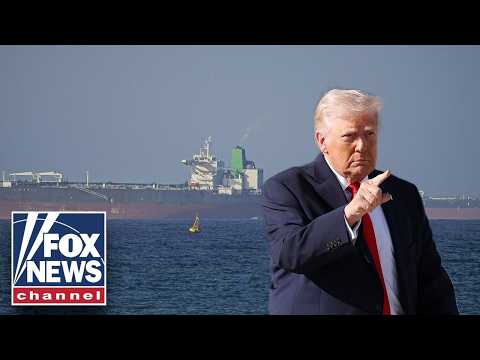
In the span of two consecutive nights, the United States carried out airstrikes on Iran's southern coastline, targeting the port city of Sirjan and Qeshm Island — home to some of Iran's most strategically significant military installations. The Pentagon says these strikes were a direct response to Iran attacking a commercial shipping vessel, the MT Kiku, a Panamanian-flagged tanker carrying over 2 million barrels of oil, with drones on a Saturday.
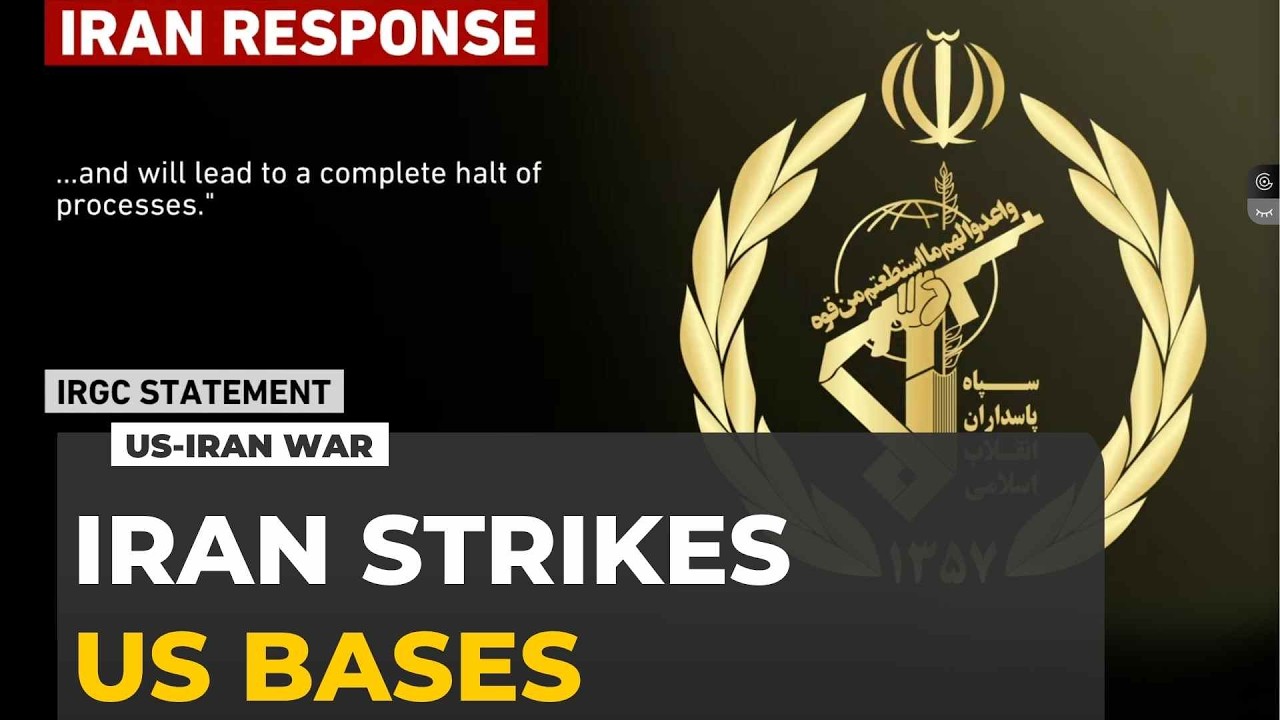
Iran's Islamic Revolutionary Guard Corps (IRGC) responded by launching attacks on US military sites in Kuwait and Bahrain, specifically targeting the Ali Salem Air Base in Kuwait and the US Navy's Fifth Fleet headquarters at Salman port in Bahrain. The IRGC claimed it had dealt a decisive blow, though US officials told Reuters that no major casualties or significant damage had been confirmed at this stage.
Both sides now accuse the other of being the aggressor and of violating the terms of a recently signed ceasefire agreement — setting the stage for one of the most dangerous standoffs in the region in years.
Did Iran Attack US Military Bases in Kuwait and Bahrain?
Yes. Iran's IRGC officially confirmed the attacks in a formal statement, saying it had targeted two key US military positions in the Gulf: the Ali Salem base in Kuwait and the Fifth Fleet's base at Salman port in Bahrain. The IRGC framed these strikes as a legitimate and proportional response to what it described as repeated American aggression against Iranian coastal positions.
According to the IRGC statement: "The enemy should know that violating the ceasefire is against the first clause of the Islamabad agreement and will lead to a complete halt of processes."
US officials have not confirmed the full extent of damage but Reuters cited an official saying there were no major casualties at this time. The strikes nevertheless represent a significant and direct Iranian military action against US assets in the Gulf region — a move that dramatically raises the stakes of this conflict.
What Is the Islamabad Agreement Between the US and Iran?
The Islamabad Agreement — formally described as a Memorandum of Understanding (MOU) — was signed between the United States and Iran just over a week before this current escalation began. The agreement was brokered as a diplomatic effort to de-escalate tensions in and around the Strait of Hormuz, one of the world's most critical oil shipping lanes.
A key and now deeply contested clause of the agreement — specifically Article 5 — grants Iran the authority to manage and arrange safe passage for commercial ships through the strait for a period of approximately 60 days. After that period, Iran and Oman would jointly administer those arrangements.
Iran argues that the United States is now undermining the very deal it signed by striking Iranian coastal positions and by allowing or supporting commercial vessels to transit the strait without Iranian coordination. The IRGC's statement was explicit: Iran controls passage arrangements under the MOU, and ships that do not coordinate with the Islamic Republic risk being treated as potential military vessels.
Critics, including experts like University of Tehran Associate Professor Hassan Marian, suggest Washington is attempting to exit its obligations under the MOU while holding Iran to its commitments — a pattern he compared to how the US handled a previous agreement in Lebanon.
What Did Trump Say About Iran's Ceasefire Violation?
US President Donald Trump addressed the escalation directly via a post on his Truth Social platform, making no effort to soften his language. Trump stated that US aircraft had struck Iranian missile and drone storage locations and coastal radar sites specifically because Iran had once again violated the ceasefire agreement.
The most striking element of Trump's message was its explicit threat: "There may come a point when we are no longer able to be reasonable and will be forced to militarily complete the job that we very successfully started. If that happens, the Islamic Republic of Iran will no longer exist."
This language represents a significant escalation in rhetoric from the US president, effectively threatening the complete destruction of the Iranian state if the strikes and ceasefire violations continue. US Central Command's official statement echoed a similar line, saying Tehran had ignored an opportunity to uphold the ceasefire and instead chose to continue attacking vessels along the Strait of Hormuz.
Can Trump Strike Iran Without Congressional Approval?
This is now one of the most hotly debated legal and constitutional questions in Washington. Democratic Congressman Ro Khanna publicly stated that the US strikes on Iran are a blatant violation of the War Powers Resolution — the law passed by the Senate that limits the president's ability to deploy military force without explicit congressional authorization.
US Central Command's own statements made clear that the strikes were ordered at the direction of the Commander-in-Chief — President Trump. That transparency has only fueled the debate.
- The White House's position: The president has the legal authority to order limited, targeted military strikes without needing Congress to declare war.
- The congressional critics' position: The War Powers Resolution requires the president to seek explicit congressional approval for any sustained military action against a foreign nation like Iran.
The US Constitution gives Congress the power to declare war, but presidents of both parties have long argued that short-term, limited strikes fall under executive authority. This tension between the White House and Capitol Hill remains unresolved and is being tested in real time as US-Iran strikes continue.
Why Is the Strait of Hormuz at the Center of This Crisis?
The Strait of Hormuz is one of the most strategically vital waterways on the planet. Roughly 20% of the world's oil supply passes through this narrow channel between Iran and the Arabian Peninsula. Disrupting traffic through the strait doesn't just affect the Middle East — it sends shockwaves through global energy markets and economies worldwide.
Iran's geographic position gives it enormous leverage. The IRGC has long maintained the ability to threaten, harass, or block shipping in the strait — a tool of pressure it has used repeatedly in disputes with Western powers. The Islamabad MOU was partly designed to stabilize this situation, giving Iran formal authority over coordinating commercial ship passage in exchange for a halt to hostile actions.
The current dispute centers on exactly who gets to decide which ships pass through and under what conditions — a question that is simultaneously military, legal, economic, and deeply political.
Could This Escalate Into Full-Scale War Between the US and Iran?
Analysts are genuinely alarmed. Hassan Marian, an associate professor at the University of Tehran, warned bluntly that a domino effect of escalating strikes is now underway. His assessment: Iran will not back down, the IRGC will continue retaliating, and the United States appears to be looking for a way out of the MOU's constraints rather than honoring them.
"I see them actually escalating if the United States is to continue to escalate," Marian said.
The combination of factors now in play — US airstrikes on Iranian soil, Iranian attacks on US military bases in allied Gulf states, an increasingly aggressive rhetorical posture from President Trump, and a disputed ceasefire agreement that neither side agrees is being honored — creates conditions where miscalculation could trigger something far larger.
For now, the world is watching a ceasefire unravel in near real time, with two of the world's most heavily armed adversaries escalating toward an unknown and potentially catastrophic endpoint.