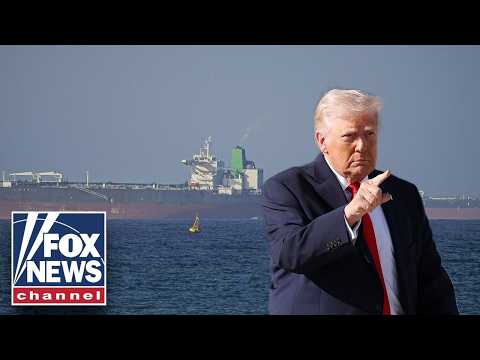
The US end goal in the Iran military strikes remains deliberately vague — and according to analysts, that ambiguity may be intentional. After six consecutive nights of American airstrikes inside Iran, the Trump administration has escalated its target packages to include bridges, airports, and power plants, all while publicly stating it wants Iran back at the negotiating table. But what exactly does Washington want Iran to agree to, and how does this conflict end? Here's a detailed breakdown of what we know.
What Is the US End Goal in the Iran Strikes?
The short answer is: it depends on who you ask — and when you ask them. Professor Alon Ben-Meir, a Middle East analyst at the Israel-Palestine Report, argues that the Trump administration's war aims have shifted significantly since the first shots were fired in February.
Initially, the US demanded Iran give up its nuclear weapons program entirely. Then the goalposts moved. Trump later signaled that Iran could retain ballistic missiles, citing the fact that regional allies like Saudi Arabia possess them too. That's a significant concession from the original war aims — but the administration hasn't framed it that way publicly.
What the US says it wants:
- Iran to return to the negotiation table
- A halt to Iran's nuclear weapons development
- Reduced Iranian threats to freedom of navigation in the Strait of Hormuz
- An end to Iranian support for regional proxy groups
What makes this particularly complicated is the mixed messaging coming from Washington. On one hand, the administration says it wants Iran to negotiate. On the other hand, Trump has claimed Iran is already "begging for a deal." If that's true, why are the strikes escalating? The contradiction points to a pressure strategy rather than a clearly defined endgame.
What Has the US Been Targeting in Iran?
For the first four to five days of strikes, US military action was concentrated in the south of Iran, primarily around the Strait of Hormuz. The key targets in this phase included Bandar Abbas, Qeshm Island, and the surrounding coastal region — all areas closely tied to Iran's ability to control or disrupt the strategic waterway.
But the most recent 24-hour period marked a notable escalation in both the types of targets and their geographic range. According to Ben-Meir, this shift was deliberate and sends a clear signal.
New targets in the latest escalation include:
- Bridges in Bandar Abbas — specifically those connecting to the Shiraz region, which Trump had previously named as a next-level target
- Kish Island airport — a significant escalation into civilian-adjacent infrastructure
- Power plants on Kish Island — reports confirm a power outage on the island following the strikes
- A train station and rail compound near Ahvaz — the US maintains this facility is used by the IRGC, not civilian rail operations
- A power plant near Bostan — pushing the strike radius further north and inland
Air defense units were reportedly activated in Tehran, but as of this writing, there are no confirmed reports of any strikes hitting the Iranian capital. The northward creep of the target map appears designed to send a psychological message: the US can reach further, and it will, unless Iran comes to terms.
Why Does the Strait of Hormuz Matter So Much?
The Strait of Hormuz is one of the most strategically critical waterways on the planet. Roughly 20% of the world's oil supply passes through this narrow channel between Iran and the Arabian Peninsula. If Iran were to close or disrupt it — even partially — the ripple effects on global fuel prices would be immediate and severe.
This is why so much of the early US strike campaign focused on the region. The US is trying to signal, through force, that it — not Iran — controls freedom of navigation through the Strait. Iran's IRGC has long used small, fast boats armed with shoulder-mounted rocket launchers to threaten oil tankers in these waters. Even without a major fleet engagement, two fighters with the right equipment can disable a supertanker.
Adding to the tension, Iran has reportedly reactivated the Houthis in Yemen, who control the Bab al-Mandab Strait — another critical global shipping lane. The Houthis have threatened to cut off that waterway if Iran's power plants are destroyed. In other words, Iran is playing a multi-front pressure game of its own.
What Military Capabilities Does Iran Still Have?
When the US military says its strikes are meant to "further degrade Iranian military capabilities," that phrase covers a lot of ground — intentionally so. Ben-Meir notes the language is deliberately broad, similar to how Israel has historically described strikes on "terror infrastructure" without specifying targets.
What we do know is that Iran retains significant asymmetric military capacity even after nearly a week of sustained US strikes. This includes:
- A large IRGC fleet of small, fast watercraft capable of harassing or disabling commercial shipping
- Rocket and missile launching infrastructure dispersed across the country
- Drone launch sites, particularly in the Gulf region
- Ports and logistics networks used by the IRGC for supply and projection
- Proxy relationships with groups like the Houthis and others across the region
Iran's main conventional naval fleet may have been significantly degraded, but the asymmetric threat — the small boats, the drones, the proxies — remains very much alive. That's the chain that keeps the Strait of Hormuz vulnerable, and it's what the US is still working to break.
What Does Victory Against Iran Actually Look Like?
This is the question Rosa from Pennsylvania asked during the live broadcast, and it may be the most important one of all. The honest answer is: there is no universally agreed-upon definition of victory, and that ambiguity is both a feature and a bug of how this conflict has been framed.
Ben-Meir draws a useful comparison to the Russia-Ukraine war. Putin could declare victory by pointing to territorial gains in Crimea and Donbas, or the war could be described as a catastrophic failure because he never toppled Kyiv's government. The same dynamic applies here.
How the Trump administration might define victory:
- Iran returns to the negotiating table and signs some form of agreement
- The Strait of Hormuz remains open and under de facto US influence
- Iran's nuclear program is verifiably paused or rolled back
- Regional stability is restored enough to claim a win before the midterms
How critics might define failure:
- Iran still holds enriched uranium
- Ballistic missile concessions were abandoned mid-conflict
- No binding, enforceable agreement was reached
- Regional instability — Houthis, proxies, oil prices — worsened
The political lens through which you view the outcome will largely determine which interpretation you accept. That's not cynicism — it's the reality of modern conflict assessment.
Did Trump's 'Very Shortly' Promise Age Well?
Back in April, during a primetime address focused on the Middle East, President Trump told the American public that the US would accomplish its Iran war objectives "very shortly." We're now in July, and strikes are ongoing and escalating.
Ben-Meir puts this in context by noting that Trump initially believed the war would last just three days — wrapping up around March 2nd or 3rd. The fact that we are now months into sustained military operations suggests that the original strategic assumptions were significantly off.
That said, Trump did achieve something tangible before the current escalation: a ceasefire and a memorandum of understanding reached in the April-June window. During that period, US and IRGC representatives sat down in Qatar to negotiate — a remarkable development given the IRGC is designated as a foreign terrorist organization by the US. That framework appears to have broken down, which is why strikes have resumed.
Does the US Have an Exit Strategy in Iran?
The blunt assessment from analysts is that the US exit strategy is "constantly evolving" — which is a diplomatic way of saying there isn't a firm one. The options on the table right now appear to be:
- A negotiated deal — both sides compromise and reach a formal or informal agreement, similar to the April memorandum of understanding
- A war of attrition — strikes continue until one side blinks, economically or militarily
- Unilateral de-escalation — one or both sides decides the cost isn't worth it and steps back without a formal agreement
What's clear is that the Trump administration would prefer to have some resolution in place before the midterm elections, for obvious political reasons. Whether Iran is willing to offer terms the US finds acceptable — or vice versa — remains the central unanswered question of this conflict.
Until that answer emerges, the strikes will likely continue, the targets will keep expanding northward, and the world will keep watching the Strait of Hormuz very, very closely.