The US and Iran have reached a ceasefire framework, with a formal signing scheduled for this Friday — but what does the US-Iran ceasefire deal actually mean, and how close are both sides to ending the war for real? According to CNN senior military analyst and former NATO Supreme Allied Commander Admiral James Stavridis, the situation is like a car chugging toward a finish line with a lot of sand in the gears. Both sides are moving in the right direction, but the thorniest issues — nuclear material, Israeli military operations, and a minefield-laden strait — are nowhere near resolved.
Here is a comprehensive breakdown of every major question surrounding this fragile agreement, ordered from the most urgent to the most consequential long-term.
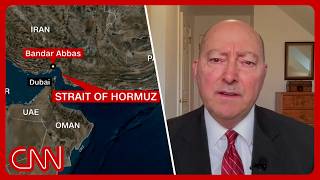 00:45
Admiral Stavridis explains the 'sand in the gears' slowing the ceasefire framework
Watch at 00:45 →
00:45
Admiral Stavridis explains the 'sand in the gears' slowing the ceasefire framework
Watch at 00:45 →
What Is the US-Iran Ceasefire Deal?
The agreement being finalized is best described as a memorandum of understanding, not a comprehensive peace treaty. Its primary and immediate goal is to restore pre-war conditions — most critically, to reopen the Strait of Hormuz to international shipping. It does not address Iran's nuclear program, its ballistic missile capabilities, or its support for proxy groups like Hezbollah. Think of it as a ceasefire to stop the bleeding, not a cure for the underlying disease.
Admiral Stavridis put the odds of this agreement holding at roughly two-in-three — up from his earlier estimate of 65% throughout the preceding months of negotiations. That is cautiously optimistic, but it reflects just how many variables remain outside anyone's control before and after Friday's planned signing.
One major sticking point already surfaced publicly: Iran is insisting that frozen funds be unfrozen before it takes any steps under the deal. The US is disputing that framing. US Ambassador to the UN Mike Waltz acknowledged on Sunday that Iran's negotiators are, quote, incredibly difficult, and that the Iranian team is struggling to get clear guidance from the Supreme Leader — with civilians and military officials sometimes operating from completely different playbooks.
When Will the Strait of Hormuz Safely Reopen?
This is the question that shipping companies, commodity markets, and energy traders are watching most closely. The short answer: even if a deal is signed Friday, the Strait of Hormuz will not be truly safe for weeks — and possibly longer.
03:20
Discussion of the Strait of Hormuz mine-clearing challenge and mariner confidence
Watch at 03:20 →
Admiral Stavridis, who has personally transited the strait close to 100 times during his naval career, was blunt about the complexity involved. Clearing the strait of mines, establishing escort protocols, and rebuilding mariner confidence is not a matter of days. His estimate: weeks, not months, but definitely weeks.
The real question isn't what politicians announce — it's what shipping companies decide. Even if the US and Iran declare the strait open, no Lloyd's-insured cargo ship is going to sail through until the insurance underwriters, the captains, and the company risk managers are satisfied. That confidence will only come from observable, verified mine-clearing operations — not press releases.
The hope, according to Stavridis, is that European nations step up to help with minesweeping. President Trump is heading to the G7 in France, and this is seen as a pivotal moment to get European allies involved in the physical work of reopening the strait. European navies have capable minesweeping assets, and their participation would both speed up the process and provide political cover for the broader agreement.
How Dangerous Are the Mines in the Strait of Hormuz?
The mines represent one of the most acute tactical problems in the entire situation. Key questions that remain unanswered include: How many mines are actually in the strait? Where exactly are they? Who planted them, and do they have accurate charts of locations? And critically — who is going to clear them, and under what security conditions?
06:15
Sabrina Singh breaks down Iran's negotiating leverage and the nuclear material problem
Watch at 06:15 →
Mine-clearing operations are painstaking, dangerous, and slow. Divers and remotely operated vehicles must locate and neutralize each device individually. Doing that work while geopolitical tensions remain elevated — and while Iran retains the capability to deploy additional mines or launch drone strikes — makes the job exponentially more difficult. This is why professionals focus on logistics while amateurs focus on the air strikes and missile exchanges. The real work of ending this conflict happens underwater, not in press conferences.
What Happens to Iran's Highly Enriched Uranium?
This is the strategic wildcard that looms over everything else. President Trump has referred to Iran's nuclear material as nuclear dust — a characterization that experts find dangerously dismissive. We are not talking about dust. Iran is believed to hold approximately 1,000 pounds of highly enriched uranium, and there is currently no clear or agreed-upon pathway for removing that material from the country.
The memorandum of understanding being signed Friday does not address this. It is explicitly left for future negotiations. That means even if the strait reopens, even if a ceasefire holds, the nuclear question remains entirely open — and Iran knows it holds significant leverage as long as that material sits on its soil.
CNN global affairs commentator and former deputy Pentagon press secretary Sabrina Singh noted that Iran is particularly skilled at drawing out negotiations, and the current regime is more hardline than its predecessors. They have already demonstrated a willingness to absorb substantial military punishment rather than concede on core issues. Expecting them to give up highly enriched uranium quickly — or cheaply — is not realistic.
Why Is Israel Opposed to This Agreement?
Israel's objections to the US-Iran framework are both strategic and operational. From Jerusalem's perspective, the memorandum of understanding fails on several fronts:
- It does not address Hezbollah or Iran's broader network of proxy forces in Lebanon, Syria, Iraq, and Yemen.
- It does not mention ballistic missiles — Iran's most direct military threat to Israeli territory.
- Israel is not a party to the agreement, meaning it has no formal role in implementation or enforcement.
Israeli forces have reportedly seized territory roughly the size of New York City in Lebanon and have signaled they may continue operations against Hezbollah regardless of what the US and Iran agree to. That creates an immediate and serious problem: Iran can plausibly argue to its own public and to international observers that the US cannot actually deliver a ceasefire if its closest regional ally keeps conducting military operations.
President Trump appeared visibly frustrated with Israeli Prime Minister Netanyahu over the weekend, reportedly asking what is Bibi doing — a sign that even within the US-Israel relationship, this agreement is generating real friction. If Israel conducts a major military operation between now and Friday's signing, the deal could collapse entirely.
How Has the Iran War Strained US Alliances?
The conflict has driven a visible wedge through the transatlantic relationship. While the US was engaged in military operations against Iran, President Trump praised Chinese President Xi Jinping and Russian President Vladimir Putin for not interfering — a framing that drew sharp attention given that both are strategic competitors of the United States and NATO.
Admiral Stavridis described the transatlantic bridge as creaking. European allies, who were largely sidelined during the conflict itself, are now being asked to step up for the cleanup phase — minesweeping, maritime security, diplomatic support. The G7 summit in France is seen as a key moment to reknit those ties, with the Iran ceasefire as both a test case and an opportunity for European nations to demonstrate relevance.
How Does the Iran Deal Affect Oil Prices and Putin?
There is at least one clear geopolitical winner in a successful Iran ceasefire: anyone who benefits from falling oil prices — which means bad news for Russia. The Strait of Hormuz carries roughly 20% of the world's oil supply. With it reopened, global oil markets would ease, prices would fall, and Russia — which depends heavily on oil export revenue to finance its war in Ukraine — would feel the pinch.
Stavridis called this a spot of good news embedded in an otherwise complicated situation. Lower oil prices mean less money for Putin to sustain what Stavridis described as an illegal and immoral war. It is a secondary effect of the Iran deal, but a strategically meaningful one for the broader effort to support Ukraine without direct confrontation with Moscow.
The bottom line: the US-Iran ceasefire framework is real, the momentum is genuine, and a Friday signing is plausible. But the agreement covers only the minimum necessary to pause hostilities. The hard work — nuclear material, proxy forces, Israeli security concerns, and a minefield that needs to be physically cleared — is still entirely ahead of us.