What Is Happening With US Strikes on Iran Right Now?
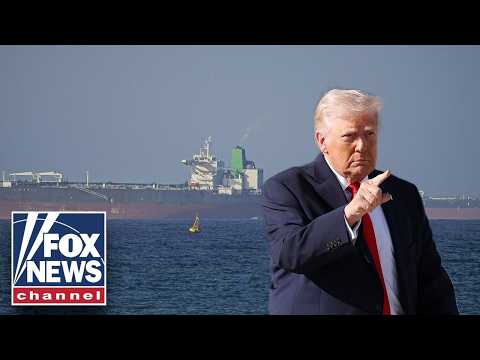
The United States military has now launched six consecutive rounds of airstrikes against Iranian targets, with the most recent wave confirmed by US Central Command (CENTCOM) just hours ago. What started as a campaign focused on disabling Iran's nuclear program has evolved into a broader military effort to secure freedom of navigation through the Strait of Hormuz — one of the world's most critical oil shipping lanes. President Trump is also reportedly weighing strikes on new targets, including Kharg Island, Iran's primary oil export hub, and a suspected new nuclear facility known as Pickax Mountain.
According to Fox News reporter Lucas Tomlinson reporting from Tel Aviv, there have been no Iranian attacks on commercial shipping in the Strait of Hormuz in the past three days — a direct result of the US military's sustained pressure. White House Press Secretary Karoline Leavitt confirmed the administration's intent: "President Trump is not going to sit by and allow these acts of terrorism to take place in the Strait without ensuring Iran pays consequences."
Why Is the Strait of Hormuz at the Center of This Conflict?
The Strait of Hormuz is arguably the single most strategically important waterway on Earth. Roughly 20% of the world's oil supply — and a massive share of liquefied natural gas (LNG) — passes through this narrow passage between Iran and Oman. For decades, Iran has used its geographic position along the Strait as a geopolitical lever, threatening to close it whenever relations with the West deteriorate.
An Iranian military spokesperson made the regime's position crystal clear, stating: "We will not allow the United States to interfere in the Strait. That is our red line. Under no circumstances will we allow the US, as a foreign or extraregional country, to interfere in the Strait of Hormuz."
But military analysts point out that Iran may have already lost that argument in practice. US forces have deployed approximately 20 warships and hundreds of aircraft in enforcing a naval blockade. FA-18 Super Hornets have been launching land-attack missiles with a range of 170 miles, and at least one oil tanker has been disabled using Hellfire missiles. Two additional ships reversed course rather than breach the blockade.
What Is Kharg Island and Why Is It a Target?
Kharg Island is Iran's crown jewel of oil infrastructure. Located in the northern Persian Gulf, it handles the vast majority of Iran's crude oil exports — making it the economic lifeline of the Iranian regime. Striking or seizing Kharg Island would not just be a military statement; it would be a direct hit to Iran's financial ability to fund its military and proxy forces across the region.
Beyond Kharg Island, analysts are also watching a location referred to as Pickax Mountain, believed to be a relatively new and possibly still-under-construction nuclear facility. The Trump administration is reportedly weighing whether disabling this site could further reduce Iran's long-term strategic threat.
Both targets represent an escalation from coastal and maritime strikes to deeper strikes inside Iranian territory — a shift military experts say is driven in part by the simple fact that the US has already exhausted the most valuable targets along Iran's shoreline.
Could the US Occupy Islands in the Strait of Hormuz?
President Trump has publicly stated he would consider putting boots on the ground in the Strait of Hormuz region — specifically referencing the possibility of occupying strategic islands including Kharg Island and the Lesser and Greater Tunb islands. Military analysts assess this as a serious but complex option.
Retired Army Lieutenant and former Black Hawk helicopter pilot Darren, speaking on the program, estimated a realistic timeline of four to six months to fully commandeer military control of such islands. He stressed that while such an operation would carry real risks — placing US forces on fixed, well-known positions that could be targeted — it would not constitute a major ground invasion in the traditional sense.
"This is a specific, very limited objective," he explained. "If President Trump decides to actually occupy any one or all three of those islands, we have the ability to hold them if necessary."
Historical precedent exists for exactly this kind of operation. In 1987 and 1988, the United States successfully opened the Strait of Hormuz during Operation Earnest Will and Operation Praying Mantis, directly confronting Iranian attempts to close the waterway during the Iran-Iraq War. The current situation echoes that era, though the military and geopolitical stakes are considerably higher.
How Has Iran Used the Strait of Hormuz as a Weapon?
Iran's strategy in the Strait of Hormuz follows a well-established playbook. When facing international pressure — whether from sanctions, nuclear negotiations, or military threats — Tehran escalates harassment of commercial shipping to signal its willingness and ability to disrupt global oil markets. In recent months, Iran-backed forces attacked multiple commercial vessels, prompting the Trump administration to authorize what it describes as a return to major combat operations.
Iran has also responded to US strikes by launching attacks on neighboring countries including Iraq, Bahrain, Jordan, and Kuwait, and has threatened to activate Houthi proxy forces in Yemen to close the Bab el-Mandeb Strait — the entrance to the Red Sea — as a second pressure point on global trade.
However, analysts note that these threats have not materialized into sustained action, suggesting either Houthi reluctance or internal fractures within Iran's proxy network. As one expert noted on the program, "The Iranian regime is too driven by internal strife" to fully coordinate a multi-front escalation strategy at this moment.
What Are the World's Most Critical Trade Choke Points?
The current conflict throws a spotlight on just how vulnerable global trade is to disruption at a handful of narrow waterways. The key choke points include:
- Strait of Hormuz: Approximately 20% of global oil supply transits here daily.
- Suez Canal: Handles 12–15% of global trade, including significant LNG volumes.
- Bab el-Mandeb Strait: The narrow passage between Yemen and Djibouti connecting the Red Sea to the Gulf of Aden, already threatened by Houthi activity and Somali piracy.
Insurance companies that finance shipping through these routes already price in the elevated threat levels, a sign that markets have somewhat adapted. But any serious escalation — particularly a closure of the Strait of Hormuz — would send energy prices surging globally and ripple through every economy that depends on oil and gas imports.
Can New Pipelines Make the Strait of Hormuz Obsolete?
One of the most compelling long-term strategies discussed by analysts is reducing the world's dependence on the Strait of Hormuz altogether through alternative pipeline infrastructure. Several projects are already in development designed to route oil and gas around the Strait, effectively stripping Iran of its geographic leverage.
Experts estimate it could take approximately one year for major pipeline alternatives to become fully operational — a realistic but not immediate solution. The strategic logic is straightforward: the longer Iran relies on the Strait as its primary bargaining chip, the more incentive the rest of the world has to invest in routing around it.
As one analyst summarized: "Capital seeks the path of least resistance. It's already flowing to projects designed to reroute around the Strait. That just takes influence out of Iran's hands."
Whether the resolution comes through sustained military pressure, diplomatic negotiation, or the slow economic obsolescence of the Strait itself, one thing is clear — the standoff between the United States and Iran over the world's most important oil shipping lane is entering a decisive phase, and the next several weeks will shape the outcome for years to come.