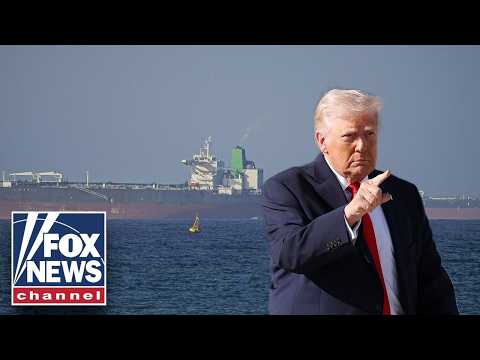

Gas prices and rent are dropping in 2025 for two interconnected reasons: a record-breaking flow of oil through the Strait of Hormuz has pushed global energy prices lower, and the Trump administration's mass deportation campaign has reduced housing demand in key markets. These are the two most visible economic wins the administration is now actively promoting ahead of the 2026 midterms — and the numbers behind both trends are drawing serious attention from both supporters and critics.
Why Are Gas Prices and Rent Falling in 2025?
The short answer is supply and demand, playing out on two separate but equally impactful fronts. On the energy side, a record 19 million barrels of oil recently flowed through the Strait of Hormuz in a single period — the highest volume in the strait's history. Even though the United States doesn't import the majority of its oil from that region, global oil prices are set on a world market. When supply increases anywhere, prices tend to fall everywhere. That's exactly what's happening at the pump right now.
On the housing side, the administration's aggressive deportation policy has reduced the number of renters competing for a limited supply of apartments and homes. Basic economics: fewer people chasing the same number of units means landlords have less leverage to raise prices. Critics have noted that this comes at a cost — the Congressional Budget Office has estimated that mass deportations could result in approximately $479 billion in lost tax revenue over the next decade. Supporters counter that if GDP growth continues on its current trajectory, that gap will more than close itself.
The debate is real, but for millions of Americans currently paying rent, the immediate relief is also real.
How Much Oil Flows Through the Strait of Hormuz?
The Strait of Hormuz is one of the most strategically significant chokepoints in the entire global energy system. Roughly 20% of the world's oil supply passes through this narrow waterway between Iran and Oman on any given day. The recent record flow of nearly 19 million barrels represents a significant opening of that channel — something that wasn't guaranteed given the geopolitical tensions with Iran that dominated headlines for much of early 2025.
The administration has pointed to this as a direct result of its Iran policy, arguing that pressure on Tehran — including what officials have described as a successful operation that paralyzed Iran's ability to threaten the strait — created the conditions for this record flow. Whether that framing holds up to scrutiny is debated, but the market impact is measurable: oil prices have declined, and that decline is moving through the supply chain toward American consumers.
How Have Stocks Performed Under Trump's Second Term?
The stock market numbers from Trump's second term are, by any objective measure, striking. Since the 2024 election, the major indices have posted the following returns:
- S&P 500: Up approximately 33%
- NASDAQ: Up approximately 38%
- Dow Jones Industrial Average: Up approximately 33%
- Small Cap Index: Up approximately 66%
That small cap number is particularly significant because small cap stocks represent smaller American businesses — the kind of companies that employ the bulk of the American workforce. A 66% return in that index is a signal that investors believe smaller domestic businesses are positioned to thrive under current policy conditions.
Additionally, foreign investment in the United States has hit a ten-year high, manufacturing activity has reached a four-year high, and sectors like U.S. steel, construction, and auto manufacturing have reported significant job growth. One Pennsylvania worker at a Trump rally cited his 401(k) returning 74% over the past 18 months — an anecdote, certainly, but one that reflects a broader market trend that is genuinely benefiting millions of Americans who participate in retirement accounts.
What Are the Real Economic Effects of Mass Deportations?
This is where the economic debate gets genuinely complicated, and honest analysis requires holding two things at once. On the positive side, deportations have reduced labor supply competition in certain sectors and — as noted above — appear to have contributed to lower rent prices in some markets by reducing housing demand. The jobless rate has also ticked down, which the administration attributes in part to the removal of undocumented workers from the labor pool.
On the negative side, economists and critics point to the lost tax revenue argument. Many undocumented immigrants were paying into payroll systems — Social Security, Medicare — without ever collecting those benefits. Their removal reduces contributions to those funds. The projected $479 billion figure over ten years is the number most frequently cited by critics of the policy.
The administration's counter-argument is straightforward: GDP growth absorbs that loss, and the downstream benefits — lower rent, lower unemployment, reduced strain on public services — outweigh the revenue hit. That's a legitimate economic argument, though it depends on growth projections that are themselves uncertain.
What Did Trump Announce at the Pennsylvania Mack Truck Plant?
President Trump's visit to the Mack Truck manufacturing facility in Lehigh Valley, Pennsylvania, was as much a political statement as a policy event. Pennsylvania is one of the most important swing states in national politics, and appearing at a manufacturing plant — surrounded by blue-collar workers — is a deliberate image the administration wants associated with its economic message heading into the 2026 midterms.
At the plant, Trump highlighted the same economic wins being discussed nationally: falling gas prices, lower rent, record oil flows, a booming stock market, and the passage of trade deals that the administration argues protect American manufacturing jobs. He also referenced the passage of what supporters call the "Big Beautiful Bill" and the Senate legislation aimed at blocking Wall Street firms from buying up single-family homes — a policy with potential broad appeal across partisan lines, since housing affordability is a concern that cuts across the political spectrum.
Who Does the Big Beautiful Bill Actually Affect?
The "Big Beautiful Bill" — the administration's signature legislative package — contains provisions that are generating both praise and criticism depending on who you ask. Among the most debated elements:
- Tax cuts that the administration argues will stimulate investment and wage growth
- Medicaid reductions that critics say will result in approximately half a million people losing healthcare coverage in Pennsylvania alone
- ACA subsidy changes that have reportedly caused around 160,000 Pennsylvanians to drop their health coverage due to increased costs
Supporters argue that the economic growth generated by the bill's tax provisions will more than compensate for reductions in government spending. Critics argue that the people losing healthcare are not the same people benefiting from stock market gains, and that the burden falls disproportionately on lower-income Americans who were already struggling with inflation — including an estimated $3,400 average household loss in purchasing power attributed to inflation during the Biden years that many Pennsylvanians are still recovering from.
Can Republicans Hold the House and Senate in 2026?
The 2026 midterms are still a meaningful distance away, and political analysts on both sides are cautious about making firm predictions. What's clear is that the Trump administration is consciously pivoting its public messaging toward domestic economic wins — lower gas prices, falling rent, a surging stock market — and away from the more complicated international situations, including the Iran conflict, that have generated mixed polling.
Democrats, meanwhile, are dealing with their own challenges. Their party is reportedly struggling financially heading into the cycle, lacks a unified economic counter-message, and is in the process of nominating candidates in key races who have faced criticism from within their own coalition. Governors like Josh Shapiro of Pennsylvania remain among the most popular figures in the Democratic Party, and many observers believe he represents the kind of candidate who could compete in a general election environment.
The fundamental question for both parties is whether the economic improvements Americans are beginning to feel — at the gas pump, in their rental payments, in their retirement accounts — will be durable enough and widespread enough to translate into votes by November 2026. History suggests that economic perception, more than economic reality, drives midterm outcomes. And right now, the administration is working hard to make sure that perception shifts in their favor.