What Is Happening Between the US and Iran Right Now?
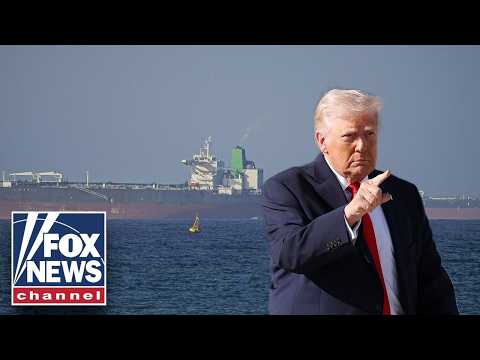
The US-Iran ceasefire is under severe pressure this weekend after American forces launched a new round of retaliatory strikes near the Strait of Hormuz. According to US Central Command, the strikes were triggered after Iran's Islamic Revolutionary Guard Corps (IRGC) targeted yet another oil tanker — a direct violation of the existing ceasefire agreement. Targets hit included military surveillance systems, communications infrastructure, air defense sites, drone storage facilities, and mine-laying capabilities.
This is the second exchange of fire between the United States and Iran in a single weekend. The situation escalated rapidly, with Iran responding to the American strikes by launching drones and missiles toward Kuwait and Bahrain — two Gulf states that have aligned themselves firmly with Washington.
What Did Trump Say About the Iran Ceasefire Violation?
President Trump took to Truth Social shortly after the strikes with a message that left little room for ambiguity. In his post, he wrote: "United States aircraft just struck Iranian missile and drone storage locations and coast canal radar sites for violating the ceasefire agreement again. It is very possible they will never learn."
But the most striking part of the post was his explicit warning about Iran's future as a nation. Trump stated: "There may come a point when we are no longer able to be reasonable and will be forced to militarily complete the job that we very successfully started. If that happens, the Islamic Republic of Iran will be no longer."
Vice President JD Vance backed up that message, making clear that the US has honored the ceasefire while Iran has not, and warning bluntly: "Violence will be met with violence." Vance added that if Iran has disagreements about how the memorandum of understanding (MOU) is being interpreted, they should pick up the phone — not launch missiles.
What Is the US-Iran Ceasefire MOU and Why Is It Failing?
At the heart of this crisis is a deeply ambiguous memorandum of understanding — and both sides are reading it very differently. According to Fox News host Brian Kilmeade, Iran believes the MOU allows it to control the Strait of Hormuz for 60 days before implementing a toll and fee system on ships passing through international waters.
That interpretation is explosive. The Strait of Hormuz is one of the world's most critical chokepoints for global oil supply. If Iran gains the ability to charge tolls on vessels transiting those waters, the geopolitical leverage it would acquire would be, as Kilmeade put it, "almost equal to a nuclear weapon." Iran would effectively control global oil prices and have a stranglehold on international trade.
Reports indicate that Iran has already met with Oman to begin setting up this toll and fee structure — meaning the clock may already be ticking on a 60-day countdown to a new flashpoint. The fundamental problem is that the MOU contains too much gray area, and Iran is actively exploiting every inch of it.
Will the US Go to War With Iran?
That is the question everyone is asking right now — and the honest answer is: the situation is moving in a dangerous direction. Kilmeade's assessment is that by Tuesday or Wednesday, this could become "nonstop escalation."
The key trigger is simple: as long as Iran continues to strike merchant ships in or near the Strait of Hormuz, the US will respond militarily. It doesn't matter what diplomatic conversations are happening behind closed doors. The military response is, as Kilmeade described it, automatic.
The Gulf states are now splitting into clear camps. Bahrain, Kuwait, and the UAE are standing with the United States — and they are being targeted by Iran because of it. Meanwhile, Saudi Arabia and Qatar are reportedly moving toward reconciliation talks with Tehran, a move that has stunned many observers given Iran's recent aggression.
Israel is also watching closely and is reportedly ready to act if needed, adding yet another layer of complexity to an already volatile region. The big open question is whether US-Iran nuclear and technical talks, which were scheduled to resume this week, will go forward at all given the weekend's events.
Why Did Iran Launch Drones at Kuwait and Bahrain?
Iran's drone and missile strikes on Kuwait and Bahrain were a direct retaliation for the US airstrikes. Both nations are home to major American military installations and have been vocal supporters of the US position in the Strait of Hormuz standoff. Iran claimed it struck nine targets, though those claims have not been independently confirmed. As Kilmeade noted, Iran has a well-documented history of inflating its battlefield claims.
The targeting of these Gulf states signals that Iran is willing to widen the conflict geographically — a dangerous escalation that could drag more regional actors into direct confrontation.
What Is the Israel-Lebanon Framework Agreement?
While the US-Iran situation dominates headlines, a separate but related development is unfolding in Lebanon. Late last week, Israeli and Lebanese officials signed a framework agreement in Washington aimed at normalizing ties between the two countries and — critically — disarming Hezbollah.
Israeli officials described the talks as "intense and difficult" but expressed cautious optimism that the framework could lead to a full peace agreement. Over the weekend, however, Israel launched fresh strikes on Hezbollah positions in southern Lebanon in response to continued attacks on Israeli forces, underscoring just how fragile the diplomatic progress remains.
The Israel-Lebanon track and the US-Iran track are separate but deeply connected. Hezbollah is an Iranian proxy, and any escalation between Washington and Tehran could quickly destabilize the fragile diplomatic movement on the Lebanese front.
Can the USA Beat Bosnia-Herzegovina at the World Cup?
Amid all the geopolitical turmoil, there is one piece of genuinely exciting news for American sports fans: the US men's national soccer team is advancing in the expanded 48-team FIFA World Cup, and their next opponent in the round of 32 is Bosnia-Herzegovina on Wednesday.
Brian Kilmeade is optimistic. Bosnia finished third in their group with a record of 1-1-1 and, while talented and physical, has less World Cup experience than the American squad. Kilmeade expects the US to win this one, noting that Bosnia's long-ball, direct style of play actually suits the American team's strengths.
Looking further ahead, the potential path gets tougher — Spain, Belgium, and possibly Argentina in the final. But the broader story here is the quality of the American team, which has drawn praise from international media, not just the domestic press.
Much of that credit goes to head coach Mauricio Pochettino, who was brought in after US Soccer decided its previous American coach wasn't getting results. Securing a world-class manager like Pochettino required serious money — and that's where hedge fund billionaire Ken Griffin stepped in, reportedly contributing a significant bonus to make the hire possible. Griffin, along with Home Depot co-founder Arthur Blank, represents a new generation of private backers who are quietly investing in the growth of American soccer — not for the credit, but because they believe in what this team can become.