
What Is Happening in the US-Iran Conflict Right Now?
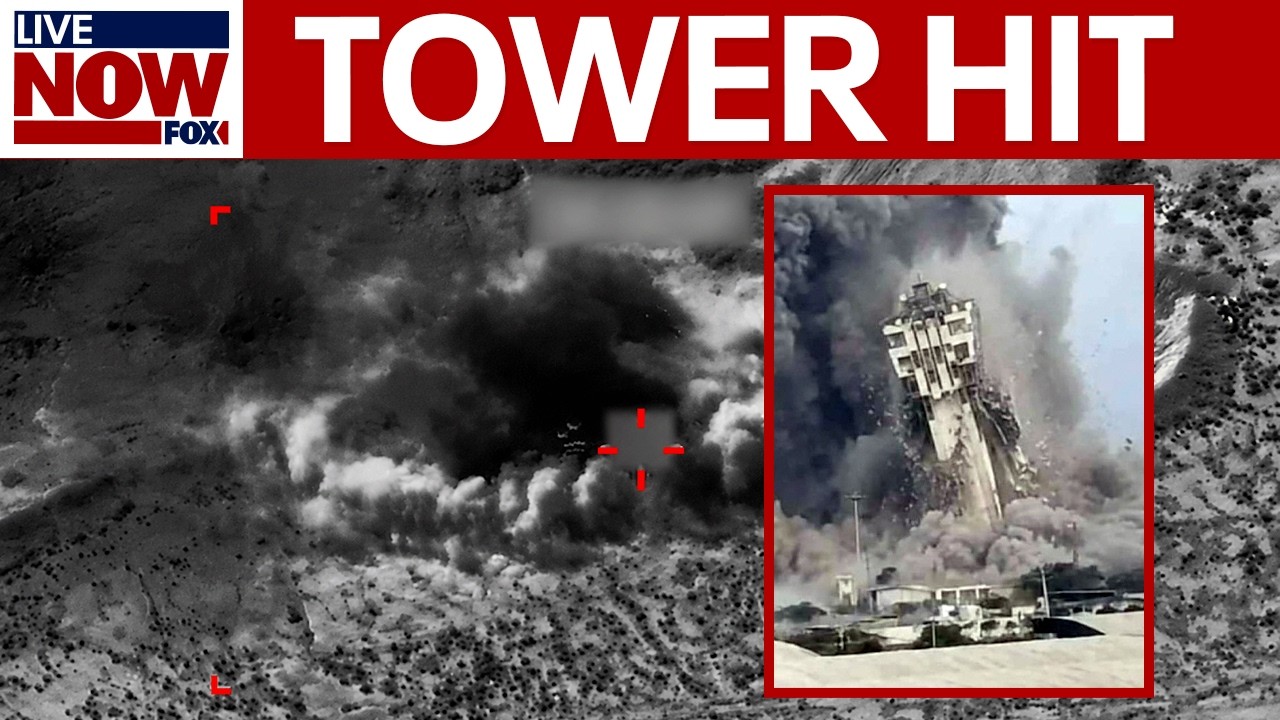
The US-Iran conflict is escalating at a rapid pace, with major developments unfolding across the Middle East within hours of each other. The United States has expanded its military operation against Iran — dubbed Operation Epic Fury — striking bridges and collapsing a tower at a key Iranian port. Iran, for its part, has fired a barrage of missiles at multiple Gulf nations, claimed to hit a US Special Operations Command Center in Syria, and is threatening to shut down the Strait of Hormuz. If you're trying to understand what's actually happening and why it matters, here's a complete breakdown.
According to Adi Schwarz, academic and Director of Research at the Misgav Institute, the big picture is no longer ambiguous: "This is a fundamentalist revolutionary regime that has been causing trouble not only for its own people but across the entire region — in Iraq, Syria, Lebanon, and Yemen." The situation has moved into what analysts are calling a new stage, one where civilian and dual-use infrastructure is now being targeted for the first time.
 00:45
Live look at the Strait of Hormuz via marine traffic as Iran-US tensions escalate
Watch at 00:45 →
00:45
Live look at the Strait of Hormuz via marine traffic as Iran-US tensions escalate
Watch at 00:45 →
Who Actually Controls the Strait of Hormuz?
The Strait of Hormuz question has become one of the most contested geopolitical flashpoints of the conflict. Iran claims to control it. President Trump says the United States is the "guardian" of that international waterway. So who's right?
Technically, the Strait of Hormuz is an international waterway — meaning no single country legally owns or operates it. Schwarz is blunt about this: "Before the war erupted, Iran did not have any ability to put taxes or have any kind of leverage over the free trade route." The fact that Iran is now asserting control — and that the world is debating it — is itself a dangerous shift.
Iran's Expediency Council has stated that decisions over the Strait rest with Iran and Oman, and warned that any outside power seeking to influence its future would have their "hand cut off." A senior Iranian official also warned that any location used to launch attacks against Iran becomes a legitimate target — and that if Iranian infrastructure is attacked, "no infrastructure would remain elsewhere in the region."
The most practical way to understand who actually holds leverage over the Strait right now? Watch oil prices. As Schwarz explains: "The prices of oil are very vulnerable. Tankers are being struck or stuck without the ability to move. Follow the market — that's where the real answer is."
08:20
Secretary Pete Hegseth posts image of tower collapse at key Iranian port on social media
Watch at 08:20 →
Why Did Iran Fire Missiles at Qatar, Its Own Mediator?
One of the most puzzling developments in the conflict is Iran firing a barrage of missiles at Qatar — the same country that has been serving as a diplomatic mediator between the US and Iran. Qatar's residents were told to seek shelter. Qatar's air defenses intercepted several of the missiles. So why would Iran attack the country helping broker a deal on its behalf?
Schwarz offers a cold strategic explanation: Iran's real nuclear option — in the absence of an actual nuclear bomb — is the global energy market. Qatar is one of the world's biggest exporters of liquefied natural gas. By attacking Qatar, the UAE, Saudi Arabia, Bahrain, and other Gulf energy producers, Iran is using energy disruption as a weapon.
"It is more important for Iran to gain back leverage over the energy market than to preserve the future relationship with Qatar," Schwarz explains. "They believe Qatar will have no other option but to remain in good standing with them. So damaging the energy market takes priority."
Bahrain's military confirmed it intercepted and destroyed Iranian aerial attacks on Friday, calling the strikes a violation of international humanitarian law. The attacks targeted civilians and private property with missiles and drones.
Did Iran Really Strike a US Special Operations Base in Syria?
Iran has claimed to have struck a US Special Operations Command Center in Syria, even reporting injuries at the site. The US had not officially responded to those claims at the time of this report.
However, there's crucial context: the US announced back in February — at the beginning of Operation Epic Fury — that it was withdrawing from that specific base. If accurate, Iran may have struck a facility the US had already vacated. Schwarz is careful here: "We don't always know what's going on in the field. Iran has a clear tendency to produce propaganda."
18:55
Live aerial view over Beirut as Israel continues strikes on Hezbollah positions in Lebanon
Watch at 18:55 →
That said, analysts are watching this claim closely. The pattern of Iranian information warfare — making bold claims that can't be immediately verified — is a deliberate strategy designed to shape perception and test American resolve.
Is a US-Iran Peace Deal Actually Possible?
This is where the analysis gets sobering. When asked directly whether a peace deal is on the horizon, Schwarz doesn't mince words: "I'm sorry to say, but I think at this point in time there is no good deal — unless we see a total capitulation from the Iranian side, and we don't see that."
The core problem is that the US and Iran define "peace deal" in fundamentally different ways. From a Western perspective, a deal means Iran rejoining the international community — reintegrating into global trade and diplomacy. From Iran's perspective, a deal means a ceasefire that buys time to rebuild strength, make minimal concessions, and eventually reassert regional dominance.
"The meaning of a peace deal for Iran is not that it would become a peaceful country," Schwarz says. "It means cessation of hostilities. Iran making as little concession as they can. Kind of like a memorandum — only to regain power and then reflect that power all over the Middle East again."
His conclusion: no deal is better than a bad deal. Giving Iran any ground — whether in diplomacy or territory — will only backfire. The only real long-term solution, in his view, is the end of the Iranian regime itself — something he believes must ultimately come from the Iranian people, supported by international conditions that make it possible.
Where Do Israel and Hezbollah Fit Into All of This?
While the US-Iran military confrontation dominates headlines, Israel is operating on a parallel but deeply connected front. Prime Minister Netanyahu has visited Washington multiple times since the start of Trump's second term, with discussions covering both Iran and the Iran-backed Hezbollah terror group in Lebanon.
Schwarz describes the current US-Israel military cooperation as unprecedented — comparing it to the WWII alliance between the US and the United Kingdom in terms of depth and operational coordination. But he's also realistic: the two countries have different scales and different interests, and disagreements are inevitable.
On Lebanon, something genuinely new is emerging. For the first time in over 40 years, there are direct negotiations between Israel and the Lebanese government — with Secretary of State Marco Rubio playing an oversight role. Crucially, Lebanon's own government is now expressing that it does not want to be a proxy of Iran, does not want Hezbollah terrorizing the country, and does not want Iranian meddling in its internal politics.
"This is unprecedented," Schwarz notes. "Whether the Lebanese Army is strong enough to dismantle Hezbollah — we still have to wait and see. But this cooperation necessitates the involvement of both Israel and the United States."
As for whether the fall of the Iranian regime would end Hezbollah's threat to Israel: "It would be a death blow. But Israel cannot wait for that. Hezbollah has miles of tunnels dug into rocky hills in southern Lebanon — not sand like Gaza. The amount of money Iran spent building that infrastructure instead of educating or providing healthcare to Lebanese citizens is staggering."
What Happens If Iran Gets a Nuclear Weapon?
The nuclear question underlies everything. The international community has spent 10, 20, even 30 years trying to negotiate with Iran over its nuclear program. Schwarz argues the conclusion should be obvious by now: "The regime is pursuing a nuclear bomb. The international community cannot afford to have Iran with a nuclear weapon."
The danger isn't hypothetical. Iran is already attacking its neighbors — Qatar, Bahrain, Saudi Arabia, UAE, Oman — without a nuclear weapon. The prospect of a nuclear-armed Iran, combined with its demonstrated willingness to attack regional energy infrastructure and threaten international shipping lanes, represents a threat of a different magnitude entirely.
The key things to watch in the coming days and weeks, according to Schwarz: whether US strikes continue to expand into civilian and economic infrastructure (roads, bridges, energy systems), how Iran responds to those escalations, and whether Gulf states' energy infrastructure becomes the next target of Iranian retaliation. As Schwarz puts it — "This is still the beginning."