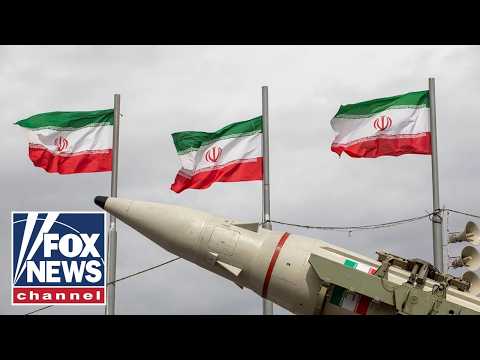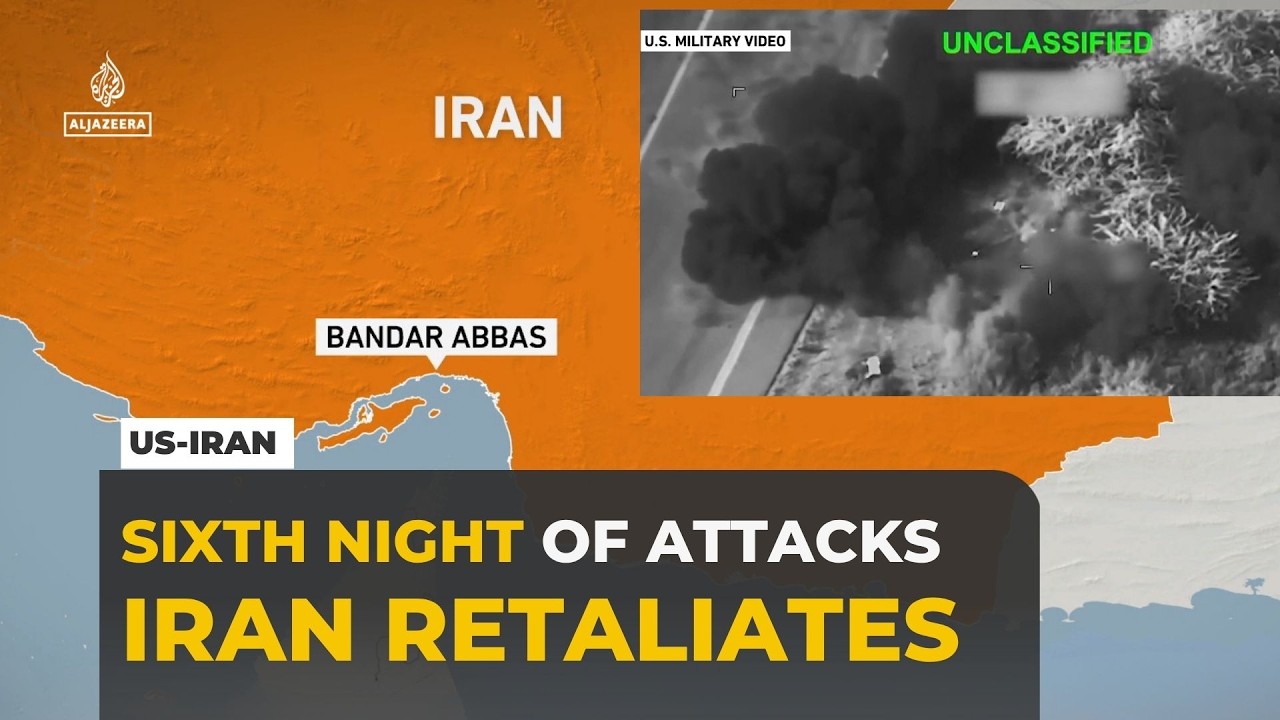

The United States military has launched yet another wave of airstrikes against Iran — its sixth consecutive night of strikes — despite a ceasefire agreement that was signed just last month. Washington says the strikes are aimed at degrading Iran's military capabilities, particularly its ability to threaten commercial and military ships passing through the critical Strait of Hormuz. Iran's health ministry reports at least 40 people have been killed and more than 300 injured in recent attacks, and Iranian state media is reporting fresh explosions near the strategic southern port city of Bandar Abbas.
 00:15
US Central Command announces sixth consecutive night of airstrikes targeting Iran's military capabilities
Watch at 00:15 →
00:15
US Central Command announces sixth consecutive night of airstrikes targeting Iran's military capabilities
Watch at 00:15 →
This is an escalating military confrontation that shows no clear signs of stopping. Here is a full breakdown of what's happening, why it started, and what it could mean for the broader region.
Why Is the US Attacking Iran Right Now?
According to US Central Command, the strikes are a direct response to Iran's actions in and around the Strait of Hormuz. Washington accuses Tehran of targeting commercial vessels transiting the strait, which the US says constitutes a violation of the memorandum of understanding — the MOU — that the two sides had recently agreed to. From the US perspective, Iran broke the deal first, and the military response is a necessary consequence.
US officials have been consistent in their messaging: military pressure and diplomacy are not mutually exclusive. The argument coming out of Washington is that while diplomatic solutions remain the preference, Iran's continued aggression has left the US with little option but to intensify both military and economic pressure.
01:42
Reporter in Tehran describes the scope of US strikes across multiple Iranian provinces
Watch at 01:42 →
US Central Command has framed the goal clearly — to eliminate Iran's ability to control or threaten passage through the Strait of Hormuz, one of the most strategically vital waterways in the world. The strikes have targeted military, naval, and defense infrastructure spread across southern, central, and northern Iran over the past week.
What Is Happening in the Strait of Hormuz?
The Strait of Hormuz is arguably the most important chokepoint for global oil shipping. Roughly 20 percent of the world's oil supply passes through this narrow waterway between Iran and Oman. Iran's Islamic Revolutionary Guard Corps, the IRGC, has long maintained a powerful military presence along the strait, giving Tehran significant leverage over global energy markets and international shipping.
The current conflict centers on Iran's use of that leverage. The US says Iran has been targeting commercial ships transiting the strait, which Washington calls an unacceptable threat to freedom of navigation and international trade. American strikes have been specifically designed to hit IRGC naval assets and infrastructure that support Iran's control over the waterway.
03:10
White House correspondent details US diplomatic engagements running parallel to military operations
Watch at 03:10 →
Iranian officials, for their part, argue that US military operations in and around the Strait of Hormuz are themselves undermining the security and safety of international navigation — a direct contradiction of Washington's stated justification for the strikes.
Did the US and Iran Sign a Ceasefire?
Yes — and that makes the current escalation particularly significant. A ceasefire agreement, referred to as a memorandum of understanding or MOU, was signed between Washington and Tehran last month. However, the agreement has clearly collapsed. Both sides are now engaged in near-daily exchanges of military strikes, with the US accusing Iran of violating the MOU by continuing to target commercial shipping, and Iran accusing the US of undermining regional security through its airstrikes.
The breakdown of this ceasefire raises serious questions about the durability of any future diplomatic agreement and whether either side has the political will to hold to negotiated terms under pressure.
Where Has Iran Struck Back Against the US?
Iran has not limited its response to its own territory. In retaliation for US strikes, Iran has carried out attacks targeting American assets across the broader Middle East region. Reports have confirmed attacks in Kuwait, Bahrain, and Jordan — three countries that host significant US military infrastructure and personnel.
These retaliatory strikes represent a major escalation. By targeting American allies and US bases beyond its own borders, Iran is signaling a willingness to expand the conflict regionally. IRGC commanders have previously threatened to broaden military operations against the United States beyond the immediate region, and these strikes suggest those threats are being acted upon.
What Is Bandar Abbas and Why Does It Matter?
Bandar Abbas is Iran's most important port city, located on the northern shore of the Strait of Hormuz in southern Iran. It serves as the headquarters of the IRGC's naval forces and is home to critical military infrastructure that Iran uses to project power into the strait and the wider Persian Gulf.
When Iranian state television reported explosions near Bandar Abbas following the latest round of US strikes, it signaled that the US is directly targeting the nerve center of Iran's Hormuz strategy. Degrading military assets at Bandar Abbas would significantly weaken Iran's ability to threaten or close the strait — which is exactly the stated goal of the US military campaign.
Is the US Still Pursuing Diplomacy With Iran?
Despite the intensity of the military strikes, US officials insist that the diplomatic track has not been abandoned. The White House and State Department have both pointed to recent high-level diplomatic engagements as evidence that a negotiated solution is still being actively pursued.
- President Trump met with Iraq's new prime minister on Tuesday in discussions that touched on the broader regional conflict.
- Secretary of State Marco Rubio held talks with the Jordanian foreign minister at the State Department, also on Tuesday.
- Ongoing negotiations between Israel and Lebanon took place in Rome this week as part of a broader effort to stabilize the region.
The framing from the White House is that military pressure is being used to create conditions for a diplomatic resolution — not to replace diplomacy entirely. Officials acknowledge that momentum on the diplomatic front has slowed, but insist the channel remains open. The key question is whether continued military escalation will push Iran toward negotiations or harden its position against any deal.
What Did Qatar Say About the Iran-US Conflict?
Qatar has emerged as one of the most vocal regional critics of the current escalation. Following Iranian retaliatory strikes on Kuwait, Bahrain, and Jordan, Qatar released an official statement condemning the attacks in the strongest possible terms. Doha called them a blatant violation of the sovereignty of those countries and a flagrant breach of international law.
Qatar's condemnation is notable given its complex position in the region — the country hosts the largest US military base in the Middle East at Al Udeid Air Base, while also maintaining diplomatic and economic ties with Iran. Its willingness to publicly criticize Iranian strikes on neighboring countries reflects the broader anxiety among Gulf states about where this conflict is heading.
What Happens Next?
The situation remains highly volatile. The US has now conducted six consecutive nights of airstrikes with no indication it plans to stop unless Iran changes its behavior in the Strait of Hormuz. Iran, meanwhile, is escalating its retaliatory strikes across the region and has threatened to expand operations further.
The collapse of the ceasefire MOU has removed what little guardrails existed on this conflict. Whether the diplomatic channels that US officials keep referencing can produce a genuine off-ramp — or whether this escalation continues to spiral — will likely depend on decisions made in the coming days in Washington, Tehran, and the capitals of countries caught in between.