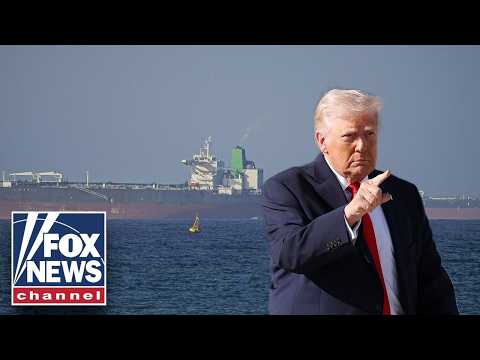
The United States launched new airstrikes against Iran after the Islamic Revolutionary Guard Corps (IRGC) attacked another oil tanker in the Persian Gulf — the latest in a rapidly escalating cycle of military exchanges that is testing the fragile ceasefire framework signed earlier this year. According to U.S. Central Command, the strikes hit military surveillance sites, communication systems, defensive capabilities, and IRGC mine-laying operations. Iran responded by launching missiles and drones toward Kuwait and Bahrain, marking the second direct military exchange between Washington and Tehran in a matter of days.
The strikes come at a moment when the broader Middle East is simultaneously grappling with renewed Israel-Hezbollah clashes and a fragile diplomatic push toward peace between Israel and Lebanon. What looked like a multi-front de-escalation just weeks ago is now unraveling at speed.
Why Did the US Launch New Airstrikes Against Iran?
The immediate trigger was an IRGC attack on an oil tanker transiting between Gulf Cooperation Council (GCC) member states — specifically a vessel moving from one Gulf nation toward the UAE. U.S. Central Command confirmed the strike package targeted a range of IRGC assets, including reconfigured drone launch areas, surveillance installations, and mine-laying vessels that pose a direct threat to commercial shipping in the Persian Gulf.
Retired U.S. Navy Captain Bob Wells, who has transited the Strait of Hormuz dozens of times, explained the strategic logic: the IRGC is not simply responding to provocations — it is deliberately applying pressure to reshape the geopolitical order of the Persian Gulf. By attacking tankers belonging to or transiting toward GCC nations, Iran is sending a message to regional partners: hosting American military bases comes with a cost.
- Targets hit: Military surveillance sites, communication systems, defensive installations, IRGC mine layers
- Iran's response: Ballistic missile and drone strikes on Kuwait and Bahrain
- Strategic goal: Pressure GCC states to reconsider hosting U.S. forces
What Did Trump Threaten If Iran Keeps Breaking the Ceasefire?
President Trump escalated his rhetoric sharply over the weekend, posting on Truth Social that there may come a point when the United States is "no longer able to be reasonable" and would be "forced to militarily complete the job." The implication was explicit: if Iran continues its current course, the Islamic Republic of Iran would, in Trump's words, "no longer exist."
Vice President JD Vance added further pressure, posting on X that Iran had signed the ceasefire agreement and the U.S. had honored it. "If they have disagreements about how they're being applied, they can pick up the phone," Vance wrote. "But violence will be met with violence."
The message from the White House is consistent: the administration views the IRGC's continued tanker attacks as a violation of the memorandum of understanding, and it is prepared to escalate further if Tehran does not pull back.
Why Does Iran Want Control of the Strait of Hormuz?
Iran's claim over the Strait of Hormuz is not new — it has been a cornerstone of IRGC strategy for nearly five decades. Captain Wells put it plainly: for 47 years, Iran has sought to push American influence out of the Persian Gulf and assert dominance over the world's most critical oil chokepoint. Roughly 20% of global petroleum passes through the Strait of Hormuz, giving whoever controls it enormous leverage over the global economy.
Tehran's foreign minister and the Speaker of the Iranian parliament both have IRGC backgrounds, which Captain Wells argues signals that even Iran's diplomatic apparatus is aligned with the IRGC's maximalist territorial ambitions. "A leopard cannot change its spots," Wells noted, suggesting that the memorandum of understanding was always going to be tested by hardliners within the Iranian security establishment.
Several regional nations are already hedging against Iranian chokepoint leverage by investing in alternative pipeline infrastructure — the UAE has built a pipeline bypassing the Strait, and Iraq is exploring similar options toward Syria. But in the near term, the Strait remains the focal point of the standoff.
What Was the US-Iran Ceasefire Deal and Did It Fail?
The memorandum of understanding (MOU) struck between the United States and Iran earlier this year was intended to reduce direct military confrontation and establish a framework for diplomatic communication. The agreement appeared to hold briefly, but cracks emerged almost immediately as the IRGC continued tanker harassment operations and Iran began asserting that it held sovereign rights over the Strait of Hormuz — a position directly contradicting the terms of the MOU.
The White House maintains that the U.S. has fully honored the agreement and that Iran is in violation. Tehran, for its part, appears to be using the MOU's ambiguity to carve out operational space for the IRGC, while nominally remaining within the diplomatic framework. Whether the technical talks between Washington and Tehran can resume following this weekend's exchanges remains the central question for the days ahead.
What Is the Current State of the Israel-Hezbollah Conflict?
Running on a parallel track to the U.S.-Iran exchanges, Israel and Hezbollah have continued trading strikes over the weekend. Israel launched new airstrikes against Hezbollah positions while Hezbollah continued attacks against Israeli forces in southern Lebanon. The fighting has not abated despite intensive diplomatic activity.
Hezbollah formally rejected the Israel-Lebanon framework agreement this weekend, calling on the Lebanese government to abandon the deal entirely. The rejection underscores just how difficult it will be to translate diplomatic frameworks into durable ceasefires when armed non-state actors with direct Iranian backing remain active on the ground.
Did Israel and Lebanon Reach a Peace Framework Agreement?
Yes — at least on paper. Israeli and Lebanese officials reached a framework agreement in Washington aimed at normalizing ties between the two countries and addressing the status of Hezbollah as a military force. The lead Israeli negotiator called the talks "intense and difficult" but confirmed that the framework creates a pathway toward a full peace agreement.
Secretary of State Marco Rubio acknowledged the breakthrough while cautioning that significant work remains. The framework is notable as a first step toward formal normalization, but Hezbollah's rejection of the deal and its continued military operations mean the agreement faces an immediate credibility test. Without Hezbollah's disarmament or at minimum its withdrawal from the border, the framework risks becoming symbolic rather than operational.
Who Is Really in Charge in Iran — The Government or the IRGC?
One of the most pressing questions emerging from this weekend's exchanges is whether Iran's civilian leadership and its IRGC commanders are operating from the same strategic playbook. Anchor Jon Scott raised the possibility that lower-level IRGC commanders — perhaps officers positioning themselves for future leadership — could be ordering strikes that the broader high command has not explicitly sanctioned.
Captain Wells offered a nuanced view: even Iran's nominally civilian foreign minister and parliamentary speaker carry IRGC pedigrees, suggesting the distinction between civilian and military authority in Tehran may be largely illusory. The IRGC, he argued, will continue to push regardless of what any signed agreement says, because its institutional identity is built around resistance to American presence in the Gulf.
What US Military Forces Are Deployed in the Persian Gulf?
The United States currently has two carrier battle groups operating in the region: the USS George H.W. Bush and the USS Abraham Lincoln, each with its associated strike group. Additional naval assets are positioned in the Red Sea. U.S. Central Command also maintains intelligence and strike capabilities across approximately 25 identified IRGC command and control nodes deep in the Persian Gulf and surrounding areas.
Captain Wells noted that CENTCOM's intelligence picture has improved markedly in recent months, citing the precision with which the latest strikes hit reconfigured IRGC drone launch areas. But he cautioned that more needs to be done — particularly in securing the eastern approaches to the UAE near the Strait of Hormuz — as the IRGC continues to adapt its tactics and reposition assets in response to U.S. pressure.
The bottom line: the situation in the Middle East is far more volatile than the ceasefire agreements of recent months suggested. With Iran pressing its Strait of Hormuz claims, the IRGC continuing tanker attacks, Hezbollah rejecting the Lebanon framework, and President Trump explicitly threatening regime elimination, the next 72 hours of diplomatic and military signaling will be critical.