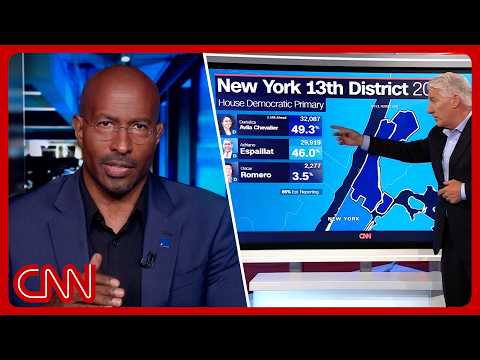
The Democratic Socialists of America scored a significant political victory in recent New York City primaries, with DSA-backed candidates — including Zohran Mamdani's endorsed slate of Claire Valdez, Brad Lander, and Dar Lisa Aila Chevier — winning competitive Democratic races. The results have ignited a serious debate about the ideological direction of the Democratic Party and whether a socialist candidate could mount a credible run for the presidency in 2028.
Who Won — and What They Stand For
The winning candidates were not running on mainstream Democratic platforms. One of the victors drew attention for a viral moment in which she appeared to wipe her hand on an American flag, a gesture that critics immediately seized on as emblematic of the movement's contempt for traditional American symbolism. Another winning candidate, Aila Chevier, has called for the abolition of police and all prisons. When pressed four times in interviews about how a society without prisons would handle violent crimes like murder, she declined to give a direct answer. She has also tweeted that Barack Obama is evil, called Joe Biden a rapist and war criminal, and used expletives directed at Kamala Harris.
These were not candidates running on a cost-of-living agenda alone. They carried explicit ideological commitments — anti-capitalism, anti-Israel positions, opposition to immigration enforcement, and support for dismantling the carceral system — that place them well outside the Democratic mainstream.
The View's Conservative Voice Sounds the Alarm
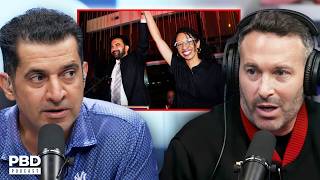 02:10
Clip from The View in which the conservative panelist warns about DSA candidates winning New York primaries
Watch at 02:10 →
02:10
Clip from The View in which the conservative panelist warns about DSA candidates winning New York primaries
Watch at 02:10 →
On The View, a conservative panelist offered what many observers called one of the clearest analyses of the political danger these results pose to the Democratic Party. She pointed out that while New Yorkers may be comfortable with the phrase "democratic socialism" in the abstract — associating it with public services like ambulances, fire departments, and police — the candidates who actually won under that banner hold positions far more radical than anything implied by the label.
"One of your new candidates wants to abolish the police and all prison," she said directly. "She tweeted that Obama is evil, Biden is a rapist and a war criminal. These were not people running on an affordability agenda. These were left-wing extremists elected at the expense of moderate Democrats — in a seat you need to win if you want to take back the House." She drew on her own experience watching the extreme right take over the Republican Party and warned Democrats: "I've seen this happen in my party where the extreme wing takes over and you can't get your party back."
Hunter Biden Draws Lessons — and Raises Red Flags
Perhaps unexpectedly, Hunter Biden weighed in on the results with a pointed political post-mortem that went viral. Writing that he was not running for office but had observations to share, he outlined what he saw as the key lessons from the New York results:
- Authenticity matters. Voters can identify focus-grouped messaging immediately.
- Establishment endorsements are now liabilities. They read like warnings, not stamps of approval.
- Conviction beats caution. Candidates who said hard things — about rent, about Gaza, about who pays for what — won. Triangulators lost.
- Cost of living is everything. Every other issue, in his words, is "wallpaper."
- The middle is not a strategy. It's an empty room.
- The country is tired of being managed. Voters want to be led.
Regardless of one's view of Hunter Biden, his framing captures why the DSA's message is resonating: in an environment of housing unaffordability and economic anxiety, a candidate who speaks plainly about economic grievances — even from a radical-left framework — can outperform cautious centrists who speak in policy abstractions.
The DSA Platform and the Road to 2028
DSA national co-chair Megan Romer was explicit after the New York victories: the organization is already looking toward 2028. "What DSA represents is a real contrast to Democrats who have run the last couple of elections on fear," she said. "You can't run on that. You have to offer an alternative." Mamdani declared before election night: "When does the race for 2028 begin? It starts now."
The DSA platform itself, when stripped of its rhetorical framing, rests on several core pillars:
- Replacing the current constitutional system of checks and balances with a parliamentary structure
- Expanding government control over the means of production
- Open borders, abolition of ICE, and reduced immigration enforcement
- Elimination of prisons, including for violent offenders, and abolition of police
- A mandatory pro-Palestine, anti-Israel ideological stance for members
The most prominent potential 2028 presidential candidate within the movement remains Representative Alexandria Ocasio-Cortez, though DSA leadership has been careful to say she would not receive an automatic endorsement. "We don't do kingmakers," Romer said — though she acknowledged that if chapters universally pushed for AOC, that would carry weight.
Why This Matters Beyond New York
The political establishment — the Nancy Pelosis, Chuck Schumers, and Hakeem Jeffries of the party — is facing a generational and ideological challenge it appears poorly equipped to handle. Internal Democratic polling reportedly shows the DSA brand running significantly stronger than the Democratic Congressional brand among Democratic voters, which means the energy, the money, and the candidates are increasingly flowing toward the socialist wing.
The risk for the broader American political landscape is straightforward: if the Democratic Party cannot contain or redirect this energy, and if the Republican Party and independent voters fail to take the threat seriously, the country could find itself with a major-party presidential candidate in 2028 running on a platform of constitutional restructuring, open borders, police abolition, and state seizure of private industry.
The New York primaries are not just a local story. They are an early signal of what the next presidential cycle could look like — and a test of whether either major party is capable of drawing a clear line in response.