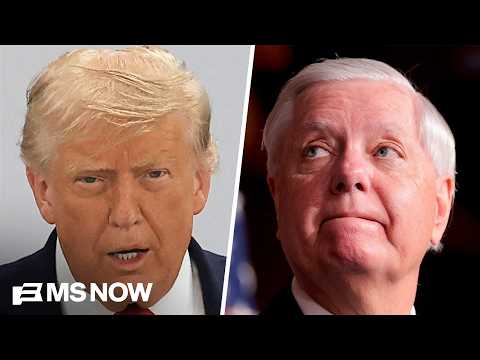
Tucker Carlson made headlines by declaring he would no longer support the Republican Party — calling it morally indefensible for prioritizing the interests of a foreign country over its own citizens. Within 24 hours, he was on record saying he likes J.D. Vance enormously and would support the best candidate. For a growing number of conservative commentators, that whiplash is the whole story.
What Tucker Actually Said
In the clip that set off the debate, Carlson was unequivocal:
"There's no chance I would support the Republican Party. Not going to support the Democratic Party. I don't know what I'm going to do. How could I — or any American voter — support a political party that's not loyal to the United States?"
He framed it as a matter of moral principle, citing 35 years as a consistent Republican defender and his time at Fox News. The break, he said, was final.
Then, asked directly whether he would support J.D. Vance, he said: "I've always liked J.D. Vance enormously. I think he's really smart. He's in an impossible situation. I'll support the best person."
 01:45
Tucker Carlson clip declaring he will not support the Republican Party
Watch at 01:45 →
01:45
Tucker Carlson clip declaring he will not support the Republican Party
Watch at 01:45 →
The Credibility Problem
The panel dissected Carlson's credibility on several fronts. One commentator noted that Carlson's voter registration tells a more complicated story than his self-portrait as a lifelong Republican: he was reportedly registered as a Democrat from 2006 to around 2022 in Washington D.C. Carlson has addressed this publicly, explaining he registered Democratic to participate in what he considered more meaningful local primary elections — but critics argue it undercuts his claim of being a 35-year Republican stalwart.
More substantively, the panel raised questions about the consistency of Carlson's stated concerns. If his objection is to American foreign policy adventurism — something he has connected repeatedly to his regret over supporting the Iraq War — that would be, as one panelist put it, "morally defensible and honest." The problem, they argued, is that Carlson's criticism reliably pivots to Israel specifically, while ignoring comparable or larger issues elsewhere.
The Christian persecution example was put forward as a test case: Carlson has devoted significant airtime to Christians facing pressure in Israel and the Palestinian territories, while spending comparatively little time on the hundreds of millions of Christians persecuted across sub-Saharan Africa and the broader Middle East. When Nigeria came up, he suggested the violence might be tribal rather than religious. To the panel, that selective framing revealed something other than principled consistency.
08:20
Panel discussion on Tucker Carlson's selective focus on Israel versus broader Middle East issues
Watch at 08:20 →
What Are His Actual Motives?
The panel ran through a framework of possible motivations — and found several plausible answers, none of them flattering.
- Political ambition: One commentator said he has believed since 2022 that Carlson wants to run for president and has been positioning himself accordingly. His current coalition-building — floating between populist conservatives, libertarians, and figures like Alex Jones — could be read as laying groundwork.
- Ideological drift: Carlson's politics have become harder to categorize. Panelists described him as mixing America First nationalism, libertarian instincts, skepticism of free markets, and occasional sympathy for positions more at home on the left. His famous McDonald's video from Russia — praising the quality and affordability of food in Moscow — was cited as an example of content that reads more like soft propaganda than journalism.
- Business incentives: He has a media operation to run and products to sell. One panelist argued this is actually the most honest motive: straightforward capitalism. Controversy drives engagement.
- Personal loyalty: More speculatively, one panelist raised the possibility that Carlson's worldview was shaped by his father's career in intelligence and that some of his fixations may reflect views inherited from that background rather than conclusions he arrived at independently.
18:30
Panel analyzing Tucker Carlson's possible political and financial motivations
Watch at 18:30 →
The Broader Risk: Who Benefits From Republican Infighting?
Beyond Carlson himself, the panel flagged what they see as the real-world consequence of his messaging. Telling Republican-leaning voters that neither party deserves their support is, functionally, an instruction to stay home — which benefits Democrats. One commentator put it bluntly: if you're a Republican and you don't vote Republican, you're giving a vote to Democrats, and encouraging that outcome while claiming neutrality is a political act, not a principled abstention.
The counterargument, raised by another panelist, is that unconditional party loyalty is itself dangerous. In his experience working in South American politics, he said the worst outcomes came when voters played "team sports" and supported parties regardless of performance. The carrot-and-stick approach — threatening to withhold support — is a legitimate form of voter pressure. The problem with Carlson, he argued, isn't the principle but the execution: announcing a break and then walking it back within a day suggests neither genuine conviction nor strategic discipline.
A Pattern, Not a Moment
What emerged from the conversation is less a debate about any single statement and more a portrait of a commentator whose positions have become difficult to predict or trust. Panelists who had once respected Carlson — one received a Fox Patriot Award from him in 2022 — said they no longer recognize the figure they saw then.
The Nick Fuentes interview was cited as a turning point for at least one participant. Carlson hosted a guest who had made deeply offensive remarks about Charlie Kirk — someone Carlson had publicly called a close friend — and declined to press him on it during the interview. For a commentator whose brand is directness and moral clarity, that omission struck the panel as revealing.
The emerging consensus: Tucker Carlson is a moving target. Whether that reflects genuine intellectual evolution, strategic repositioning, outside influence, or simple opportunism, the panel couldn't say with certainty. What they agreed on is that his credibility as a consistent, principled voice has taken significant damage — and that the vacuum his volatility creates is one the political left is watching carefully.