
The current state of America in 2025 depends entirely on who you ask. Traveling from the streets of New York City all the way to the shores of Hawaii, one thing becomes crystal clear: Americans are deeply divided, financially stressed, and politically exhausted. ICE raids, deportation debates, inflation, the National Guard, and a Democratic Party without a clear leader — these are the issues dominating conversations from coast to coast. Here's what real Americans are actually saying.
What Do Americans Really Think About the State of America?
The short answer: almost nobody thinks it's going great — but they disagree violently on why. In New York City, one woman called it "a mess" and blamed Trump directly. A few blocks away, a libertarian-leaning man said the fix was simple: "Dismantle the federal government." In Washington DC, a resident said she felt safer than she had in years. In Hawaii, a former Trump voter admitted he no longer knows what the president's agenda even is.
 01:45
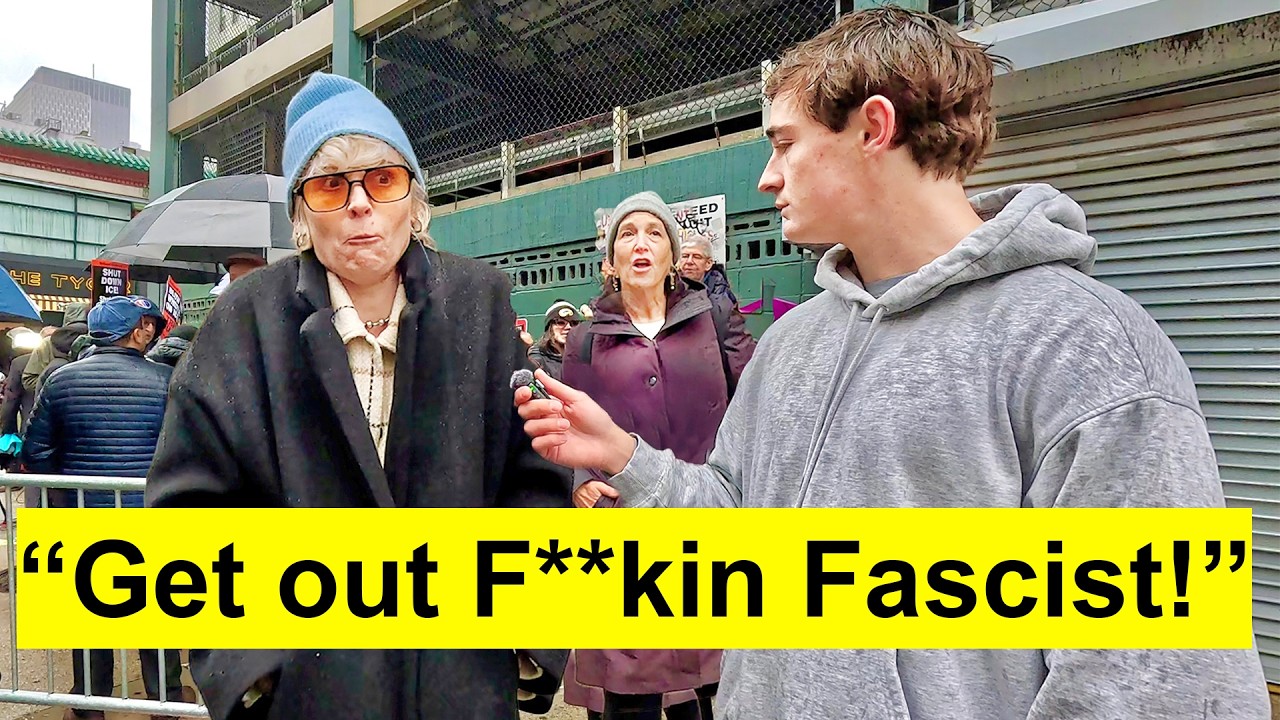
Protesters outside Canal Street in NYC demand press credentials from a reporter asking basic questions about the current state of America
Watch at 01:45 →
01:45
Protesters outside Canal Street in NYC demand press credentials from a reporter asking basic questions about the current state of America
Watch at 01:45 →
What's striking is that the dissatisfaction is nearly universal, but the diagnosis is completely split. Left-leaning Americans point to what they see as authoritarian overreach — deportations without due process, the National Guard on city streets, and executive actions bypassing Congress. Right-leaning Americans point to border chaos, rising crime, and a media they believe is actively working to destabilize the country. And then there's a growing middle — people fed up with both sides — who see the entire political system as a machine that benefits no one but itself.
One man on the streets put it bluntly: "It's not even about money anymore. It's about whoever is controlling the narrative. They need to stop." He talked about his own son wanting to learn how to load a silencer — not out of aggression, but out of fear. That fear, whether you agree with it or not, is real and it's spreading.
Should Illegal Immigrants Be Deported or Allowed to Stay?
This was the hottest topic everywhere we went — and the responses were far more nuanced than cable news would have you believe. Outside Canal Street in New York City, where ICE raids had just taken place, protesters refused to engage while simultaneously demanding press credentials from a reporter exercising his First Amendment rights. The irony was not lost on anyone watching.
08:20
A DC resident explains why she supports reverse migration and calls Biden's immigration policy a 'total disaster'
Watch at 08:20 →
Among everyday citizens, the consensus leaned more toward enforcement than the media narrative might suggest — even in liberal strongholds:
- New York City: A woman who worked in criminal court said the majority of people she sees arrested are American citizens stealing basic necessities like food and toilet paper. She argued there are bigger issues than deportation — but still didn't say illegal migrants should stay unconditionally.
- Washington DC: A DC resident said she fully supports reverse migration, arguing that without assimilation, immigration "has just really become an invasion." She added: "We love our immigrants, but what Joe Biden did to this nation made the process a total disaster."
- Chicago: A man on the South Side, when pushed to choose between keeping all illegal migrants or deporting all of them, said: "Deport they ass."
- Hawaii: Multiple residents said welfare and government support should go to Americans first, not refugees or undocumented immigrants.
The nuance most people landed on: keep the ones who are contributing, remove the criminals, and fix the broken system so this never happens again. But when forced to choose between all or nothing? More people than you'd expect chose deportation — even in blue cities.
How Is Trump's Second Term Going — Is He Delivering?
Opinions on Trump's second term broke predictably along political lines, but even within his own base, cracks are starting to show. A MAGA supporter inside the White House said she was blown away by how much progress had been made. A man at a Midwest gas station pointed to lower gas prices and a safer homeland as proof Trump was delivering. A San Diego resident praised border tightening and called the economy "on fire."
But outside the base, the picture gets murkier. A Hawaii resident who voted for Trump said: "I voted for Trump. I thought things were going to get better. And then the opposite happened." She described feeling lost, unsure of what his agenda even is anymore, and worried about the influence of powerful players around him.
18:35
Hawaii residents describe working seven days a week just to survive in America's most unaffordable state
Watch at 18:35 →
In Washington DC, a man said he agreed with some of Trump's policies — particularly pushing people off long-term government dependency — but disagreed with others. He also made a point that often gets lost in the noise: Democrats were historically anti-immigration too. Bill Clinton signed legislation that cracked down hard on immigration. The current Democratic stance, he argued, exists primarily because Trump is on the other side — not because of any real ideological conviction.
The recurring theme from Trump supporters: the media is the enemy of honest coverage. They pointed to the portrayal of National Guardsmen as "Nazi police" as a prime example of how distorted the narrative has become — especially after a Guardsman was killed in DC by an illegal migrant from Afghanistan.
Why Is Hawaii the Most Unaffordable State in America?
Hawaii hit differently in this conversation. It's easy to look at photos of the islands and assume everyone is living in paradise. The reality on the ground is something else entirely. The average home price in Hawaii is the highest of any state in the nation, and residents described a life of relentless financial pressure.
"Everyone's working seven days a week just to survive," one woman said, who had moved back from Utah and described it as a "rat race." Residents blamed a combination of factors: mainland Americans buying up property, foreign investors driving prices even higher, and a cost of living that makes even basic expenses feel impossible. One man said most Hawaiians are living paycheck to paycheck — and that a single medical emergency could put almost anyone on the street.
The anger toward outside buyers — both domestic and foreign — was palpable. And unlike the mainland debates about immigration and politics, the crisis in Hawaii felt more immediate and personal. People are fishing to survive. They're working multiple jobs. And many feel completely invisible in a national conversation that rarely includes them.
Who Is the Face of the Democratic Party Right Now?
Ask ten Democrats who leads their party and you'll get ten different answers. On the streets of New York, one person named Hakeem Jeffries. Another mentioned JB Pritzker. Gavin Newsom came up repeatedly as the likely 2028 presidential nominee. AOC also surfaced as a name to watch on Polymarket's prediction markets.
But the more telling answer came from a Washington DC resident who said it plainly: "There's no real political environment anymore. It's either Donald Trump or anti-Trump." The Democratic Party, in his view, has lost its ideological identity and replaced it with opposition. Whether that's enough to win in 2028 remains to be seen — but it's clearly not energizing voters the way the party needs it to.
Is Chicago Really as Dangerous as the Media Says?
Chicago has dominated headlines for years, and the city's reputation for violence is well established. But talking to people actually living there paints a more complicated picture. One resident said he hadn't even seen the National Guard yet, despite all the news coverage. He acknowledged Chicago has problems but pushed back on the idea that it's uniquely dangerous: "It's dangerous, but there's a lot of other cities that are more dangerous too."
His solution wasn't more police or the National Guard — it was economic opportunity. More jobs, better wages that actually keep up with taxes, and investment in communities that have been left behind. The minimum wage going up sounds good until the tax increase eats most of the gain, he pointed out. It's a cycle that keeps people stuck.
Who Will Win the 2028 Presidential Election?
According to Polymarket at the time of filming, JD Vance leads the field for 2028, followed by Gavin Newsom. On the streets, most people who offered a prediction leaned toward Newsom as the Democratic nominee — though enthusiasm was lukewarm at best.
In Hawaii, one resident said she believed a Democrat would win in 2028 simply because "everything is trending down for Trump right now." In New York, multiple people said they'd vote for Newsom if given the choice. But nobody seemed particularly excited about any of the options — which may be the most telling data point of all.
The 2028 race is still years away, but the groundwork is already being laid. And if the conversations happening on the streets of America right now are any indication, whoever wins will inherit a country that is financially strained, politically fractured, and desperately looking for someone — anyone — who actually makes things better.
The Bottom Line: What Is the Real State of America in 2025?
After going from New York City to Washington DC, through the Midwest, into Chicago, and all the way out to Hawaii, one conclusion stands above all others: Americans are tired. Tired of the fighting, tired of the propaganda, tired of paying more for less, and tired of feeling like nobody in power is actually listening.
The debates over immigration, Trump's second term, and the future of the Democratic Party are real and important. But underneath all of it is something more fundamental — a population that wants safety, affordability, and leadership they can actually trust. Whether America finds that in the next few years remains the biggest open question of our time.