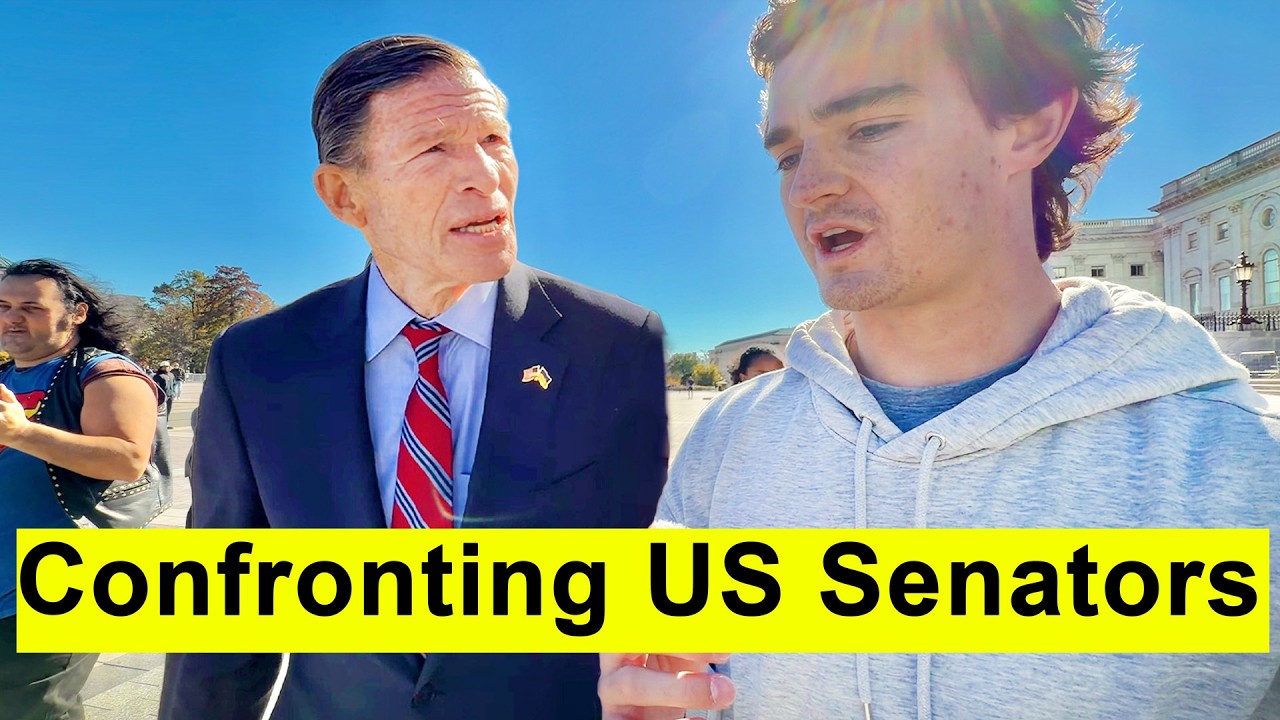

The government is shut down right now because Republicans and Democrats cannot agree on healthcare — specifically, whether health insurance tax credits under the Affordable Care Act will be extended before a spending bill is passed. With 53 Republican senators pushing to reopen the government and needing at least 7 Democratic votes to reach the 60-vote threshold required to break a filibuster, the stalemate has dragged on longer than any shutdown in US history. We went to Washington DC — Capitol Hill, the White House, and the streets of Anacostia — to hear from senators, protesters, and everyday Americans about what is actually going on.
Why Is the Government Shut Down Right Now?
At its core, this shutdown is a standoff over healthcare. Democrats are refusing to vote for a continuing resolution to fund the government unless there is a firm guarantee that healthcare tax credits — the subsidies that make insurance affordable for millions of Americans — will be preserved. Republicans argue that the government should be reopened first, and negotiations can happen afterward.
One Democratic senator told us directly: "I will vote to reopen the government when there is a commitment to extend the health care tax credits that make health insurance affordable." On the other side, a Republican representative insisted that Democrats are holding the government hostage: "We need the votes of the Democrats in the Senate to have cloture so that we can open up the government."
What makes this particularly bitter is the history. Democrats point out that they voted 13 times to keep the government funded during the Biden administration without attaching conditions. Republicans counter that the current moment requires accountability. Meanwhile, President Trump has reportedly refused to come to the negotiating table, with one senator stating bluntly: "Trump has refused to come to the table to even talk about a compromise."
How Does the Government Shutdown Affect SNAP Benefits?
This is where the shutdown stops being a political talking point and becomes a human crisis. Over 40 million Americans rely on SNAP — also known as EBT or food stamps — to feed themselves and their families. During this shutdown, instead of the full $9 billion that is typically distributed monthly, only around $5 billion is going out. That is nearly a 45% cut to the food assistance millions of families depend on.
In the Anacostia neighborhood of Washington DC — one of the lower-income areas in the city — residents told us exactly what that means on the ground. One woman said simply: "So next month, I won't receive food stamps, and I really need these food stamps." Another resident described people showing up to grocery stores and gas stations only to find their EBT cards are not working. A community leader in the area put it starkly: "If the government doesn't reopen, families will go starving here."
The ripple effects go even further. One man who had just been released from federal prison explained that the shutdown had frozen the reintegration programs he needed to find a job — leaving him with no income and no path forward. These are the kinds of consequences that rarely make national headlines but define what a government shutdown actually means for real people.
Who Is to Blame for the Government Shutdown?
Depending on who you ask, the answer changes completely — and that is exactly the problem. Outside the Capitol building, Democratic protesters held signs reading "Stop the Healthcare Heist" and "Billionaires Got Richer, Americans Get Sicker," placing the blame squarely on President Trump and Republican leadership for refusing to negotiate.
Republican representatives we spoke to flipped the script entirely, arguing that Democrats are the ones blocking a resolution by withholding the seven votes needed to end the filibuster. One Republican said: "We voted 13 times to keep the government open during the Biden years. We never held the government hostage."
Outside the White House, protesters dressed as handmaids chanted "Shame" and pointed at the administration. Regular citizens we spoke to expressed frustration with both sides. One resident in Anacostia summed up the mood on the street: "At this point, everybody knows that Republicans and Democrats are all the same." The blame game, it seems, has left ordinary Americans exhausted and skeptical of everyone in power.
How Many Votes Does It Take to Reopen the Government?
Here is the mechanics of why this shutdown is so difficult to resolve. Because of the Senate filibuster, any bill to fund the government and reopen it requires 60 votes in the Senate — not just a simple majority. Republicans currently hold 53 Senate seats, meaning they need at least 7 Democratic senators to cross the aisle and vote yes.
Republicans have brought reopen-the-government votes to the floor more than 10 times and have failed each time to get those seven Democratic votes. Democrats have held firm, insisting that healthcare guarantees must come first. This is the core math of the shutdown, and until one side blinks, the impasse continues.
One protester outside the Capitol made an interesting point about the filibuster itself: "That's the only thing saving either side. If you don't want something to go through, the filibuster is what helps people take more time." Whether the filibuster is a democratic safeguard or a tool for obstruction depends entirely on which side of this fight you are on.
How Does the Shutdown Affect Air Travel and Daily Life?
Beyond food assistance and paychecks, the shutdown is creating problems that touch everyday life in less obvious ways. Air travel is one of them. With the shutdown in effect, the aviation sector is operating at roughly 10% reduced capacity compared to normal. That means fewer flights, potential delays, and a stressed system that affects millions of travelers who have nothing to do with the political fight in Washington.
Federal workers across dozens of agencies are either furloughed or working without pay, waiting for back pay that may come once the government reopens — but with no guarantee of when that will be. And with congressional members technically not required to be in Washington DC during a shutdown, many offices — including that of Rep. Alexandria Ocasio-Cortez, whose office we visited — were simply empty. The halls of Congress were quiet at the exact moment when lawmakers should be working hardest to find a solution.
What Are Low-Income Communities Saying About the Shutdown?
The neighborhood of Anacostia in Washington DC told a story that the political theater on Capitol Hill tends to drown out. This is a community where, as one local leader described it, "the majority of people rely on food stamps, food banks, or both." The shutdown is not an abstract policy debate here — it is a question of whether families can eat during the holidays.
Residents connected the funding cuts directly to broader issues: the threat of increased community violence when people are desperate, the inability of formerly incarcerated individuals to access reintegration programs, and the emotional toll of uncertainty. "When you think about the UN and the policies we have — if a country did this where people were not eating — we would have a whole different conversation," one community leader told us.
Should You Rely on the Government? What the Shutdown Reveals
Perhaps the most unexpected takeaway from our day on the streets of Washington came not from a senator or a protester, but from a resident of Anacostia who offered a brutally honest perspective: "The government is not reliable. This government shutdown has proven that."
His point was not partisan — it was practical. Over 40 million Americans are learning, in real time, what happens when the safety net disappears without warning. Several people we spoke to said the shutdown should serve as a wake-up call to build personal financial resilience — emergency savings, side income, contingency plans — because depending entirely on government assistance leaves families dangerously exposed when political fights in Washington grind everything to a halt.
As one woman put it: "Free sounds good until there's no more free stuff. And then you've got to figure stuff out yourself." Whether you agree with that sentiment or not, the shutdown has forced millions of Americans to confront exactly that reality — and the political class on both sides of the aisle is still arguing about who is to blame.