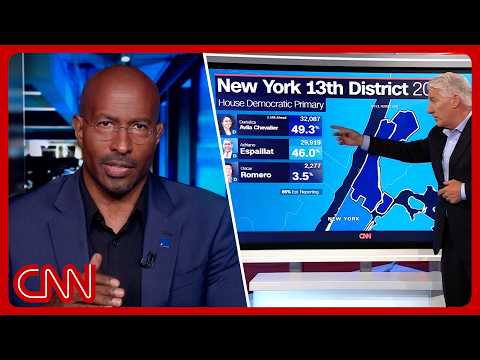
Zohran Mamdani — a 33-year-old self-proclaimed democratic socialist — just won the Democratic primary for New York City mayor, and the city is anything but quiet about it. Running on a platform that includes rent freezes, a $30 minimum wage, defunding the police, government-run grocery stores, and free buses for all New Yorkers, Mamdani has ignited one of the most polarizing mayoral races in recent memory. We took to the streets to ask New Yorkers directly: who are you voting for, and what do you actually think will happen to this city?
Who Is Zohran Mamdani and Why Is He Running for NYC Mayor?
Mamdani is a 33-year-old New York State Assemblyman who was born in Uganda and has lived in the United States since age seven. He is a self-described democratic socialist who rose to national prominence after winning the Democratic primary, beating out more established candidates. His mother is a well-known Bollywood film director, and he previously drew attention for his involvement in pro-Palestinian protests — including confrontations with law enforcement that were caught on video.
Donald Trump has publicly labeled him a communist. On prediction markets like Polymarket, Mamdani currently holds a 71% chance of winning the general election, placing him well ahead of competitors including current Mayor Eric Adams, Curtis Sliwa, and Andrew Cuomo. Whether you love him or can't stand him, Mamdani is the most talked-about political figure in New York City right now.
What Are Mamdani's Key Policies for New York City?
Mamdani's platform is ambitious — and depending on who you ask, either visionary or catastrophic. Here's what he's proposing:
- Rent freezes across the city to combat the housing affordability crisis
- $30 minimum wage for all workers in New York City
- Defund the NYPD and replace traditional policing with community outreach and social workers
- Government-run grocery stores to provide affordable food access to all residents
- Free public buses for every New Yorker
- A 2% surtax on millionaires to fund city services and reduce reliance on federal money
- "Trump-proofing" NYC by generating enough independent city revenue to operate without federal funding
His proposed budget is reported to be roughly triple the current figure, which has fiscal conservatives and business owners sounding serious alarms.
Does Mamdani Have a Real Chance of Winning the NYC Mayor Race?
According to Polymarket, the answer is a strong yes. His 71% odds reflect the reality that New York City is overwhelmingly Democratic, and winning the Democratic primary is historically the biggest hurdle. His opponents in the general election — including Eric Adams, who is running as an independent amid federal indictment proceedings, and Andrew Cuomo — are all splitting the non-Mamdani vote.
One New Yorker on the street offered a sobering take: "Only about 5% of New Yorkers voted for him in the primary. Primaries are low-turnout elections, so fringe candidates do better because they have a lot of energy. The hope is that a lot of different people coalesce behind Eric Adams, because this is unacceptable."
Still, history suggests that primary winners in NYC almost always go on to win the general. Unless a strong independent or Republican candidate consolidates opposition votes, Mamdani is the frontrunner.
What Do Everyday New Yorkers Think About Mamdani?
We hit the streets across New York City and got a wide range of reactions — and the divide could not be sharper.
Mamdani Supporters Say:
Many younger New Yorkers and working-class residents were enthusiastic. "He represents working people and is offering policies that counter the establishment and resist the influence of billionaires over this city," one supporter said. Another cited rent freezes and public transit improvements as her main reasons for voting for him in the primary. Several supporters said they were energized by the idea of a young, fresh face — someone outside the machine of "old white men" who have cycled through City Hall for decades.
Mamdani Critics Are Alarmed:
The opposition was just as passionate. One business owner told us bluntly: "We're going to go full communist. This is not going to work out well. My business will be destroyed. This is the final nail in the coffin — I'll have to leave."
An immigrant from Italy put it this way: "This country is capitalism. You can come here and become somebody. Mamdani is trying to eliminate what his own parents had the opportunity to do in this country — and that doesn't seem fair."
A man originally from Moscow added a particularly pointed perspective: "I ran from there once. I'd like to not do it again. If you create government-subsidized stores, you will destroy regular stores. His budget is going to triple. As people start to leave, you're taxing the people who stay more and more — and the city becomes Detroit."
Is Mamdani a Socialist, a Communist, or Something Else?
Mamdani calls himself a democratic socialist. Trump calls him a communist. And some New Yorkers we spoke with pushed back on both labels. One interviewee argued that "communism doesn't really exist" in its pure form — pointing out that even Russia and China operate capitalist markets under authoritarian control.
What seems clear is that his policy positions sit well to the left of mainstream Democratic politics. Government ownership of grocery stores, abolishing billionaire wealth, and replacing police with social workers are not typical Democratic Party platform items — they align more closely with socialist political theory. Whether that makes him a communist in any practical sense is debatable, but it's the framing that has defined media coverage and voter reactions alike.
What Could Happen to NYC If Mamdani Becomes Mayor?
This was the question that generated the most passionate responses on the street. The concerns raised by critics followed a consistent economic logic:
- High-income earners and businesses leave the city to avoid new taxes, shrinking the tax base
- A shrinking tax base forces even higher taxes on those who remain
- Real estate developers stop building; landlords warehouse apartments rather than rent them under freeze conditions
- The city inherits financial obligations for failing properties and swelling entitlement programs
- Major employers — law firms, financial institutions, the Stock Exchange — relocate
"You will not be able to undo what this man does to the city," one critic warned. "It is very hard to undo migration. It is very hard to undo entitlements. These are one-way roads."
Supporters counter that the current system is already failing working New Yorkers — with rents consuming entire paychecks and groceries increasingly unaffordable. They argue bold action is overdue, and that taxing the ultra-wealthy is a reasonable way to fund it.
Would Defunding the NYPD Actually Work?
Mamdani wants to restructure the NYPD, reducing traditional policing in favor of social workers and community outreach programs. Critics on the street pointed to Portland, Oregon as a cautionary tale. "Portland is what will happen, except with tremendously more crime — it's a much larger city. Pharmacies will close. Stores will close," one man predicted.
Others questioned the basic logistics: "When you defund them, where does that go? I think if anything, fund them more and get better training." The idea of social workers responding to violent incidents struck many as dangerously naive given New York City's scale and complexity.
Government-Run Grocery Stores: Smart Policy or Dangerous Experiment?
Of all Mamdani's proposals, city-owned grocery stores may be the most eyebrow-raising. The reaction on the streets was almost uniformly skeptical, even among some who otherwise support him. "Where's the money coming from?" was the immediate question from multiple people. The answer — taxes — did not satisfy most of them.
The Moscow native we spoke with offered the sharpest critique: government-run stores suppress private competition while simultaneously requiring massive tax increases to operate. The end result, he argued, is higher prices on government shelves and empty shelves on private ones — a dynamic he said he witnessed firsthand growing up in the Soviet Union.
Whether Mamdani's vision for New York City is a bold reinvention or a blueprint for collapse depends entirely on who you ask. One thing is certain: this mayoral race has every New Yorker talking — and the outcome will define the city for a generation.