
The short answer to why the US can't restart the war with Iran right now comes down to one thing: oil. Trump struck roughly 80 targets in Iran this week and reapplied sanctions on Iranian oil exports, prompting Iran to launch drone and missile attacks on US military sites across the region. It looks, on the surface, like the ceasefire is unraveling. But despite the escalation, a full return to war is something the US simply cannot afford — because the global oil market is sitting on a knife's edge, and the stockpiles that kept prices from going haywire last time are now dangerously depleted.
Why Can't the US Afford to Restart the War With Iran?
Trump, whatever else you think of him, is acutely sensitive to oil prices. And right now, the global oil market is far more fragile than it appears. The ceasefire brought oil prices back down to pre-war levels by July — but that stability is illusory. The buffers that cushioned the world from an acute supply shock during the war have been largely used up. If the Strait of Hormuz closes again and global supply drops by 11 million barrels per day or more, there is significantly less room to absorb the blow this time around. That means higher prices, potential shortages, and a political disaster for a president who has staked his economic credibility on keeping energy costs down.
There's also the small matter of what JD Vance said on the Michael Null show last week — more on that in a moment — which suggests the US entered the ceasefire with a deliberate plan to use the pause to rebuild reserves before deciding its next move. That plan is very much still in progress.
What Happened to Oil Prices When the Strait of Hormuz Closed?
When the Strait of Hormuz closed and global oil supply dropped by at least 11 million barrels per day, most analysts feared catastrophe. Goldman Sachs called it the largest oil supply shock in history. The original predictions were alarming: prices could shoot to $200, even $300 a barrel. So what actually happened?
Prices hovered between $90 and $120 a barrel. Painful, but nothing like the apocalyptic scenarios that were floated. There were two key reasons for this relative resilience:
- Massive global stockpiles: JP Morgan estimated there were around 8.4 billion barrels in global inventories at the start of the crisis — well above historical norms. These were drawn down at an unprecedented rate to compensate for lost supply.
- China cut its imports: China, normally the world's biggest oil importer, reduced its imports by roughly 4 million barrels per day. Some of this was genuine demand destruction — EV charging in China jumped 17% between April and May as drivers switched away from gasoline — but Bloomberg analysis suggests about half of that reduction came from China drawing down its own vast stockpiles rather than actually buying less oil.
The uncomfortable truth is that the world essentially borrowed from its future to survive the crisis. And now the bill is coming due.
Why Did China Suddenly Cut Its Oil Imports?
China's role in stabilizing oil markets during the Hormuz crisis deserves more attention than it's getting. The Chinese economy proved surprisingly agile in the face of an oil price shock. Public EV charging infrastructure saw a 17% spike between April and May, indicating a rapid consumer shift away from petrol-powered vehicles. But the more significant factor was China quietly offloading the enormous strategic stockpiles it had been quietly building for years.
According to Bloomberg, roughly half of China's apparent demand reduction was stockpile drawdown rather than genuine consumption cuts. This matters enormously for what happens next — because just like the US and everyone else, China's reserves are now considerably thinner than they were going into the war. China cannot play the same stabilizing role in a second round of conflict that it played in the first.
How Depleted Is the US Strategic Petroleum Reserve?
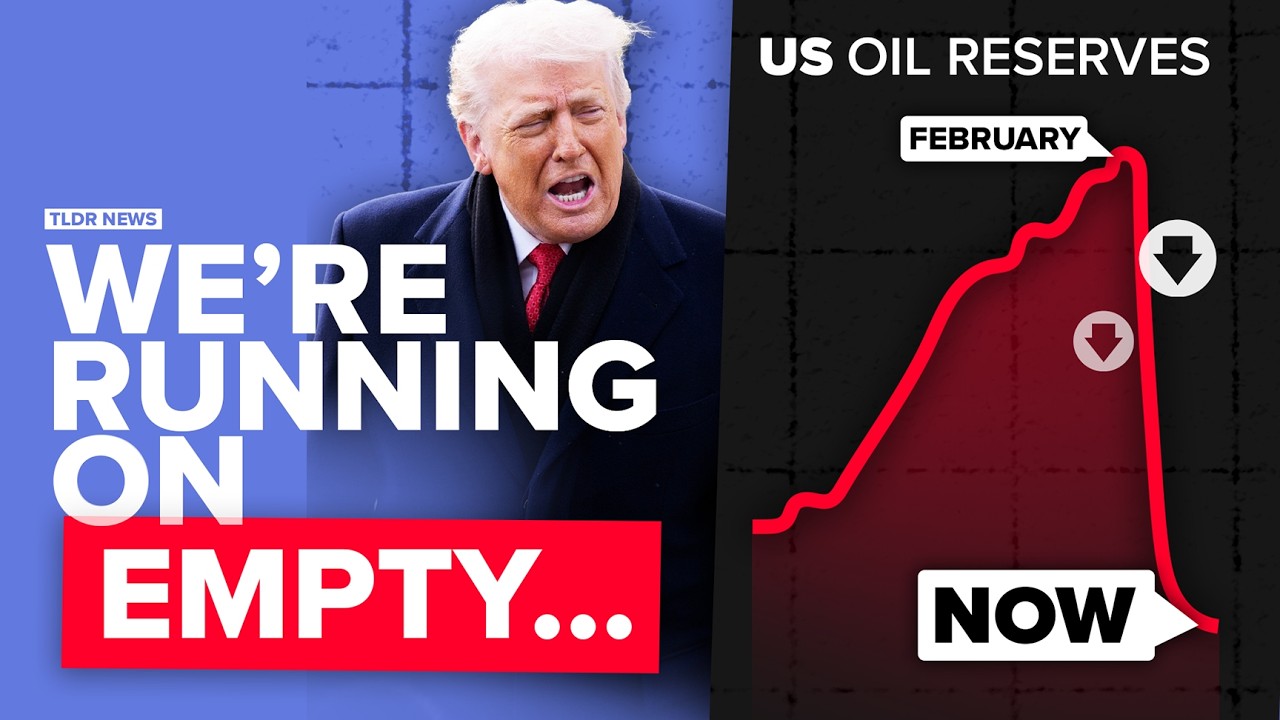
The US Strategic Petroleum Reserve (SPR) is probably the single largest oil reserve in the world, and it has been central to the global effort to keep prices manageable. But the latest EIA data tells a worrying story: the SPR has fallen from around 415 million barrels before the war to just 325 million barrels — and critically, releases have continued even after the ceasefire was signed.
That 325 million barrel figure is the lowest the SPR has been since 1983. But the raw number understates the problem. Here's why:
- The oil in the SPR is stored in underground salt caverns in Louisiana and Texas. Every time you extract oil, you risk dissolving the surrounding salt and causing the caverns to collapse.
- The SPR was designed with a 25-year lifespan when it was established after the 1973 Arab oil embargo. It was built to survive five large draw-downs. It has now been through nine.
- Operational pressure requires a minimum floor of around 160 million barrels at all times. The reserve simply cannot be fully drained without risking structural failure.
JP Morgan's analysts reckon that global oil markets start to get seriously unstable when total worldwide inventories fall below 6.8 billion barrels. Given the pace of drawdowns over recent months, that threshold is no longer a distant theoretical concern.
What Is the Bab al-Mandab and Why Does It Matter?
If the Strait of Hormuz is the obvious chokepoint, the Bab al-Mandab is the one that could turn a bad situation catastrophic. This maritime strait sits between Djibouti and Yemen, connecting the Red Sea to the Gulf of Aden. It's become dramatically more important to global oil flows in recent months for a specific reason: Saudi Arabia has been rerouting oil exports.
With its eastern coast ports cut off by the Hormuz closure, Saudi Arabia redirected exports through ports on its western coast — which means the oil flows out through the Red Sea and the Bab al-Mandab. Daily throughput through that strait has jumped from roughly 3 million barrels before the war to around 8 million barrels today — approximately 8% of total global supply.
Iran has two ready-made options to close it. First, it could direct the Houthis — who control much of western Yemen and are widely regarded as an Iranian proxy — to resume harassing commercial shipping. Second, it could simply target vessels directly using longer-range missiles and drones. Either way, closing the Bab al-Mandab on top of the Strait of Hormuz would push the total daily supply shortfall from 11 million barrels to something closer to 20 million. At that point, the world's depleted stockpiles would drain almost immediately, and the price consequences would be severe.
What Did JD Vance Reveal About the Iran Ceasefire Strategy?
The most candid window into the Trump administration's thinking came last week, when Vice President JD Vance appeared on the Michael Null show. He was remarkably open about how the White House views the ceasefire:
"I think what the president has told us to do is use this to sort of refill the world's oil economy... to refill some stocks and then to see where the hand is."
This is essentially an admission that the ceasefire was never primarily about diplomacy or de-escalation — it was a strategic pause to rebuild the oil buffers that had been exhausted by the war. Trump himself inadvertently confirmed the urgency at the G7 summit, where he claimed oil reserves were going to run out in about four weeks before the memorandum of understanding was signed. That kind of timeline concentrates the mind.
Could the US Go Back to War With Iran in the Future?
Almost certainly, the current restraint is a function of necessity rather than a genuine change in strategic direction. The logic of Vance's comments — refill the stocks, then reassess — strongly implies that the option to restart military action remains very much on the table once the economic conditions allow for it.
The problem is that rebuilding global oil inventories to the levels they were at before the war will take months, possibly years. The SPR alone would need sustained, deliberate restocking to return to pre-war capacity, and the geopolitical conditions for doing so cheaply aren't guaranteed. Until global stockpiles are genuinely resilient again, any serious military escalation risks triggering the oil price shock that the ceasefire was designed to avoid in the first place.
For now, Trump is caught between his hawkish instincts and the hard constraints of a fragile global energy market. The strikes this week suggest those instincts are hard to suppress entirely. But the economics are doing what diplomacy often can't: keeping the lid on.