Will the US Military Intervene in Cuba?
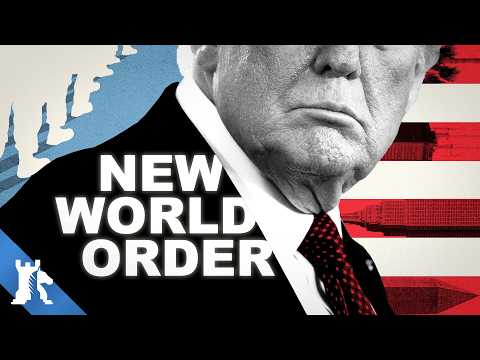
The question of whether the US will militarily intervene in Cuba is no longer hypothetical. Donald Trump has publicly hinted that Cuba is next on his agenda after the interventions in Iran and Venezuela, stating, "We may stop by Cuba after we're finished with this." That comment was not isolated. In the weeks that followed, Trump repeatedly floated Cuba as a coming priority — and behind the scenes, the Pentagon is already drawing up a range of military options. Whether those options get used depends on how diplomacy plays out, but the threat is real, and Havana knows it.
Unlike the buildup before the Venezuela operation, any military action against Cuba could be launched directly from bases inside the United States. That means intervention could come suddenly, with little public warning. Options on the table reportedly range from targeted raids to capture senior Cuban officials, to broader air campaigns against military and government infrastructure, to — in the most extreme scenario — a full-scale invasion aimed at regime change. The full invasion remains the least likely outcome, but it is no longer off the table in Washington's planning documents.
 00:45
Trump hints Cuba is next after Iran and Venezuela, setting off speculation about US military planning
Watch at 00:45 →
00:45
Trump hints Cuba is next after Iran and Venezuela, setting off speculation about US military planning
Watch at 00:45 →
What Is Trump's Maximum Pressure Policy on Cuba?
Trump's Cuba policy in 2026 is best understood as an escalation of a campaign he began in his first term. When he entered the White House in 2017, he rolled back Obama-era normalization efforts, tightening sanctions on flights, remittances, and travel. But the second term brought a far more aggressive posture. In January 2026, Trump signed an executive order declaring Cuba an extraordinary threat to US national security — and crucially, that order created a legal framework to impose 30% tariffs on any country that supplies oil to Cuba.
The effect was immediate. Fuel tankers turned around mid-route. Suppliers across the board — Venezuela, Mexico, Algeria, Angola, Brazil, Russia — largely stopped delivering to the island. Cuba, which needs roughly 100,000 barrels of oil per day to sustain basic civil services but produces only 40,000 domestically, was left dangerously exposed. In 2026, it has received only a handful of deliveries: an 85,000-barrel shipment from Mexico in January and a 100,000-barrel delivery from Russia in late March. Beyond that, almost nothing.
The strategy fits into Trump's broader goal of asserting American primacy in the Western Hemisphere while limiting the influence of China and Russia. Cuba's close ties to both — and its alliance with the now-deposed Maduro — made it a natural next target after Venezuela.
Why Is Cuba's Economy Collapsing Right Now?
Cuba's economic collapse in 2026 is the result of years of mismanagement compounded by Trump's maximum pressure campaign cutting off the island's oil lifeline. The consequences are cascading and visible. Gasoline is scarce. Medicine is in short supply. Power outages are routine. Schools are suspending classes, hospitals are cancelling surgeries, and garbage trucks sit idle because there's no fuel to run them. Food prices have surged, and mosquito-transmitted disease outbreaks are overwhelming a public health system that is already under severe strain.
04:10
Map showing Cuba's oil supply routes and the effect of Trump's executive order on tanker deliveries
Watch at 04:10 →
Many of these problems had been building for years, but the near-total cutoff of oil imports has accelerated them dramatically. Cuba is now experiencing what analysts describe as its worst economic crisis since the "Special Period" of the 1990s — the devastating collapse that followed the fall of the Soviet Union. The difference this time is that the crisis is being deliberately engineered from Washington, and there is no obvious external patron waiting to step in and stabilize the island.
- Oil shortfall: Cuba needs 100,000 barrels/day but produces only 40,000
- Power grid: Rolling blackouts now affect most of the country daily
- Healthcare: Hospitals cancelling surgeries due to fuel and supply shortages
- Food: Prices rising sharply as distribution systems break down
- Public services: Waste collection, schooling, and transportation all disrupted
Washington is watching these developments closely, and the prevailing view inside the White House is that the Cuban state is at its most vulnerable point in decades. Trump appears determined to exploit that opening.
What Does the US Actually Want from Cuba?
In April 2026, a US State Department delegation visited Havana — the first time a US government aircraft had landed in Cuba since the Obama era. The Americans arrived with a detailed list of demands. At the top: compensation for American residents and corporations whose assets were confiscated after the 1959 revolution. The Assembly of the Cuban Resistance estimates the total compensation claim at somewhere between $9 and $10 billion — a figure that Cuba, in its current economic state, has no realistic ability to pay.
The delegation also demanded the release of political prisoners and greater political freedoms for the Cuban population. Cuba has made some gestures in response — releasing 2,000 political prisoners in April and introducing regulations allowing expatriots to own businesses on the island. But the White House has not been appeased. The compensation question, in particular, remains a potential dealbreaker. It is also deeply tied to domestic US politics: delivering some form of property compensation would be a significant political win in South Florida ahead of the November midterm elections.
07:30
US State Department delegation arrives in Havana — the first US government aircraft to land since the Obama era
Watch at 07:30 →
Beyond the political calculus, a deal with Cuba would open real economic opportunities — most immediately in tourism, and over time in broader investment. American companies have been locked out of the Cuban market for over six decades. That's a meaningful commercial prize, even if Cuba's current state makes near-term investment unattractive.
What Role Does Marco Rubio Play in US-Cuba Policy?
Secretary of State Marco Rubio may be the single most important figure shaping US policy toward Cuba right now — and possibly the most important American in any eventual negotiation. As the son of Cuban immigrants, Rubio has spent his entire political career treating Cuba not merely as a foreign policy issue but as a deeply personal one. He was one of the sharpest critics of Obama's normalization attempt, and he has become the face of the Trump administration's posture across Latin America.
Rubio is also uniquely positioned to be both a threat and an opportunity to Havana. He's a threat because he has consistently pushed for tougher measures against the Cuban government. But he may also be an opportunity, because he has hinted at a more gradual approach — suggesting that change in Cuba doesn't have to happen all at once, that "everyone is mature and realistic." In practice, that language opens the door to a deal that introduces reforms incrementally while keeping much of Cuba's existing political structure in place.
That kind of arrangement would be deeply controversial. Cuban exile groups, anti-government organizations, and members of Congress would likely see it as legitimizing the communist government. The Helms-Burton Act ties the removal of the US embargo to specific conditions — free elections, dismantling of the state security apparatus — that no gradual deal would satisfy overnight. Navigating that political maze would require extraordinary skill. Rubio may be the only figure in Washington who has even a remote chance of pulling it off.
Could Regime Change in Cuba Actually Happen?
Regime change in Cuba is complicated by a problem that did not exist in Venezuela: there is no obvious alternative leader waiting in the wings. After nearly seven decades of communist rule, Washington has been unable to identify anyone within the Cuban system with a credible track record of supporting economic liberalization — even modestly. If President Díaz-Canel were forced into exile tomorrow, it is genuinely unclear who would replace him or whether that replacement would be any more cooperative with Washington.
That said, Cuba is running out of room. Without oil, conditions will keep deteriorating until they become politically unsustainable, potentially triggering large-scale anti-government protests. The Cuban government knows this. Its recent concessions — prisoner releases, new property rules for expatriots — reflect a leadership that is feeling the pressure. But so far, those moves have not been enough to shift the White House's posture.
How Did US-Cuba Relations Get to This Point?
The roots of the current standoff stretch back to 1959, when Fidel Castro took power in Havana and set off one of the longest-running foreign policy headaches in American history. In the decades that followed, US policy toward Cuba oscillated between escalation and attempted engagement. The Clinton-era Cuban Liberty and Democratic Solidarity Act tightened the embargo and set strict conditions for lifting it. Obama took the opposite approach — restoring diplomatic relations, relaxing some sanctions, and removing Cuba's designation as a state sponsor of terrorism.
The Obama thaw briefly sparked optimism. Cuba permitted more small private businesses, loosened rules on foreign investment, and trimmed its state payroll. But hardliners in Havana feared the reforms would trigger political change they couldn't control, and the liberalization stalled well short of what was needed. By the time Trump arrived in 2017, there was little goodwill left to preserve — and he wasted none of it. The trajectory since then has been one of tightening pressure, with each successive move ratcheting the situation closer to where it stands today: on the edge of something far more dangerous than a diplomatic dispute.