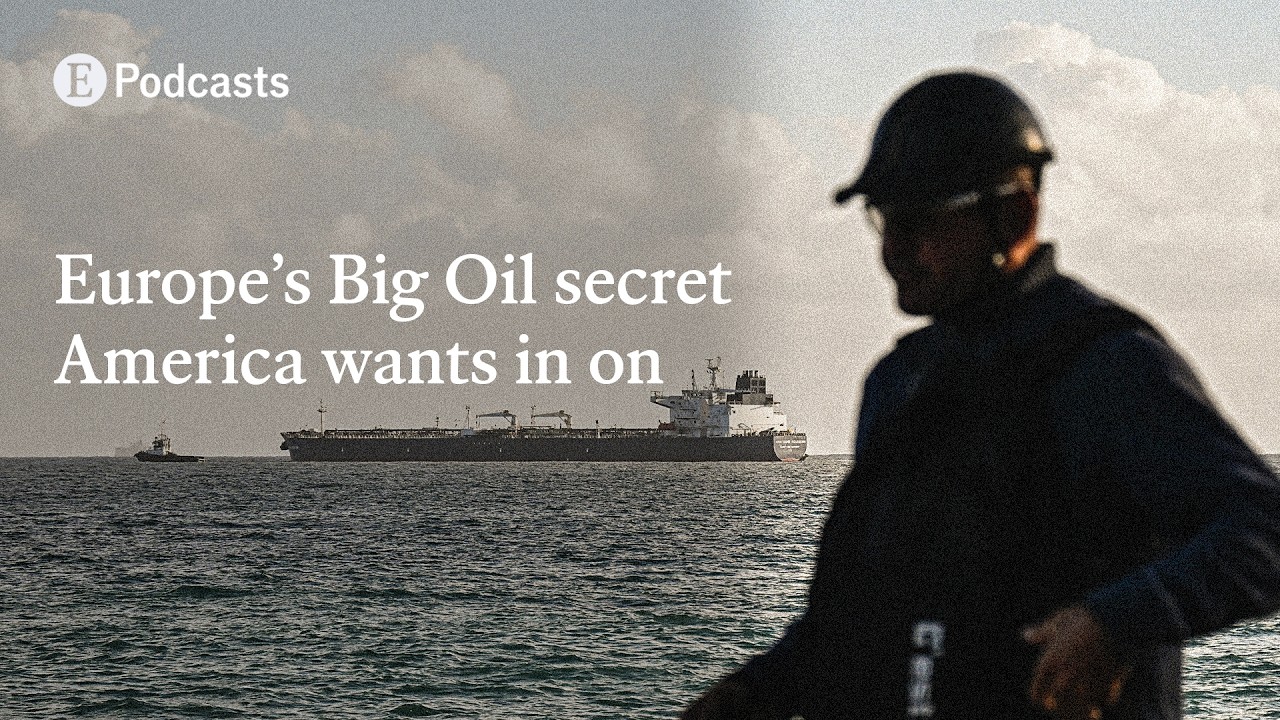

When oil prices spike, most people assume big energy companies profit simply by pumping more crude out of the ground and selling it at a higher price. That part is obvious. But how oil majors make money from energy trading — buying and reselling other people's barrels at a profit — is a far less understood, and far more lucrative, story. European giants like BP, Shell, and TotalEnergies collectively trade 40 to 50 million barrels per day of oil and gas. That's five to ten times more than they actually produce. And in a volatile year, that trading activity alone could generate between $15 and $20 billion in profit.
What Is Energy Trading and How Does It Work?
To understand why this matters, it helps to first separate trading from marketing. Marketing is simply selling what you produce — getting your own oil from the wellhead to the customer. Trading is something else entirely. It means buying barrels that someone else produced and selling them to whoever will pay the most, wherever in the world that happens to be.
 01:15
Expert explains the difference between oil marketing and oil trading — and why that distinction is worth billions
Watch at 01:15 →
01:15
Expert explains the difference between oil marketing and oil trading — and why that distinction is worth billions
Watch at 01:15 →
When there's a war, a sanctions regime, or a supply shock, prices diverge sharply between regions. Some places face shortages. Others face gluts. Buyers panic and want product now rather than later. All of these dislocations create price differences — and those price differences are exactly what traders exploit. The wider the volatility, the bigger the opportunity. That's why energy crises, paradoxically, are often boom times for sophisticated trading desks.
How Do Oil Majors Actually Make Money From Trading?
The secret weapon behind these trading operations isn't a genius algorithm or a lucky bet — it's information. The European majors are enormous companies with global footprints: oil and gas fields, refineries, storage terminals, and tanker fleets spread across every major market on earth. As they operate this vast network, they constantly generate data about supply levels, demand trends, shipping bottlenecks, and price movements.
Their trading desks sit at the center of that information flow. While an independent trader might be guessing at global supply conditions, a BP or Shell trader is reading real-time data from their own refineries and terminals. That informational edge allows them to make bets with far greater confidence — and to correct bad bets before they become costly ones.
04:30
How the majors' global networks generate the intelligence edge that powers their trading desks
Watch at 04:30 →
Sources familiar with these operations put it bluntly: the trading desks of the European majors basically never lose money on an annual basis. In a bad year, they make a little less. In a good year — like a year marked by war, sanctions, and energy market chaos — they make an enormous amount.
How Much Do BP, Shell, and TotalEnergies Earn From Trading?
The majors are famously secretive about their trading desks. They don't publish profitability figures, headcount, or positions. But estimates gathered from multiple industry sources paint a striking picture. In a strong year, BP, Shell, and TotalEnergies combined could earn $15 to $20 billion in trading profit — potentially as much as one-fifth of their total group profits.
Even more remarkable is what trading does for capital efficiency. Trading profits alone may add up to a third to the majors' return on capital — a metric shareholders watch closely. And that's largely why the European majors have outperformed their American counterparts since the energy crisis intensified in early 2022. The Americans drilled more. The Europeans traded better.
Why Are European Oil Majors Better Traders Than American Ones?
The answer goes back decades, and it comes down to two things: geology and necessity.
07:10
The history of how BP accidentally discovered oil trading in the 1980s after Middle East nationalizations
Watch at 07:10 →
American majors like ExxonMobil and Chevron have always had access to vast domestic oil and gas reserves. They also had a huge home market to sell into. With abundant supply and ready demand on their doorstep, there was little pressure to develop sophisticated global trading capabilities. Why learn to buy cheap in Rotterdam and sell expensive in Singapore when you can just pump Texas crude and sell it down the road?
European majors never had that luxury. BP, Shell, and Total had to go abroad to find their barrels, and that exposed them to international markets early. Then came the 1970s oil nationalizations in the Middle East and Gulf. Overnight, the Europeans lost access to enormous reserves they had once controlled. Suddenly, they had no choice but to go into the market and buy barrels from someone else.
BP reportedly figured out first — sometime in the 1980s — that it could buy barrels it didn't actually need and resell them at a profit. Shell and Total followed in the 1990s, when low oil prices pushed them to find new ways to boost returns. Decades of iteration, hiring, and refinement followed. The result is a finely tuned machine that has been tested through multiple crises and keeps getting better.
How Many People Does It Take to Run an Oil Trading Desk?
Surprisingly few. A major's core trading team might be just 60 to 70 actual traders. Add in shipping specialists, financing teams, risk managers, and support functions, and you're looking at roughly 1,000 to 2,000 people total. For companies that employ 100,000 people overall, that's a tiny fraction of the workforce.
But the profit per head is extraordinary. In a strong year, each person on the trading team generates roughly $10 million in profit. That kind of return-per-employee is almost unheard of in heavy industry — and it explains why these teams are so well compensated and so fiercely protected from public scrutiny.
Are National Oil Companies Like Saudi Aramco Getting Into Trading?
Yes — and aggressively. The model pioneered by the European majors has not gone unnoticed. National oil companies, the state-owned giants in major producing countries, are now actively building out trading capabilities of their own. Saudi Aramco and ADNOC — the Abu Dhabi National Oil Company — are among the most ambitious.
According to one industry recruiter interviewed for this story, ExxonMobil and ADNOC are currently among the biggest hirers of commodity traders worldwide. They're not dabbling. They're trying to build something serious, and they're going after experienced talent to do it fast.
Can American Oil Companies Ever Catch Up to European Traders?
They can — but it won't happen quickly. The Americans have tried before and failed, largely because they were half-hearted about it. They didn't give their traders enough capital to work with, which limited the scale of positions they could take. And critically, they didn't give traders enough independence — forcing them to focus primarily on marketing the company's own production rather than making opportunistic market bets.
This time around, there's more commitment. Exxon in particular appears to be approaching the effort with greater seriousness. But even with the right resources and the right people, building a world-class trading operation takes time. It's less like hiring a few smart people and more like building a racing car — you prep the machine, run it in a crisis, analyze the data, make adjustments, and run it again. That process takes many cycles before it becomes truly competitive.
The European majors, for all the competitive pressure coming their way, are expected to remain dominant in energy trading for at least several more years. The golden goose, as one analyst put it, is still laying eggs — but it won't be unchallenged forever. As new players build out their capabilities, trading margins may eventually compress, and the engineers and producers will reclaim the spotlight from the dealmakers.
For now, though, the quiet, secretive, extraordinarily profitable world of oil trading remains the best business most people have never heard of.