
How Did El Salvador Cut Its Murder Rate to Canada's Level?
El Salvador reduced its murder rate from over 50 per 100,000 people to roughly the same level as Canada — one of the world's most peaceable nations — in just a few years under President Nayib Bukele. The answer is brutal in its simplicity: Bukele locked up approximately 2% of the entire adult population. Anonymous tip lines were set up so that ordinary citizens — grandmothers peering out their windows at gang members extorting their grandchildren — could report suspects who would then be swept into maximum security prisons with no guarantee of a fair trial. In one extraordinary case, a single judge presided over a simultaneous trial of nearly 500 people. The result? Bukele is now, by a wide margin, the most popular politician in all of Latin America.
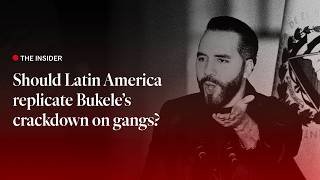 0:45
Discussion of Bukele's murder rate reduction and his status as Latin America's most popular politician
Watch at 0:45 →
0:45
Discussion of Bukele's murder rate reduction and his status as Latin America's most popular politician
Watch at 0:45 →
The strategy worked because it fundamentally reversed the balance of fear in Salvadoran neighborhoods. Before Bukele, residents were terrified of the gangs. After his crackdown, the gangs became terrified of the people — anyone could be an informant, and the consequences were permanent. Gang members weren't just arrested; they effectively disappeared into the prison system. For a population that had lived under the thumb of violent extortionists for decades, this felt like liberation.
Is Bukele's Gang Crackdown Exportable to Other Countries?
Here is where experts pump the brakes hard. The near-universal consensus is that the El Salvador model is not simply transplantable to other Latin American nations — at least not with the same results. The reason comes down to the specific type of criminal enterprise Bukele dismantled. El Salvador's gangs, like MS-13 and Barrio 18, were primarily extortion operations. Their business model depended on controlling neighborhoods and taxing residents, small businesses, and transport networks. By some estimates, these gangs were extracting roughly 16% of El Salvador's GDP.
That business model has a critical vulnerability: the victims hate it. Ordinary people who are being extorted have every incentive to cooperate with authorities. When Bukele offered them an anonymous way to fight back, they took it eagerly. The gangs lost their social camouflage the moment the population stopped being too afraid to speak. That dynamic simply does not exist in the same way when the criminal enterprise is cocaine production and smuggling — and that distinction matters enormously for any country hoping to copy Bukele's playbook.
3:10
Experts debate whether the El Salvador model can be exported to countries fighting drug cartels
Watch at 3:10 →
Is Bukele Actually a Dictator? How He Dismantled Democracy
Bukele has called himself a dictator — and he isn't entirely wrong. What makes El Salvador such a remarkable case study is that it shows, in real time, how a democracy can be dismantled while a leader remains genuinely popular. Bukele didn't seize power through a military coup or steal an election. He used security as his mandate and eroded institutions one by one.
- Parliament blocked him? He marched soldiers into the legislature to force compliance.
- The Supreme Court ruled against him? He replaced the justices.
- Term limits stood in his way? He had them reinterpreted to allow indefinite re-election.
The troubling reality is that most Salvadorans support all of this — because the gangs really were that bad, and the relief of living without them is that real. But Bukele now holds the power to imprison anyone he chooses: journalists, political dissidents, rivals. The security infrastructure built to crush gangs is fully operational against any threat to his rule. As one analyst put it, only the bad parts of his model are truly exportable.
Why Does the War on Drugs Keep Failing in Latin America?
The failure of the war on drugs in Latin America comes down to basic economics, and it is worth stating plainly: bombing drug operations creates job vacancies. When you kill a cartel boss or destroy a trafficking network, you have not eliminated the demand for cocaine, the astronomical profit margins that illegality creates, or the supply of desperate people willing to take over. You have simply opened up one of the most lucrative positions in the criminal economy.
Consider the farmers. Governments promise roads and infrastructure if they switch from growing coca to legal crops. The drug gangs offer cash, now, at rates that no legitimate agricultural market can match. The choice is not a moral one for subsistence farmers — it is a survival one. Meanwhile, consumers in wealthy countries continue to want cocaine, and the price premium from prohibition ensures that someone will always find a way to supply them.
6:20
Colombia's coca eradication statistics — more was replanted than destroyed, with better yields
Watch at 6:20 →
The result is what former Colombian President Juan Manuel Santos memorably described as riding a stationary bicycle. You expend enormous effort and appear to be moving, but you go nowhere. The United States, as a condition of foreign aid, keeps demanding that Latin American governments keep pedaling — and so the security theater continues, helicopters and all.
What Really Happened When Colombia Cracked Down on Coca?
The data from Colombia's most aggressive U.S.-aligned crackdown, conducted during the Bush administration years, is instructive and sobering. Over roughly a decade of sustained military pressure, aerial spraying, and forced eradication, the number of hectares devoted to coca cultivation did not fall. It multiplied fivefold. Farmers replanted faster than the military could uproot, often with better seeds that increased per-hectare cocaine yields. The total cocaine harvest actually went up.
On the ground, the Colombian military conducts what observers describe as elaborate security theater — helicopters, special forces, dramatic footage of coca bushes being torn from hillsides. When pressed on how many hectares were replanted after their annual eradication numbers, military officials acknowledged that slightly more than the destroyed amount was replanted. All that military effort, all that American money, and the net result was negative.
Extortion Gangs vs. Drug Cartels: Why They're Not the Same Problem
The single most important analytical distinction in understanding Latin American crime is the difference between extortion-based gangs and cocaine trafficking organizations. They look superficially similar — both are armed, both are violent, both terrorize communities — but they operate on fundamentally different economic logic.
Extortion gangs need cooperation from the local population, or at least passive non-resistance. They tax the community they live in. This means they can be beaten by flipping community sentiment against them, which is exactly what Bukele did. Drug trafficking organizations, by contrast, primarily need territory and logistics. They need the farmers who want their money, the transporters who need the income, and the buyers who want the product. Community sentiment is largely irrelevant to their business model.
This is why a Bukele-style crackdown — mass arrests based on community tip-offs — would not produce the same results in, say, Colombia or Mexico. The informant network that underpins Bukele's success simply would not function the same way against an industry where most participants are willing participants, not victims.
Would Legalizing Cocaine Actually Stop Cartel Violence?
The uncomfortable conclusion that serious analysts keep arriving at is this: the only true solution to cocaine cartel violence is legalization. The entire profit structure of the cocaine trade — the margins that make it worth killing over — exists solely because the drug is illegal. Prohibition is not a side effect of the drug war; it is the drug war's engine.
That said, legalization is politically toxic in most countries and faces enormous resistance from the United States, which conditions aid packages on continued enforcement efforts. So what is the realistic middle ground? Experts suggest a combination: genuine, targeted police work to dismantle money laundering networks and financial infrastructure; real threat of force against gang leadership (not symbolic bombing runs); and an honest acknowledgment that the goal is harm reduction, not elimination. You are not going to end the cocaine trade. You might be able to make it somewhat less violent and somewhat less powerful — but only if you stop pretending that helicopter raids over jungle coca fields constitute a serious policy.