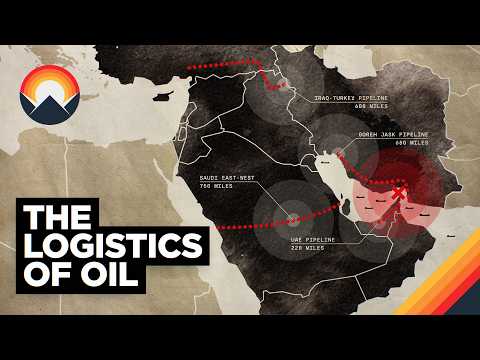
Iran survived US sanctions through two mechanisms that read like a thriller novel: a secret cryptocurrency laundering network funneling billions through the world's largest crypto exchange, and a ghost armada of oil tankers selling crude to China in plain sight. Despite maximum pressure — sanctions, blockades, and a 12-day military conflict in 2025 — the Ayatollah's regime not only stayed standing but walked away from a ceasefire agreement that many analysts are calling a US capitulation. Here's exactly how they did it.
How Did Iran Survive Maximum Pressure Sanctions?
Washington's strategy was straightforward: strangle Iran's economy until the regime collapsed or surrendered. Treasury Secretary Scott Bessent repeated the mantra almost daily — maximum pressure was working, Iran was in economic chaos. The reality told a different story. Compared with other oil-exporting nations in the region, Iran was suffering the least. The regime kept paying salaries, funding the Revolutionary Guard, accelerating missile production, and ramping up drone manufacturing — even during active hostilities.
How was that possible? Two reasons, both stranger than fiction. The first is a covert financial engineering network that routed Iranian money through the global crypto market. The second literally floats on the high seas, 70 kilometers off the coast of Malaysia. Together, these two systems created a parallel financial universe that Washington's sanctions could not touch.
How Did Iran Move Billions Through Binance?
Binance, founded in 2017 by Changpeng Zhao (widely known as CZ), quickly became the world's largest cryptocurrency exchange — over 600 currencies, billions in daily trading volume, and crucially, for a long time, compliance controls that were nowhere near strong enough for its size. That made it an ideal backdoor for sanctioned regimes.
Iran exploited that backdoor systematically. The mechanism worked in layers. First, oil revenues entered through intermediaries — discrete banks and brokers in Dubai or Turkey. That money was then converted into crypto, primarily USDT, a US dollar-pegged stablecoin running on the Tron blockchain. Why a stablecoin? Because it behaves like a digital dollar: fast, cheap to transfer, and stable in value — a perfect substitute for the dollar-based banking system Iran was locked out of.
Those funds then passed through international platforms like Binance, blending invisibly among millions of legitimate transactions. From there, they flowed into Iranian cryptocurrency platforms — most notably Nobitex, Iran's largest domestic crypto exchange — where they were converted into rials to pay salaries, fund regime-affiliated companies, or purchase supplies. Entire procurement chains — spare parts, ammunition components, smuggling networks — were paid without a single transaction ever touching a Western bank.
According to blockchain intelligence firm TRM Labs, one network alone — two sister platforms called Zsex and Zed Zion — moved approximately $1 billion in stablecoins since 2023, the majority linked to the Revolutionary Guard. And that, investigators stress, is just a visible sliver of a much larger operation.
Who Is Babak Zanjani, Iran's Secret Financier?
Every back door needs someone who knows how to open it. Enter Babak Zanjani — a man who started out selling sheepskins and became one of Iran's wealthiest individuals, a self-described "economic soldier" of the Basij, the Revolutionary Guard's volunteer militia. He flaunted Rolexes, luxury cars, and a private jet on social media while quietly moving billions for the Iranian government through shadowy banking networks.
By 2013, he got too greedy. Iranian authorities arrested him for embezzling more than $2 billion of the regime's own money. He was sentenced to death — a sentence that was never carried out. In 2024, he was quietly released. And almost immediately, he went back to work, this time in crypto rather than conventional banking.
Through a trading platform called Zsex — registered at an office in central London but functioning as a hub for Revolutionary Guard finances — Zanjani built a sprawling web of seemingly independent accounts: family members, intermediaries in Dubai, frontmen across multiple jurisdictions. To a casual observer, it looked like scattered individual traders. To Binance's own internal investigators, the digital footprints told a very different story: a single coordinated operation masquerading as many.
Binance's response? According to reports, the company fired the staff who flagged the suspicious activity, dismantled the investigation, and suspended the investigators. The operation continued.
Why Did Trump Pardon Binance Founder CZ?
In 2023, US federal prosecutors caught up with Binance. The company was fined a record $4.3 billion and CZ personally pleaded guilty to money laundering charges, serving four months in prison. Case closed — except it wasn't.
In October 2025, President Trump pardoned CZ. The timing raised immediate questions. The Trump family operates its own crypto venture, World Liberty Financial, which launched a stablecoin called USD1. According to US press reports, a team of more than a dozen Binance engineers helped build the technical infrastructure for that coin. Shortly after, a state-owned Abu Dhabi fund invested $2 billion in Binance — paid not in dollars, but specifically in USD1. That single transaction vaulted a Trump-family-linked cryptocurrency into the ranks of the world's largest stablecoins. Today, Binance holds nearly 90% of all USD1 in existence.
In return, the man convicted of enabling Iran's financial lifeline received a presidential pardon, and his firm's compliance obligations quietly relaxed. Whether this was deliberate coordination or a collision of separate interests, the outcome was the same: the highway that Iran used to move its money remained open for business.
What Is Iran's Shadow Fleet and How Does It Work?
Crypto solved the payment problem. The shadow fleet solved the oil-selling problem. Iran's ghost armada is, by most assessments, the most sophisticated sanction-evasion shipping operation in history — even more audacious than Russia's equivalent.
The fleet consists of hundreds of aging oil tankers bought secondhand, registered under flags of convenience in countries like Sierra Leone, and owned through labyrinthine shell companies in Chinese cities or Dubai. They sail with their transponders switched off, disappearing from maritime tracking systems for weeks at a time. Many carry no insurance. Their true ownership is nearly impossible to trace.
The key operation happens 70 kilometers off Malaysia's coastline, in a 500-square-mile stretch of calm international water known as the Eastern Outer Port Limits. Here, Iranian tankers quietly pull alongside cleaner vessels. Giant fenders are deployed between the hulls. The ships are roped together at roughly three meters apart. A massive hose is connected and Iranian crude — sometimes more than a million barrels at a time — is pumped from one ship to the other over the course of one to several days.
The Iranian vessel turns back toward home. The receiving ship continues to port with falsified certificates of origin declaring the oil to be Malaysian blend or Omani crude. China then imports it without recording a single barrel as Iranian. The numbers expose the scale of the fiction: in just the first four months of 2025, China reported importing 126 million barrels from Malaysia and 102 million from Indonesia — figures that exceed what both countries are physically capable of producing.
How Does Iran Secretly Sell Oil to China?
The US Treasury Department estimates that 90% of Iran's oil exports now travel on these ghost ships, generating more than $40 billion per year for the regime. Throughout the 2025 conflict — including during the US naval blockade — that revenue kept flowing, because there is typically a gap of more than three months between oil leaving Iranian shores and payment arriving. The blockade started the clock, but it couldn't stop the checks already in the mail.
When the US sanctions a specific vessel, it doesn't stop operating. The ship changes its name, changes its flag, transfers ownership to a new shell company, and resumes operations within days. The case of the Sea Sky illustrates this perfectly: sanctioned by Washington in 2025 for transporting Iranian crude, its owners immediately re-flagged it from San Marino to Gabon, renamed it the Hansen, and sent it back to sea. Hundreds of ships in the fleet cycle through this process routinely.
Did the US Lose the Economic War With Iran?
The 60-day ceasefire agreed between Washington and Tehran after more than 100 days of conflict — with the Strait of Hormuz sealed — has been described by analysts, Israeli media, and even implicitly by Trump himself as a US capitulation. America won the military engagement decisively. But the economic and political war produced a different result.
Iran entered negotiations having successfully monetized its oil throughout the conflict, maintained its financial networks through crypto infrastructure, and kept its regime machinery fully funded. The United States gained nothing in the agreement it did not already hold before hostilities began, while conceding significant ground. The parallel drawn to the signing location — Versailles, site of Germany's post-WWI capitulation — was not accidental.
The lesson from this episode is uncomfortable but important: modern sanctions regimes, no matter how severe on paper, can be systematically dismantled by a combination of cryptocurrency infrastructure, shadow shipping networks, and willing intermediaries operating in the gray zones of global finance. Iran didn't beat the sanctions. It built a tunnel underneath them — and the tunnel had some very well-known contractors.