
Why Is California High-Speed Rail Taking So Long?
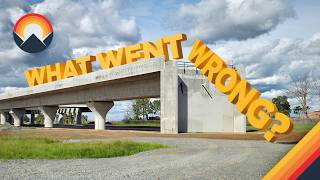
California's high-speed rail project is taking so long because it was fundamentally broken from the moment voters approved it in 2008. The plan presented on that ballot was, by nearly every expert measure today, a fantasy — built on cost estimates comparable to mature European rail systems, a construction timeline faster than anything ever achieved in similar terrain, and a fraction of the funding actually secured. Three decades after the legislature first formed the California Intercity High-Speed Rail Commission in 1993, the project is now seven times over budget, six years past its first planned completion date, and has not laid a single foot of track connecting Los Angeles to San Francisco. Construction is ongoing only in the Central Valley — the easiest and least populated segment of the entire route.
What Was Prop 1A and What Did Voters Actually Approve?
On the same 2008 ballot where Californians chose between Obama and McCain, they also voted on Proposition 1A — a measure to fund America's first true high-speed rail system. The promise was bold and specific: LA to San Francisco in 2 hours and 40 minutes, for an estimated $33 to $42 billion, with initial operations by 2020. Voters said yes, with 52.6% in support.
 02:14
Map showing the two competing mountain pass routes out of the LA basin — Tejon Pass vs. the Palmdale alignment
Watch at 02:14 →
02:14
Map showing the two competing mountain pass routes out of the LA basin — Tejon Pass vs. the Palmdale alignment
Watch at 02:14 →
That 2-hour-40-minute trip time wasn't just a campaign promise — it was written into California law. Missing that target is technically a violation of state law. This legally mandated benchmark would go on to haunt nearly every routing decision that followed, forcing planners to optimize for speed even when it conflicted with cost, practicality, or common sense.
What Went Wrong With California High-Speed Rail?
The problems with California high-speed rail didn't emerge during construction — they were baked into the planning process itself. From the very beginning, the project consistently chose ambition over pragmatism: targeting some of the fastest operating speeds of any rail line in the world, committing to serve every major population center along the route, and insisting on running directly through dense urban downtowns rather than terminating on their outskirts.
Each of these choices, individually defensible, compounded into a project of staggering complexity. The route passes through seismically active mountain ranges, dense urban cores, protected environmental land, and agricultural regions crisscrossed by existing infrastructure — each presenting its own legal, logistical, and financial maze. And at nearly every decision point, political considerations shaped technical outcomes.
Why Did California Pick the Palmdale Route Over Tejon Pass?
One of the most controversial decisions in the entire project was how the railroad would exit the Los Angeles basin. The two serious candidates were Tejon Pass — where Interstate 5 already crosses the mountains — and the Palmdale alignment, a longer detour to the northeast. Tejon Pass was the obvious frontrunner: existing road and power infrastructure, a more direct route, and a simpler environmental review process. Choosing anything else would add precious minutes to the trip time.
07:45
Diagram of how a Palmdale connection could link California HSR with Brightline West's Las Vegas line
Watch at 07:45 →
And yet the California High-Speed Rail Authority voted for Palmdale. Depending on the analysis, this adds between 3 and 12 minutes to the journey — a significant penalty given the legally binding 2:40 deadline. The decision has never stopped being controversial.
Was It Political Corruption?
The most damning explanation involves an alleged backroom deal. LA County Supervisor Michael Antonovich, whose district included Palmdale, believed a routing through his region would bring construction jobs and long-term economic development. Rail Authority board member Jerry Epstein — a real estate developer with major holdings in Marina del Rey under a county lease — allegedly struck a deal: support from Antonovich for his lease renewal in exchange for championing the Palmdale alignment. Critics call this example number one of how political cronyism derailed California HSR.
Were There Legitimate Reasons for Palmdale?
The corruption narrative is compelling, but it's also an oversimplification. The Palmdale route had real advantages. The Antelope Valley has room to build new housing at scale — something nearly impossible in the dense LA basin — potentially creating a low-cost commuter town that could ease the region's housing crisis. More forward-looking still, Palmdale puts California HSR in position to connect with Brightline West, the privately funded Vegas-to-LA line now under construction. With a relatively simple 50-mile desert link, Bay Area trains could run directly to Las Vegas, and Brightline West trains could reach LA Union Station. The two projects have even ensured compatible signaling systems and track standards to keep this option open.
The Tejon Ranch Problem
There's another layer to the Tejon Pass story that rarely gets told. The alignment studies for Tejon Pass never assumed the most efficient route through Tejon Ranch — a massive private landholding traded on the NYSE with a half-billion-dollar market cap. The company had long-planned housing developments in the area and was strongly opposed to a rail line disrupting them. Complicating matters further, Tejon Ranch had struck a deal with environmental groups to put hundreds of thousands of acres into conservation status. Taking the most direct route would have triggered years of litigation against a well-funded company and powerful environmental nonprofits. So planners always assumed expensive tunnels to route around the ranch — a decision independent analysts say inflated cost estimates by up to $6 billion, artificially narrowing the cost gap between Tejon and Palmdale.
14:20
Overview of Central Valley routing decisions, including the Hanford bypass saga and BNSF right-of-way
Watch at 14:20 →
Why Is Building High-Speed Rail in the US So Difficult?
High-speed rail requires something most American infrastructure doesn't have: a continuous, uninterrupted corridor of geometrically compatible land. Existing freight railroads follow routes optimized for slow, heavy trains — their curves are far too tight for trains targeting 220 mph. That means high-speed rail almost always has to carve entirely new paths through the landscape.
In California specifically, that landscape includes earthquake-prone mountain ranges, some of the most litigious private landowners in the country, protected historic sites, shallow water tables that make tunneling unpredictable, and urban cores that have spent a century building infrastructure in exactly the places a new railroad would need to go. Every obstacle triggered its own legal process, environmental review, or community negotiation — and those processes compound.
The Hanford bypass is a perfect example. The city didn't want the railroad running through it. Planners initially favored an eastern bypass, then studied a western one after federal regulators required it, then actually started preferring the western option — until they discovered the local water table was 10 to 15 feet deep instead of the usual 30 to 40, making a below-grade trench prohibitively expensive. They reversed course back to the eastern alignment. The entire episode cost two and a half years and triggered a 13-year lawsuit.
How Much Does California High-Speed Rail Actually Cost?
When voters approved the project in 2008, the estimated price tag was $33 to $42 billion. Today, that figure has ballooned to roughly seven times the original estimate. The Central Valley segment alone — the flattest, simplest, most rural portion of the route — has absorbed enormous sums while serving the fewest people. No credible current estimate exists for a full LA-to-SF system completion cost, and no completion date has been set.
Funding has largely dried up as costs have soared. The federal government is now openly hostile to the project. The gap between what was promised in 2008 and what is being delivered today has made it politically toxic, even among people who support high-speed rail in principle.
Will California High-Speed Rail Ever Be Completed?
The honest answer is: it's genuinely uncertain. The infrastructure being built in the Central Valley is real, significant, and represents genuine engineering progress. But it's a small fraction of what's needed, and the political and financial environment has turned sharply against the project.
The deeper tragedy is this: the perception of failure is largely being driven by the gap between what was promised in 2008 and what has been delivered — a gap that was set in motion during the planning phase, not the construction phase. But that nuance doesn't travel well. To a casual observer, California high-speed rail looks like a corrupt, incompetent failure of state governance. That perception is now the project's biggest obstacle, making new funding harder to secure than any mountain tunnel ever was.
If California high-speed rail is ever completed as designed, it will be one of the most impressive rail projects ever built anywhere in the world — a transformative piece of infrastructure connecting the nation's largest metropolitan areas at speeds that genuinely compete with air travel. But getting from here to there requires something the project has struggled to find from the very beginning: the political will to make hard, practical decisions and stick with them.