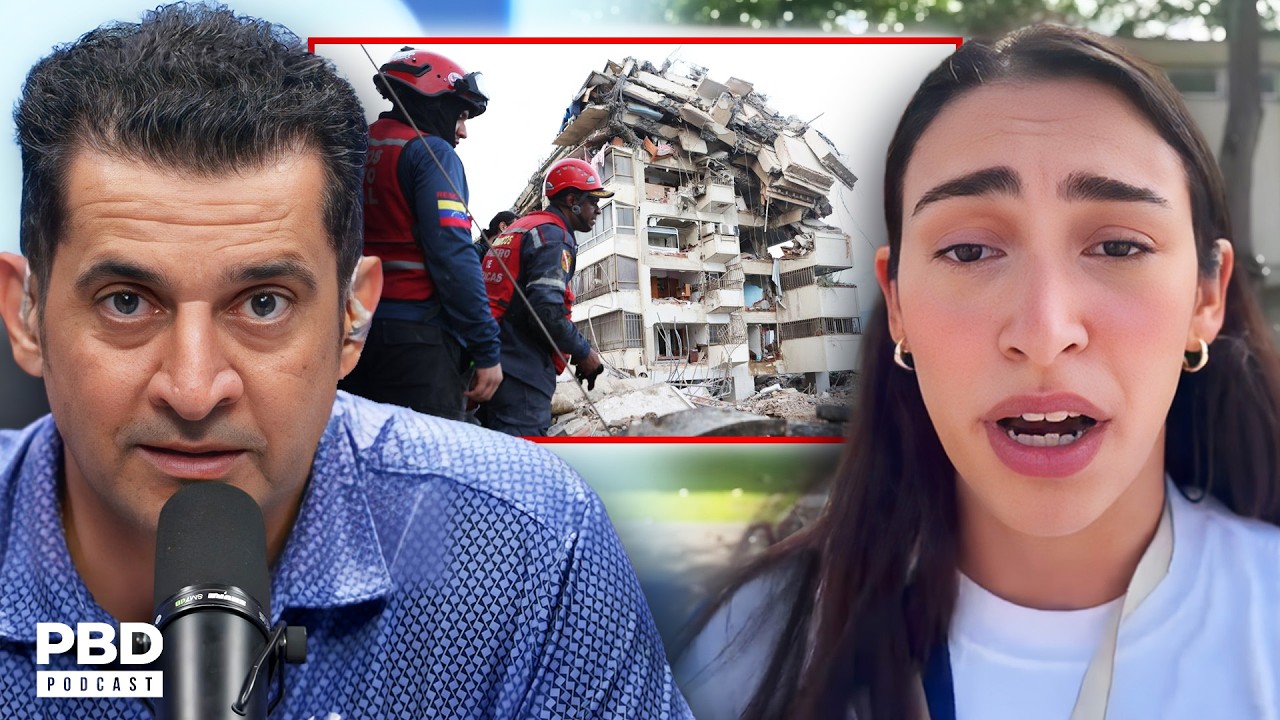

Back-to-back earthquakes measuring 7.4 and 7.6 struck Venezuela, killing hundreds, injuring thousands, and leaving tens of thousands missing. While official death tolls climbed past 589 with nearly 3,000 injured, those on the ground say the true scale of the disaster is far worse — because rescue teams have not yet reached the most devastated areas. Dr. Anda Padila, a physician working at a donation center inside Venezuela, joined a live broadcast to share what the news cameras are missing.
What Happened: Twin Earthquakes in Quick Succession
The earthquakes struck near Caracas, sending shockwaves across the country. Venezuela's National Assembly President Jorge Rodriguez warned that casualty figures would continue to rise. Acting President Deli Rodriguez declared a state of emergency. The United States, through Secretary of State Marco Rubio, announced the immediate deployment of search and rescue teams, medical resources, and humanitarian assistance.
For a country that had not experienced a major earthquake in over 50 years, the strikes were catastrophic — and the nation was not prepared.
 01:45
Airport security camera footage showing intense shaking during the earthquake, with dust from concrete pillars filling the air
Watch at 01:45 →
02:30
Interior footage of a building violently shaking during the quake, items falling from shelves
Watch at 02:30 →
01:45
Airport security camera footage showing intense shaking during the earthquake, with dust from concrete pillars filling the air
Watch at 01:45 →
02:30
Interior footage of a building violently shaking during the quake, items falling from shelves
Watch at 02:30 →
From the Ground: A Doctor's Account
Dr. Padila described the moment the earthquake hit: "It felt like the longest seven to ten seconds of my life. The building was shaking intensely. The lights went out. My mom was at the supermarket — everything was shaking there too." She said that after the shaking stopped, the full horror revealed itself through videos of buildings collapsing and desperate searches for loved ones.
"The worst part was searching for your co-workers, your friends, your family — trying to reach them," she said. "We were all desperate just to hear that our loved ones were okay."
The state of La Guaira was among the hardest hit. Dr. Padila reported that more than 100 buildings collapsed there alone. Friends of hers were rescued from rubble after being trapped for hours. Others did not survive. "I had a friend who sadly passed away yesterday. We were trying to get him a rescue team, but it wasn't possible. Everything moves slowly here. The rescue teams are slow, the capacity is surpassed."
The Rescue Crisis: Civilians Doing the Work
One of the most alarming details Dr. Padila shared was that in the most affected areas, professional rescue teams had still not arrived — even 72 hours after the earthquakes. Civilians were manually pulling debris off survivors with their bare hands.
"Friends of mine went down to La Guaira and said they could hear people screaming under the buildings, but there were no protection or rescue teams there yet," she said. "It's mostly civilians trying to do whatever they can to bring people out."
18:45
Video of rescuers and civilians trying to reach a survivor named Anthony trapped in collapsed rubble
Watch at 18:45 →
20:10
Footage of a high-rise apartment building completely collapsing during or immediately after the earthquake
Watch at 20:10 →
Dr. Padila warned that the official death toll was likely a significant undercount. "They haven't even gotten to the most affected places yet. It is not possible to know how many people have passed because they haven't reached them. If the international numbers are confirmed, the real figure is most likely to exceed a thousand — the devastation is that big."
Infrastructure and the Weight of Years of Neglect
When asked about the role of Venezuela's infrastructure in worsening the disaster, Dr. Padila was measured but direct. She pointed to systemic neglect — in building maintenance, basic services, water, and electricity — as a compounding factor that made the earthquake's impact far more deadly than it might otherwise have been.
"There is a lack of attention to the well-being of the population," she said. "All of this damage has been reflected in the maintenance of everything — buildings, basic services. That is the reality inside Venezuela."
How to Help
Dr. Padila, speaking from a donation center surrounded by clothing, surgical materials, and medicine, made a direct appeal: "If you can extend your hand to help us, it is deeply appreciated. We need it to be faster. People are living in the streets, in the cold, without food for 24 hours. Resources inside are running out."
She noted that GoFundMe campaigns and aid foundations are active, and that speed of delivery is the critical factor. Hospital staff are already reporting supply shortages.
Miami, home to one of the largest Venezuelan communities outside Latin America, was identified as a key hub for outreach and fundraising efforts. For those looking to contribute directly, connecting with verified Venezuelan community organizations or established humanitarian foundations working in La Guaira and Caracas remains the most effective path.
The situation inside Venezuela remains fluid and deeply under-reported. The earthquakes lasted only seconds. The recovery will take years — and it starts now.