What is happening in Venezuela after the earthquake is something the rest of the world is largely not seeing — and that may be by design. A massive earthquake struck Venezuela, and within days, the government began restricting access to outside journalists, aid workers, and even allied military teams. One content creator spent a full week flying from Florida to Chile, coordinating with retired special forces, and working through diplomatic channels — all in a failed attempt to get inside the country and show the world the truth. What he learned from Venezuelans on the ground paints a devastating picture.
What Is Happening in Venezuela After the Earthquake?
The earthquake that struck Venezuela is being described by those with inside contacts as one of the worst natural disasters to hit the Western Hemisphere in at least a decade. Infrastructure across the country was already fragile before the quake, and videos emerging from inside Venezuela show entire buildings simply crumbling to the ground.
 02:15
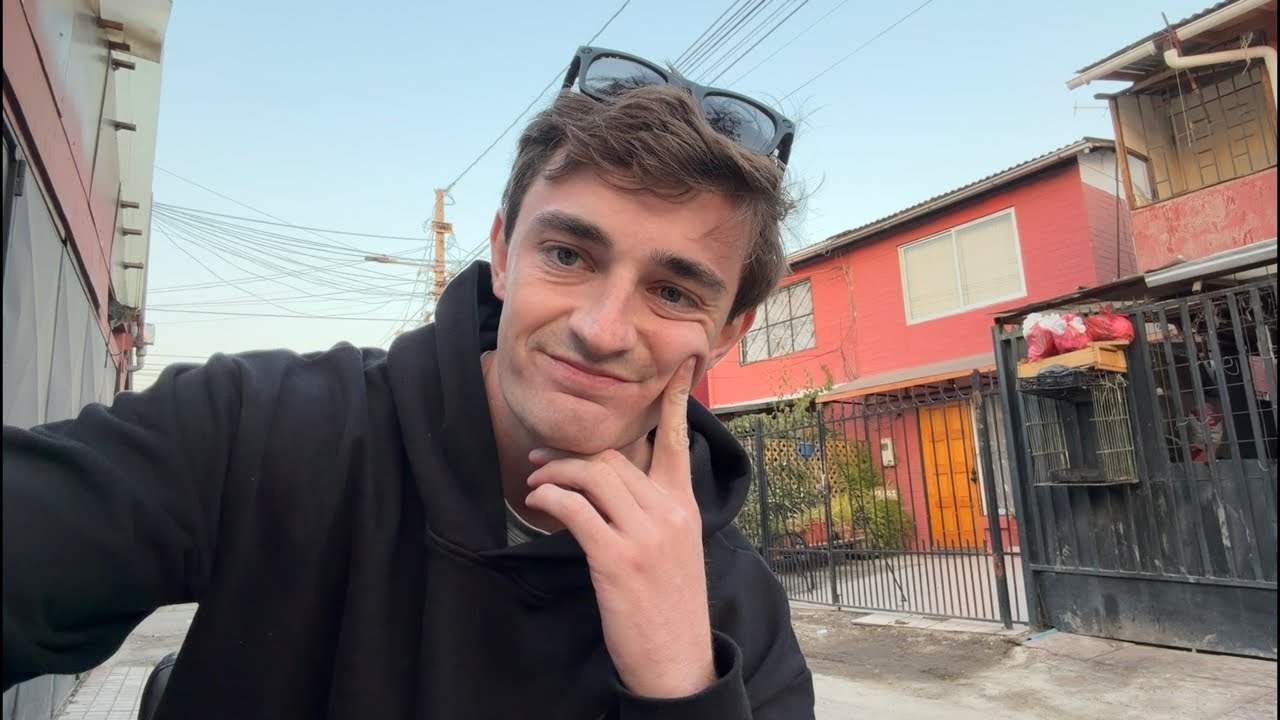
Creator explains the week-long failed attempt to enter Venezuela, coordinating with retired special forces in Florida
Watch at 02:15 →
02:15
Creator explains the week-long failed attempt to enter Venezuela, coordinating with retired special forces in Florida
Watch at 02:15 →
What makes this disaster uniquely difficult to track is the near-total information blackout. Venezuela has extremely limited social media penetration, which means firsthand accounts and footage have to physically leave the country before they can be posted online. As a result, the outside world is receiving almost no real-time information about the scale of the destruction.
Venezuelans living in Chile — many of whom still have direct family contact inside the country — describe conditions as absolutely horrific. One particularly grim detail: the smell coming from Caracas is reportedly overwhelming due to the number of unrecovered bodies left in the rubble. The situation on the ground is deteriorating rapidly, and very few outside observers have been able to verify anything independently.
Why Is Venezuela Blocking Journalists and Aid Workers?
In the immediate aftermath of the earthquake, Venezuela initially allowed some humanitarian aid workers and foreign teams to enter the country. But within the second week following the disaster, the government reversed course and began aggressively restricting access.
08:40
Venezuelan resident in Chile describes confirmed deaths, missing persons, and a church and school collapse hours earlier
Watch at 08:40 →
The widely held belief among those who attempted to enter — including a group of retired special forces operating under the approval of multiple allied governments — is that the Venezuelan government does not want the outside world to see what is actually happening inside the country. Venezuela's communist government has a long history of tightly controlling its international image, and a disaster of this scale would expose the full extent of the country's crumbling infrastructure and governance failures.
Even more alarming: Chilean teams that had previously received official documentation and government permission to operate inside Venezuela were, by the second week, being actively investigated and monitored by the Venezuelan military. If officially approved foreign teams with full paperwork were being scrutinized, anyone attempting to enter without that level of backing — particularly independent journalists — faced an almost certain risk of detention, similar to incidents previously reported in Cuba.
Attempts to enter through Chile were considered one of the more promising routes, given existing relationships between Chilean military units, Chilean firefighters (Cuerpo de Bomberos), and Venezuelan contacts. But even those channels went cold. The window had closed.
How Many People Died in the Venezuela Earthquake?
The confirmed death toll, based on the limited information available, stood at approximately 3,000 confirmed deaths at the time of reporting. However, the real number is believed to be dramatically higher.
18:30
Venezuelan mother Willry shares her message about living under communism vs. capitalism, filmed in Santiago, Chile
Watch at 18:30 →
Around 50,000 people are reported missing, and given the pace of rescue operations and the state of the country's emergency response infrastructure, most analysts fear a large proportion of those missing are already dead. Some early estimates suggested casualties could potentially reach into the hundreds of thousands, though those figures remain unverified due to the information blackout.
Just hours before this report was filed, additional collapses were confirmed — including a church and a school — adding to the already staggering toll. The lack of verified data is itself part of the story: without outside access, no one can say with confidence how bad it truly is.
Is Crime Spiking in Venezuela After the Earthquake?
Natural disasters in countries with weak institutions almost always trigger a secondary crisis of crime and exploitation — and Venezuela is no exception. In fact, it may be among the worst examples of this phenomenon in recent memory.
Intelligence gathered from contacts inside Venezuela indicates that gangs and criminal networks moved quickly to exploit the chaos. Human trafficking, already a severe problem in Venezuela before the earthquake, has reportedly worsened significantly in the aftermath. With law enforcement overwhelmed and entire neighborhoods reduced to rubble, criminal organizations have effectively expanded their operations.
One particularly disturbing account involved a man who had reportedly helped rescue over 2,000 survivors from the rubble. Rather than being celebrated, he is now reportedly being tortured — a signal of just how lawless and dangerous conditions have become for anyone operating independently inside the country.
Why Do So Many Venezuelans Flee to Chile?
Chile has become one of the primary destinations for Venezuelans fleeing the collapse of their home country. The Venezuelan diaspora in Santiago is large and well-established, and many have built new lives there over the past several years.
The connection runs deep. Venezuelans in Chile provided some of the most important early education for outside observers trying to understand the migrant crisis. Hearing firsthand accounts from people who watched a once-prosperous country collapse under socialist and communist governance — and who then had to walk thousands of miles to reach safety — shaped a generation of independent journalism on the topic.
For many Venezuelans in Chile, the earthquake has reignited contact with family members they haven't been able to safely communicate with in years. The reports coming back through those family channels are what's driving the most credible ground-level accounts of what's happening inside Venezuela right now.
What Do Venezuelans Who Lived Under Communism Say About It?
With communism and socialism gaining renewed interest in political discourse inside the United States, the perspective of people who actually lived through it carries unusual weight.
Venezuelans who fled the country describe a system that promised equality but delivered neither freedom nor prosperity. The pattern they identify is consistent: centralized control eliminates private enterprise, entrepreneurs stop investing, and the economy hollows out. Cuba is frequently cited alongside Venezuela as a parallel example — different countries, same trajectory.
The message from those who lived it is straightforward: every country that has implemented communism or socialism has followed the same path. The leaders who champion it for the people inevitably practice capitalism for themselves, while ordinary citizens lose the ability to build, invest, or escape.
For Venezuelans who rebuilt their lives in Chile, the concern about similar rhetoric gaining traction in the United States is genuine and personal. They've seen this movie before. They know how it ends.
The Bigger Picture: A Disaster the World Isn't Watching
The Venezuela earthquake may go down as one of the most underreported humanitarian disasters in recent history — not because journalists aren't trying to cover it, but because a government with something to hide has successfully blocked access at every level.
From Florida to Santiago, every route in was eventually closed. Special forces teams were turned away. Officially sanctioned foreign aid workers were put under military surveillance. The smell of the dead is reportedly drifting through Caracas. And the world largely has no idea.
The effort to get inside Venezuela failed. But the story itself — of a government blocking its own citizens' suffering from view — may ultimately be more revealing than any footage that could have been captured from inside.