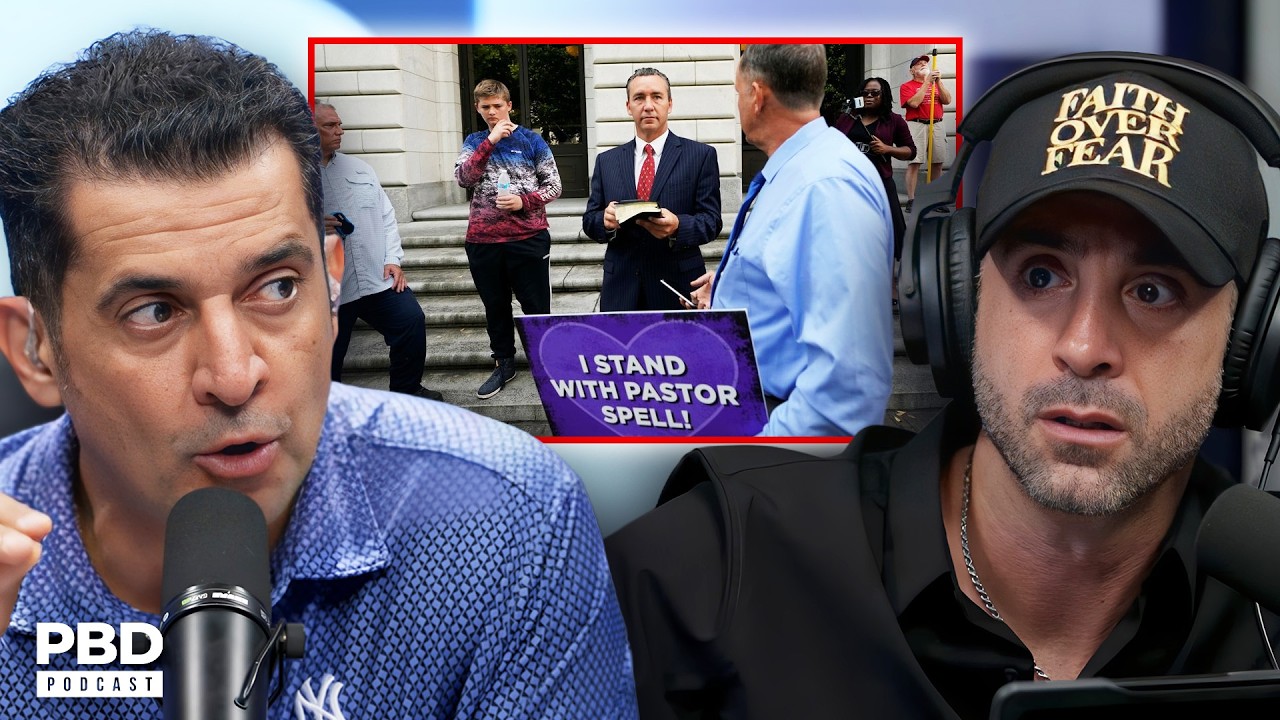

When a neighbor allegedly looked Pastor Tony Spell in the eye and said, "I'm going to rape your wife, rape your grandchildren, and kill your family — what are you going to do about it?" the 46-year-old Louisiana pastor gave him an answer. He walked across Hooper Road and delivered it in person. The incident, captured on video and now circulating widely, has sparked a debate about faith, family protection, and what a man is actually obligated to tolerate.
What Happened
According to Spell, the confrontation was not spontaneous. He and his congregation claim they have been targeted for six years by a family living across the street from the church. Members allege the harassment has included racial slurs directed at congregants. The specific trigger for the physical altercation was the neighbor's son allegedly making explicit threats against Spell's wife and grandchildren.
 00:30
Video footage of Pastor Spell crossing the street and confronting the young man before the fight
Watch at 00:30 →
00:30
Video footage of Pastor Spell crossing the street and confronting the young man before the fight
Watch at 00:30 →
The video shows Spell approaching the young man, who throws the first punch. What follows is a swift and decisive physical response from the pastor, after which the young man is left on the ground. Spell was subsequently arrested on a second-degree battery charge. He was released approximately two hours later — and walked straight to the front of his church to preach.
02:45
Pastor Spell addressing his congregation after being released from jail, referencing Luke scripture about laying hands on the sick
Watch at 02:45 →
"In my name shall they lay hands on the sick, and they shall recover," Spell told his congregation after his release. "Today I fulfilled the scripture. I laid hands on the sick."
The Legal and Moral Question
The neighbor's family disputed Spell's account, stating they do not believe their son made the threats described. However, commentators who reviewed the footage pointed out that video evidence places the young man at the scene and shows him engaging first.
Spell himself was unapologetic. "I have a duty and obligation to do what I did," he told reporters. "I could not allow someone to threaten my family. I was acting as a husband, a father, and a pastor."
The battery charge raises a legitimate legal question about the line between self-defense and preemptive physical confrontation. Spell did cross the street to initiate the encounter — though the young man, by the video account, swung first once the confrontation began.
The Faith Dimension
Some observers assumed that Spell's role as a pastor should have compelled a more passive response. The panel discussing the incident pushed back on that assumption directly, citing specific scripture.
In Luke 22:36, Jesus instructs his disciples: "If you don't have a sword, sell your cloak and buy one." The argument is that Christianity does not demand passive submission in the face of threats to innocent people — it demands forgiveness for personal wrongs, but not indifference to violence against one's family.
1 Timothy 5:8 is similarly direct: a man who does not provide for and protect his household has denied the faith. The theological case being made is that protection is not in conflict with pastoral identity — it is part of it.
A Broader Cultural Reaction
Much of the reaction to the video has centered less on the legal nuances and more on the cultural moment it represents. One commentator framed it in generational terms: in an earlier era, the argument goes, law enforcement and the broader community would have viewed explicit threats of rape and murder as the true provocation — and the physical response as proportionate. Today, that calculus has shifted in ways many find troubling.
The debate over free speech also surfaced. Threatening to rape and murder a man's family is not protected speech — it is criminal threatening. The fact that the young man's family responded by saying "we don't think he said that" rather than addressing the substance of the allegations struck several commentators as itself revealing.
What the incident has clearly done is resonate. The story of a grandfather who absorbed six years of alleged harassment, heard the worst possible threat made against his family, and decided that was the line — has found a broad and sympathetic audience. Whether the courts treat it the same way remains to be seen.
The Takeaway
Pastor Tony Spell did not go looking for a fight. By his account and the account of his congregation, a fight was brought to him — loudly, explicitly, and repeatedly over six years. When it finally became impossible to ignore, he handled it himself, accepted the legal consequences, and preached about it two hours later.
People can debate the tactics. The underlying principle — that a man has an obligation to protect his family — is harder to argue with.