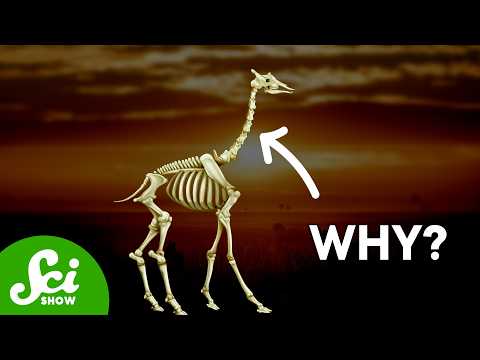
The curse of King Tut's tomb has fascinated people for over a century — but what actually caused all those mysterious deaths? The answer likely isn't supernatural at all. Scientists who examined the tomb found a fungus called Aspergillus flavus, a known respiratory threat that could plausibly explain many of the so-called curse deaths. And in a twist no one saw coming, that same deadly fungus may now be on its way to saving lives as a potential leukemia treatment.
What Actually Caused King Tut's Curse?
When archaeologists excavated Tutankhamun's tomb in the 1920s, the story that captured the world wasn't just about ancient treasure — it was about what happened to the people who found it. The financial backer of the expedition, Lord Carnarvon, died suddenly in 1923, just one year after the tomb was opened. Then more expedition members started dying. By 1930, ten people associated with the excavation had met untimely ends.
 01:15
A breakdown of the key deaths attributed to King Tut's curse between 1922 and 1930
Watch at 01:15 →
01:15
A breakdown of the key deaths attributed to King Tut's curse between 1922 and 1930
Watch at 01:15 →
The deaths fueled wild speculation, including endorsement from none other than Sir Arthur Conan Doyle — the creator of Sherlock Holmes — who publicly supported the supernatural curse theory. The narrative wrote itself: random Europeans disturbing an ancient pharaoh's resting place, struck down by divine retribution. That's basically a blockbuster movie plot.
But scientists who later examined the tomb found something far more grounded: spores of Aspergillus flavus, a fungus with the potential to cause serious illness, especially in people who inhale a large quantity of it. The leading scientific hypothesis is that many of the alleged curse deaths were actually cases of aspergillosis — a lung disease caused by breathing in Aspergillus spores — that went undiagnosed because medicine at the time simply wasn't looking for it.
How Many People Died After Opening King Tut's Tomb?
By 1930, at least ten people connected to the excavation had died. The deaths ranged from Lord Carnarvon's infected mosquito bite to a suicide, a smothering, and a pneumonia death from an unrelated American investor who had simply visited the tomb. The timeline was also conveniently loose — one excavator was cited as a curse victim after being injured in a car crash fifty years later, in 1970. One of the lead archaeologist's friends even received a mummified hand as a paperweight gift, and his house subsequently burned down.
04:30
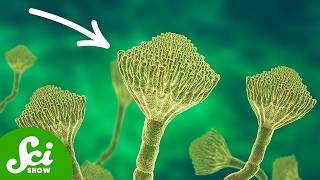
Aspergillus flavus spores as seen under a microscope — the leading suspect behind the curse deaths
Watch at 04:30 →
Naturally, the curse narrative didn't require strict causality. Confirmation bias did a lot of heavy lifting. Still, the deaths that genuinely looked like pneumonia — which several of them did — could very plausibly have been undiagnosed aspergillosis. At the time of the excavation in the 1920s, aspergillosis as a recognized disease didn't receive serious medical attention until the 1980s. Doctors simply weren't looking for it.
What Is Aspergillus and How Dangerous Is It?
Aspergillus is a genus of fungus that is genuinely everywhere. You breathe in Aspergillus spores on a daily basis and almost certainly experience zero consequences. For most healthy people, the immune system handles it without breaking a sweat.
The problem arises when you're immunocompromised or exposed to a very high concentration of spores all at once — like, say, when you crack open an ancient sealed tomb and breathe in everything that's been sitting undisturbed for thousands of years. In those conditions, Aspergillus can take hold in the lungs and cause aspergillosis, which can present a lot like severe pneumonia. Without a proper diagnosis, it would have been very difficult to treat — especially in the 1920s.
It's worth noting that this explanation is still circumstantial. No one has been able to directly sample Aspergillus from the bodies of the people who died. The fungus was found at the scene, had plausible means of causing harm, but there's no smoking gun. The lead archaeologist himself lived well into his 60s — so neither the curse nor the fungus theory is a complete explanation for everything that happened.
08:45
Diagram showing how RiPPs are synthesized and modified inside a fungal cell
Watch at 08:45 →
Did Another Royal Tomb Curse Kill Scientists in 1973?
King Tut isn't the only monarch whose tomb came with a body count. In 1973, a group of scientists opened the tomb of Polish King Casimir IV, who died in 1492. All twelve scientists were healthy going in. Ten of them died shortly afterward. In total, as many as fifteen people who worked on-site or handled artifacts from the tomb fell sick and died.
When a microbiologist examined the tomb years later? Aspergillus flavus again. Same fungus, different century, different country, eerily similar outcome. While the evidence still falls short of definitive proof, the pattern is hard to ignore. Two royal tombs, two clusters of mysterious deaths, one fungus present at both scenes.
What Are RiPPs and Why Do Scientists Love Them?
Here's where the story pivots from creepy history to cutting-edge science. Researchers at the University of Pennsylvania became interested in a class of molecules that Aspergillus flavus is known to produce, called RiPPs — short for ribosomally synthesized and post-translationally modified peptides. That name is a mouthful, but what it means is actually fascinating.
RiPPs start out like any ordinary protein: ribosomes in the cell string together amino acids in the usual way. But then something unusual happens. Once the peptide pops out of the ribosome, a separate enzyme takes over and heavily modifies it — adding complex chemical structures that give RiPPs a wildly diverse range of shapes and functions. That diversity is exactly what makes them so interesting to drug researchers. Among their many known functions are several that interact directly with human biology, which means they're a promising hunting ground for new medicines.
Fungi in general are considered treasure troves of potentially useful compounds. Nature has already given us drugs like Ozempic that were inspired by natural products, and with antibiotic resistance becoming a growing global crisis, finding new bioactive molecules in nature is more urgent than ever.
What Are Asperigimycins and What Can They Do?
The UPenn researchers scanned the genomes of twelve different Aspergillus species looking for RiPP-producing genes. Aspergillus flavus stood out as one of the most promising candidates. Digging deeper, the team identified four genes likely to produce RiPPs, and the resulting molecules were named asperigimycins, after the fungus they came from.
The original goal was to find new antimicrobials — weapons against antibiotic-resistant bacteria. The asperigimycins didn't pan out on that front. But what they found instead was arguably more exciting: anti-leukemia activity.
- Two of the four asperigimycins stopped leukemia cells from growing when mixed directly with leukemia cell lines in the lab.
- A third showed anti-leukemia activity when paired with a fatty molecule — and its effectiveness was comparable to FDA-approved chemotherapy drugs.
- The fatty component was necessary to protect the RiPP long enough to reach the right part of the cell and do its job.
Perhaps most encouraging: the asperigimycins appeared to be specific to leukemia. When tested against other cancer cell types, nothing happened. In cancer treatment, specificity is a major feature, not a bug. You want a drug that targets what you're aiming at and leaves everything else alone — that's the holy grail of chemotherapy development.
Could the Mummy's Curse Fungus Actually Cure Cancer?
It's important to keep expectations calibrated here. This research is at a very early stage. The asperigimycins haven't been tested in animals yet, let alone humans. Their safety profile, optimal delivery mechanism, and long-term effectiveness all need extensive further study before they could ever reach a real patient.
The researchers believe the asperigimycins likely work by preventing leukemia cells from dividing, though the exact mechanism is still being investigated. And the scientists suspect there are likely even more undiscovered RiPPs waiting to be found in Aspergillus flavus and related species.
Connecting all of this back to King Tut was almost certainly a brilliant move by the university's media team — and honestly, credit where it's due. But the underlying science is genuinely compelling on its own merits. A fungus that may have killed explorers who disturbed ancient tombs is now being studied as a potential weapon against one of the most difficult cancers to treat. The world is complicated, and sometimes the very same thing can be both the villain and the hero of the story.
We're excited to see where it goes.