So what actually makes a sunburn worse? The honest answer is: a lot more than most people realize. It's not just about forgetting sunscreen on a hot day. The conditions that lead to the worst sunburn of your life include surprisingly common things — like the painkiller you took for a headache, the shade tree you're sitting under, or the altitude of your favorite hiking trail. Researchers have been putting popular sunburn myths to the test, and the results are genuinely eye-opening. Here's what the science says about the conditions that dramatically increase your UV exposure and skin damage risk.
Can Ibuprofen or Aspirin Make Sunburn Worse?
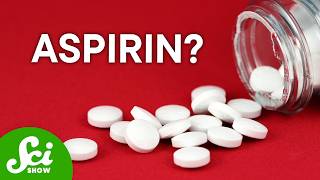
This one catches almost everyone off guard. NSAIDs — Nonsteroidal Anti-Inflammatory Drugs like ibuprofen and aspirin — are medicine cabinet staples. You reach for them when you have a headache, a sore back, or a fever. But many experts warn that taking NSAIDs before sun exposure can actually increase your photosensitivity, effectively lowering the threshold of UV your skin can handle before it starts to react.
 01:15
Diagram showing how NSAIDs increase photosensitivity before sun exposure vs. reducing inflammation after
Watch at 01:15 →
01:15
Diagram showing how NSAIDs increase photosensitivity before sun exposure vs. reducing inflammation after
Watch at 01:15 →
Some drugs are activated by UV light, triggering the creation of highly reactive oxygen molecules inside your body that can damage your skin — essentially mimicking or amplifying a sunburn response. So if you pop an ibuprofen before heading to the beach, you may be setting yourself up for a worse burn than you'd otherwise get.
Here's where it gets interesting, though: the timing flips the whole equation. Taking NSAIDs after sun exposure can actually help reduce how severe a sunburn becomes. Your standard sunburn is, at its core, an inflammatory response. Your skin absorbs UV rays, your immune system kicks in, and inflammation follows. That's exactly the kind of thing NSAIDs are designed to fight. So post-sun ibuprofen or aspirin may dial back the damage.
And there's a bonus finding for aspirin specifically: research suggests it can help fight melanoma. Aspirin reacts with a chemical found in cancerous melanoma cells to produce reactive oxygen that inhibits those cells from spreading. So NSAIDs can be pro-sunburn before you go outside and anti-sunburn (and anti-melanoma) after. Make up your mind, ibuprofen.
03:40
Illustration of UV penetration at different water depths in clear vs. murky water
Watch at 03:40 →
Does Being in Water Protect You From Sunburn?
Water feels like a shield. You're cooled off, submerged, and somehow you feel untouchable by the sun. The problem? Water is transparent — and that means it's also largely UV-transparent. It is not an impenetrable forcefield against solar radiation.
That said, depth does matter. The deeper you go, the more protection you get. In murky, turbid water, you might be nearly fully protected at around 2.6 meters. In crystal-clear water, you'd need to be around 9 meters deep to get that same level of protection. Great news for scuba divers, less helpful for everyone else.
For the average beach-goer splashing around waist-deep, water can actually make things worse. Shallow, choppy water reflects UV rays back up at you, increasing your total exposure. So you're not just catching rays from above — you're catching them bouncing up from below too. The takeaway? If you're not diving deep into murky water, wear sunscreen. Full stop.
05:10
Comparison of shade coverage from banyan tree vs. Alexandra Palm and their UV protection levels
Watch at 05:10 →
Does Shade Actually Protect You From Sunburn?
Shade feels like safety. But researchers have found that it offers far less UV protection than most people assume — and the false sense of security it creates might actually increase your sunburn risk.
Not all shade is created equal. A study investigated which trees provide the best protection and found significant variation. In Queensland, Australia, the Ficus benghalensis banyan tree — with its wide, horizontal canopy — offered the best coverage. The Alexandra Palm, sparse and vertical, offered the worst. But even the champion banyan tree only covered about 67% of the sky directly overhead. That still leaves a substantial portion of UV getting through.
Cloud cover is similarly unreliable. The World Health Organization notes that thin clouds can actually scatter sunlight, potentially making UV exposure more intense than on a cloudless day. Thick cloud cover offers some shelter, but it's never a guarantee. You can get a serious sunburn on an overcast day, and many people do — precisely because they didn't think they needed sunscreen.
Even structural shade like building overhangs or fabric sails depends heavily on how much open sky surrounds them and how reflective nearby surfaces are. Which brings us to the next factor.
08:55
Map showing Earth's elliptical orbit and why Australia is closer to the sun during its summer
Watch at 08:55 →
How Much Do Reflective Surfaces Increase UV Exposure?
Standing next to a shiny steel building might seem fine — especially if you're in the shade. But reflective surfaces bounce UV rays in every direction, including right at you. On average, being near highly reflective metallic surfaces can increase your UV exposure by around 20%.
Not all surfaces are equally risky. Research found that pale green metal surfaces reflected less UV than the silver, mirrored building materials common in modern city architecture — at least during most hours of the day. Around noon, the sun is so intense that the color difference barely matters.
Sand and concrete are also more reflective than people expect, adding roughly 15% more UV exposure when you're standing on a beach. And snow? Snow can reflect up to 90% of UV radiation. That's why skiers sometimes come home with a brutal goggle-shaped sunburn — the sun is hitting them from above and bouncing back up from the snow below. Cold weather does not mean safe weather when it comes to UV.
What Time of Day Is UV Radiation the Strongest?
The angle of the sun determines how much atmosphere UV rays have to travel through before they reach you. Around noon, the sun is nearly directly overhead, meaning those rays take the shortest, most direct path through the atmosphere. Less atmosphere means less UV absorption — and more reaching your skin.
In the early morning or late afternoon, the sun sits at a lower angle, and its rays travel a much longer path through the atmosphere. More atmosphere means more UV gets filtered out before it hits you. The practical takeaway: UV exposure is highest between roughly 10 AM and 4 PM, and being outside around noon is when you're most vulnerable. This is when sunscreen, protective clothing, and shade matter the most.
Does High Altitude Make Sunburn More Likely?
The short answer is yes — significantly. At higher altitudes, there's simply less atmosphere between you and the sun. Fewer air molecules means less UV radiation gets scattered or absorbed before it reaches your skin. For every 1,000 meters you climb in elevation, UV intensity increases by approximately 10%.
High-altitude environments also tend to have lower ozone concentrations, which matters because ozone is one of the atmosphere's key UV filters. So a mountain hike hits you with a double penalty: more UV coming in, less atmosphere and ozone to stop it. Add in dehydration and thinner air making everything feel harder, and the mountains demand serious sun protection that many hikers overlook.
Why Does Australia Have the Highest Skin Cancer Rates?
You might assume the worst place for UV exposure would be right on the equator, where the sun is most directly overhead. And while proximity to the equator does increase UV risk — because rays travel a shorter distance through the atmosphere — the highest melanoma rates in the world actually belong to Australia and New Zealand.
A common misconception is that Australia sits under a massive ozone hole. That's not quite accurate. The ozone layer is historically thinner over the Southern Hemisphere during summer compared to the Northern Hemisphere, but there isn't a dramatic hole sitting over populated parts of Australia. The real ozone hole forms over Antarctica seasonally, not over Sydney.
What does make a significant difference is Earth's elliptical orbit. When the Southern Hemisphere tilts toward the sun during its summer, Australia is actually about 5 million kilometers closer to the sun than the Northern Hemisphere is during its summer. Some researchers estimate this makes UV intensity up to 30% stronger than at comparable Northern latitudes in summer.
Add to that Australia and New Zealand's relatively low air pollution levels — genuinely good news for public health — but fewer particles in the atmosphere means less natural UV filtration. Strong sun, close orbit, thin ozone, clean air: it's a perfect storm for skin cancer risk.
What's the Absolute Worst Scenario for a Sunburn?
If you want to construct the most punishing sunburn conditions imaginable, here's your recipe: go to Australia in the summer, around noon, on top of a mountain, waist-deep in clear water, surrounded by shiny reflective buildings. Oh, and maybe take an ibuprofen beforehand for good measure.
In all seriousness, sunburn risk is cumulative and context-dependent in ways that genuinely surprise people. The shade isn't as safe as it looks. The water isn't a shield. The cold doesn't protect you. And common medications can tip the scales in either direction. The consistent takeaway from all of this research is straightforward: wear sunscreen, reapply it, and don't rely on environmental factors to do the job for you.