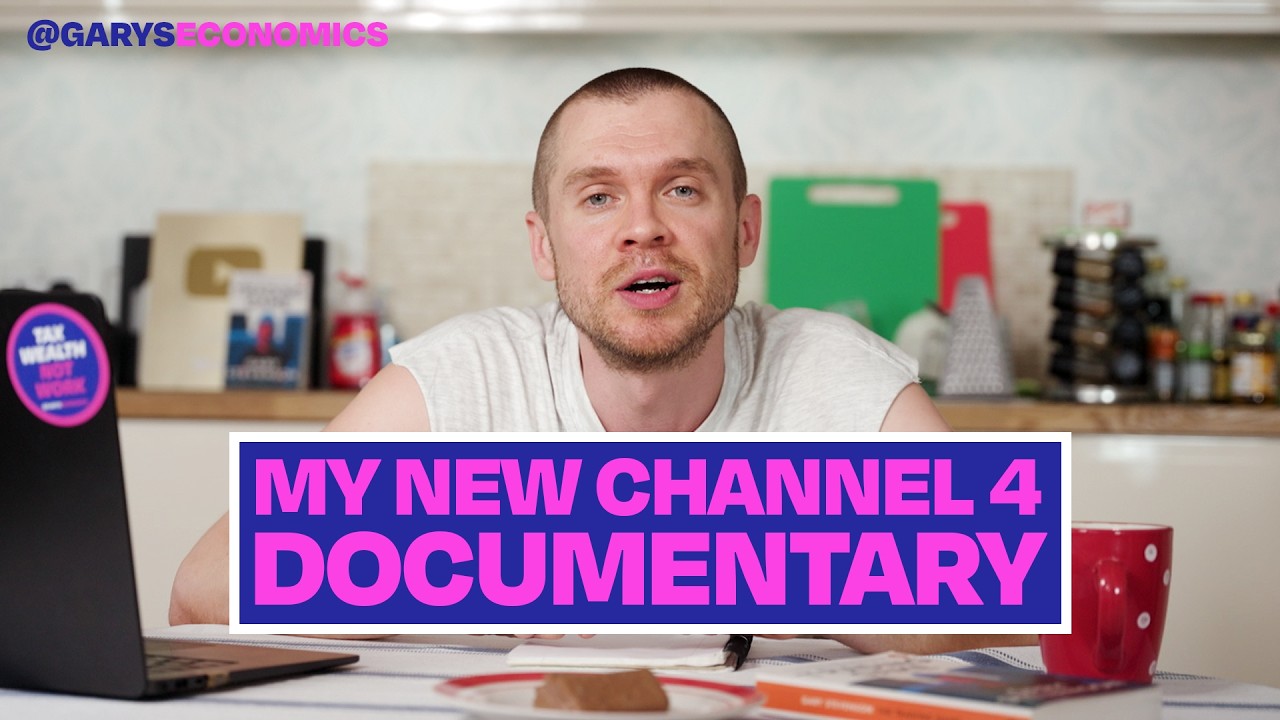
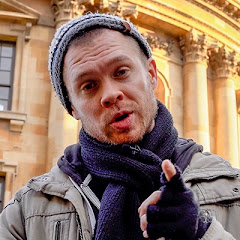
Gary Stevenson's Channel 4 documentary, How to Get Filthy Rich, is a 90-minute film about wealth inequality in the UK and the urgent case for taxing the super rich. Released on Channel 4 on Wednesday 8th July at 9pm, the documentary sees Stevenson — a former Citibank trader turned inequality campaigner — travel across the country interviewing billionaires, NHS doctors, ordinary workers, and politicians to answer one core question: why aren't we taxing the rich more?
What Is Gary Stevenson's Channel 4 Documentary About?
The documentary is framed around Stevenson's central economic argument: wealth is being rapidly transferred from ordinary people to the super rich, and without a serious wealth tax, the UK government has only three options — raise taxes on ordinary workers, cut the welfare state further, or some grim combination of both.
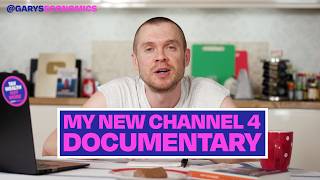 0:32
Trailer clip: Gary Stevenson proposes a 2% wealth tax and is met with 'absolute populist claptrap'
Watch at 0:32 →
0:32
Trailer clip: Gary Stevenson proposes a 2% wealth tax and is met with 'absolute populist claptrap'
Watch at 0:32 →
Stevenson travels the length of the country, speaking to a wide range of voices. He interviews people who can't afford homes, communities watching vital public services disappear, and — in a notable coup — one actual billionaire. He also spends significant time with people who are aggressively opposed to taxing the wealthy, giving the film a genuine debate-style tension rather than a one-sided polemic.
The documentary includes an emotional interview with NHS doctor Andrew Myerson, who — shivering in the sleet at a tax rally — reads out a list of everything that has been shut down in communities across the UK: health centres, youth clubs, football pitches, police stations. It's one of the most striking moments in the film, and it crystallises why Stevenson believes this is not an abstract economic debate but a life-and-death issue for millions of people.
Should the UK Tax the Super Rich More?
This is the question at the heart of the entire documentary, and Stevenson's answer is an unambiguous yes. His proposal is a 2% annual tax on wealth above £10 million. In the trailer, this is met with the response "absolute populist claptrap" — which tells you exactly the kind of pushback the film confronts head-on.
12:40
NHS doctor Andrew Myerson reads a list of closed community services while shivering in the sleet
Watch at 12:40 →
Stevenson's core argument is straightforward: working people in the UK pay effective tax rates of around 50% when you factor in income tax and National Insurance, while billionaires often pay 20%, 10%, or even 0% on their wealth. That gap is not a natural economic outcome — it's a political choice. And it's a choice that is making inequality worse every single year.
The documentary argues that every incoming government — Labour, Conservative, or otherwise — eventually gets forced by this structural imbalance into raising taxes on ordinary people or slashing public services. Stevenson points to both Rishi Sunak and Keir Starmer as recent examples of leaders who entered office with reasonable approval ratings and quickly became unpopular because the broken economic model left them no good options. His argument is that the only way to break that cycle is to tax the super rich.
What Is a Wealth Tax and How Would It Work in the UK?
A wealth tax is an annual levy on the total value of a person's assets — property, investments, shares, cash — above a certain threshold, rather than a tax on income or spending. Stevenson's specific proposal targets wealth above £10 million at a rate of 2% per year.
Critics argue this is administratively complex, risks capital flight, and punishes asset-rich but cash-poor individuals. Supporters — including French economist Gabriel Zucman, who Stevenson recently interviewed on his YouTube channel — argue that the technology and international cooperation frameworks now exist to make it workable, and that the cost of not doing it is far higher in terms of social damage and falling living standards.
6:15
Patriotic Millionaires bus drives into central London calling for a super-rich tax
Watch at 6:15 →
Stevenson has been lobbying MPs directly in Parliament and working with groups like the Patriotic Millionaires — a lobbying organisation of wealthy individuals who actively support being taxed more — to keep the pressure on the new government.
Why Are UK Living Standards Falling?
The documentary doesn't just make an abstract moral case — it builds an economic one. Stevenson's argument is that wealth is being systematically extracted from the bottom and middle of the income distribution and accumulated at the very top. Because the super rich are not being taxed on that wealth, governments are perpetually underfunded. That forces cuts to the NHS, schools, local councils, youth services, policing, and every other public good that ordinary people depend on.
The result, as Stevenson sees it, is a doom loop: inequality rises, public services deteriorate, working people get squeezed further, and the rich get richer. Unless the government intervenes to tax that accumulated wealth, he argues, living standards will continue to fall regardless of who is in power.
This is why he frames the documentary not as a left-wing wish list but as an economic necessity. The three options are tax the rich, tax workers, or cut services. Pick two, or pick all three — but you can't avoid the choice.
What Does 'Tax Wealth Not Work' Actually Mean?
"Tax wealth not work" has become one of the most-repeated slogans in UK economic debate in 2024 and 2025, and Stevenson is largely responsible for driving it into the mainstream. The slogan captures a simple but powerful idea: the current tax system penalises people for earning a wage far more heavily than it penalises people for sitting on vast inherited or accumulated wealth.
A nurse, a teacher, or a delivery driver pays income tax and National Insurance from the moment they earn above the threshold. A billionaire whose net worth grows by tens of millions through rising asset prices may pay almost nothing on that gain. Stevenson argues that flipping this logic — reducing the burden on earned income while increasing it on unproductive accumulated wealth — would be both fairer and more economically productive.
The slogan has, in his words, "become bigger than this channel" — it's now regularly cited by politicians across the spectrum, even those who oppose a formal wealth tax.
How Was 'How to Get Filthy Rich' Made?
The documentary came about after Stevenson's book The Trading Game became a major bestseller and he was simultaneously approached by the BBC, ITV, and Channel 4. He and his agent chose Channel 4, who paired him with Mindhouse Productions — the company co-founded by Louis Theroux. Director Trevor Duxbury led the on-the-ground shoot alongside producer Ireen Carter.
Filming took place largely over winter, often in freezing conditions, and was emotionally gruelling. To get five minutes of usable footage from a contributor, Stevenson would often spend three to five hours with them — including many hours with people who were aggressively opposed to his views. He describes this as one of the most draining parts of the process.
The Louis Theroux influence is visible in the interview style: patient, generous, letting contributors speak at length and occasionally reveal more than they intended. Stevenson credits the Mindhouse team with teaching him how to be an interviewer rather than just an interviewee.
What Is Louis Theroux's Production Company Mindhouse?
Mindhouse Productions is the documentary company co-founded by Louis Theroux, one of the UK's most respected documentary makers. The company is known for nuanced, character-driven films that present complex subjects through personal encounters rather than talking-head lectures.
Their involvement in How to Get Filthy Rich gives the documentary a distinct texture — it is not a policy explainer but a journey, with Stevenson as a protagonist navigating a divided country. The Mindhouse approach of embedding with contributors for long periods before filming, and of building genuine on-screen relationships rather than adversarial gotcha moments, shapes the entire tone of the film.
How Can You Watch the Documentary?
- Channel 4 — First broadcast Wednesday 8th July at 9pm (UK)
- 4OD (Channel 4 on demand) — Available to stream online after broadcast
- YouTube (Gary's Economics channel) — Available from Sunday 12th July
Stevenson is asking viewers to watch, share, and — most importantly — use the documentary as a starting point for conversations with friends, family, and anyone who will listen. In his words: "Send it to your mum." The goal is to build enough public pressure that the incoming UK government has no political choice but to act on wealth inequality. Whether or not you agree with his conclusions, it's hard to argue with the urgency.