What Happened at the Unite the West March in London?
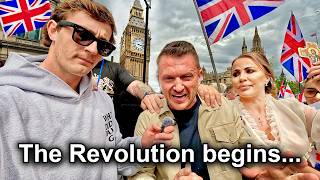
The Unite the West march in London drew what witnesses described as hundreds of thousands of protesters — potentially over a million — flooding the streets from Whitehall all the way to Parliament Square and Trafalgar Square. It is being called one of the largest marches in the history of the United Kingdom. Protesters came from all corners of Britain demanding answers on immigration policy, the grooming gangs scandal, the cost of living, and what many described as a government that has completely stopped listening to its own people. With Big Ben as the backdrop and over 4,000 police officers deployed, the march was anything but a small gathering of fringe voices.
 03:12
Aerial view of the march crowd stretching from Whitehall to Parliament Square
Watch at 03:12 →
03:12
Aerial view of the march crowd stretching from Whitehall to Parliament Square
Watch at 03:12 →
The atmosphere on the ground was charged but largely peaceful, with crowds chanting, waving flags, and holding signs that read everything from 'Restore Britain' to 'We Did Not Vote for Open Borders.' Grandparents, veterans, nurses, parents, and people of multiple ethnicities stood shoulder to shoulder. One man hoisted an effigy of Prime Minister Keir Starmer above the crowd. Another woman, a former NHS nursing assistant, described losing her job simply for sharing a government document about asylum seeker benefits on social media.
Why Are Hundreds of Thousands Marching Against Keir Starmer?
The grievances against Keir Starmer were loud, specific, and deeply personal for many who attended. Protesters argued that his government has consistently prioritized the needs of new arrivals over the needs of working British people. Common complaints included the inability of young Brits to afford housing, long NHS wait times, rising costs of living, and the rollout of policies — like digital ID — that were never part of Labour's election mandate.
One protester held a sign listing everything she said she didn't vote for: open borders, digital ID, higher taxes, two-tier policing, loss of free speech, and higher cost of living. Her message was simple — Starmer won a landslide and then immediately acted like he had no obligation to the people who put him there.
07:45
Former NHS nursing assistant explains why she was fired for sharing government data
Watch at 07:45 →
Perhaps most emotionally charged were the voices of ordinary citizens who felt criminalized for expressing concern. A pensioner described fearing for her grandchildren's future. A former healthcare worker described being fired for gross misconduct after sharing publicly available government data. A grandfather said he wants his granddaughter to one day recognize the England he was born in. These weren't extremists. They were people who felt completely unheard.
- Housing: Multiple protesters said their adult children cannot get onto the property ladder while asylum seekers are housed and supported.
- Healthcare: Former NHS workers spoke about deteriorating access and systemic pressure.
- Free speech: Several attendees described being silenced, fired, or investigated for sharing opinions that were entirely legal.
- Cost of living: Rising taxes and energy costs were cited repeatedly as burdens falling hardest on working-class Brits.
Why Is Keir Starmer Calling Protesters Far Right?
Before the march even began, Prime Minister Keir Starmer went on record calling the event a reminder of what Britain is 'up against in the battle of our values,' describing the organizers as 'convicted thugs and racists' who are 'peddling hatred and division.' The statement inflamed an already frustrated crowd.
Protesters on the ground were visibly angry at the label. One man in his sixties pointed to the crowd and asked, 'Can you see any far-right fascists and Nazis around here? I see grandparents. I see parents. I see soldiers.' A black British man attending the event said directly to camera that the event was not racist. Iranians, South Asians, Black Brits, and people of multiple backgrounds were present in the crowd, undermining the government's framing almost immediately.
Many protesters believe the 'far right' label is being used deliberately to silence legitimate dissent. As one woman put it: 'He needs to stop branding hardworking Brits as far right. We just want to be heard.' The political calculus, in the eyes of many marchers, is straightforward — call it racist, and most mainstream journalists won't cover it seriously. Call the organizers thugs, and the message gets buried under the messenger.
14:22
Facial recognition cameras deployed at King's Cross station to monitor protesters
Watch at 14:22 →
Did the UK Government Ban Journalists From the March?
One of the most striking elements of the day was the reported blocking of foreign journalists from entering the United Kingdom to cover the event. Several protesters and commentators on the ground noted this with visible disbelief. The video's host — an American journalist — acknowledged he was surprised he had been allowed in at all, referencing his previous work covering Cuba.
In addition to the journalist restrictions, the government deployed facial recognition cameras at major transit hubs including King's Cross station, reportedly to track and identify who was attending the march. Over 4,000 police officers were on the ground. Protesters described the surveillance as chilling — and deeply ironic, given that the same technology and scrutiny is not applied to those crossing the border illegally.
One protester captured the mood succinctly: 'If you can do that to your own people, why can't you monitor more closely the people you're letting in?' The use of mass facial recognition against peaceful domestic protesters was described by many as emblematic of a government more interested in controlling its citizens than protecting them.
What Do Protesters Say About Grooming Gangs and Immigration?
The grooming gangs scandal sat at the emotional core of many conversations throughout the march. Multiple protesters — fathers, grandfathers, and mothers alike — referenced the systematic rape of young British girls by organized gangs, many of Pakistani heritage, and expressed fury that political and police leadership allowed it to continue for years out of fear of being labeled racist.
22:10
Tommy Robinson leads the march through central London and addresses the crowd
Watch at 22:10 →
One father of two daughters broke down the issue plainly: when people coming from different cultural backgrounds don't share the same values or moral framework, there will be a clash — and pretending otherwise doesn't protect children, it endangers them. Another protester pointed to a specific case of a young man allegedly stabbed by a migrant, with the victim reportedly handcuffed by police after the attacker accused him of making a racist remark. The young man allegedly bled out and died. Whether fully accurate or not, stories like this have become rallying points that the march organizers have used to build momentum.
On broader immigration, the crowd was nuanced in ways the 'far right' label doesn't capture. Most protesters interviewed said they support legal, vetted immigration. What they oppose is open borders, unchecked arrivals, and a system that they believe prioritizes newcomers over long-established residents.
What Role Did Tommy Robinson Play in the London March?
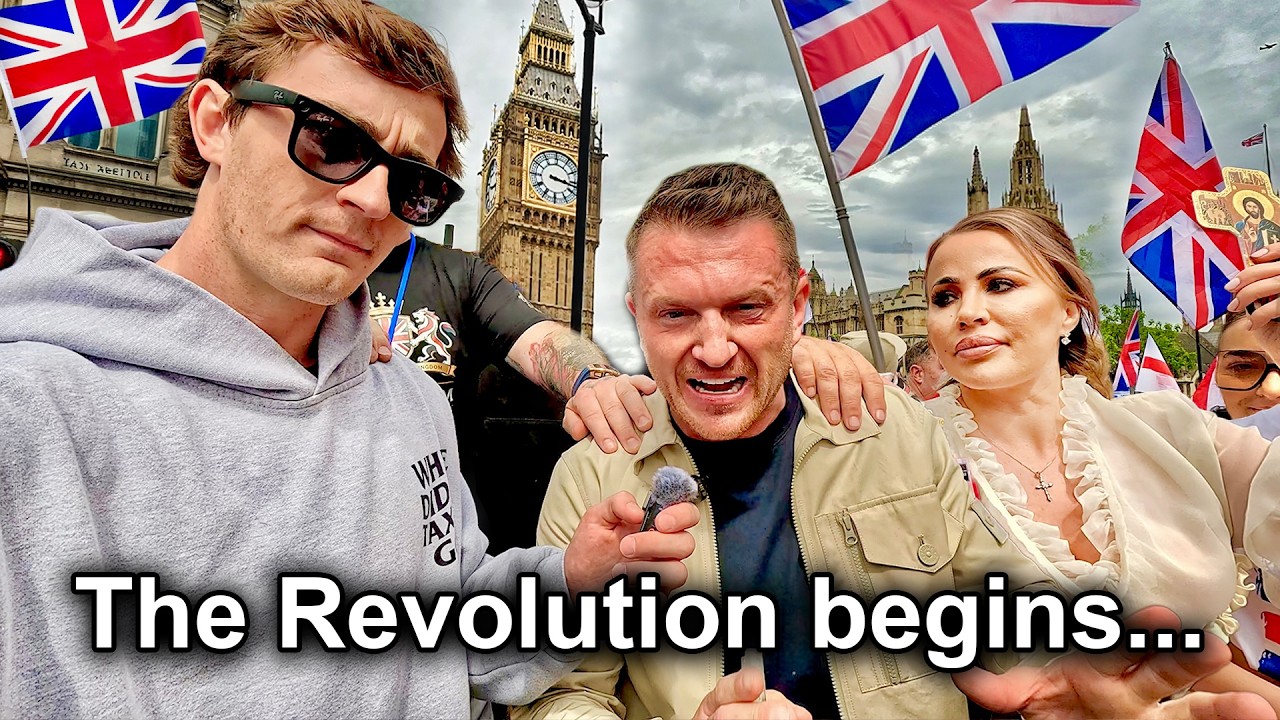
Tommy Robinson — the controversial far-right activist and founder of the English Defence League — led the march from the front and gave a speech to the assembled crowd. His presence is what prompted Starmer's 'convicted thugs' label, as Robinson has a criminal record. But for the protesters who turned out, Robinson's past was largely irrelevant. To them, he was one of the few public figures willing to say what they felt everyone else was too afraid to say.
In an interview during the march, Robinson framed the day as a 'counter-revolution' — a response to what he called the far left's successful revolution of open borders, family breakdown, and the erosion of national identity. He called for Britain to be ready for the 2029 general election, describing it as the most important in the country's history. His message to the rest of the West: 'They've imported hostile, violent men into our communities and then smeared us as racists for wanting the protection of our women.'
Are Protesters Warning of Civil War in the UK?
The word 'civil war' came up more than once during street interviews — not as a desire, but as a warning. One older protester, a man who said his relatives had fought and died for Britain, said flatly that civil war had already been 'going on for years' in a cultural and social sense. He added that no one wins in war — but that if things don't change, open conflict becomes increasingly difficult to avoid.
Others framed it differently. Tommy Robinson and other speakers emphasized the ballot box — specifically the 2029 election — as the right vehicle for change. The goal, as stated from the stage, is to mobilize the roughly 50% of British voters who don't currently vote, give them back a sense of identity and purpose, and win power through democratic means.
Whether you agree with the politics of everyone in attendance or not, the size of the march makes one thing undeniable: a very large number of British people feel ignored, dismissed, and angry — and they are no longer willing to stay quiet about it. As one protester said simply: 'This is the revolt. This is the peasants revolting.'