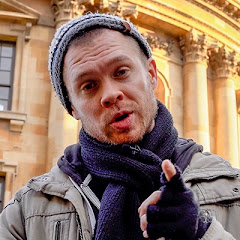
Should a YouTube channel interview politicians? It's a deceptively simple question — and for Gary's Economics, it just became very real. The channel recently received an official approach from the UK Labour Party, asking to send MPs on to discuss economic policy. And rather than quietly make a decision behind closed doors, Gary brought the dilemma straight to the audience. Here's the full breakdown of the pros, cons, and the bigger strategic picture behind the debate.
Should a YouTube Channel Interview Politicians?
The case for saying yes starts with a basic moral argument: if you spend significant airtime criticizing the government, you probably owe them a chance to respond. Gary's Economics has been consistently critical of Labour's economic policy since the party came to power, and the thinking goes — they're literally the government of the country. That's not a fringe political actor. That's the party making decisions that affect every viewer's living standards.
At the same time, the case for saying no is just as compelling. Politicians, particularly ruling-party MPs, operate under strict message discipline. They're briefed on what to say, they repeat approved talking points, and they rarely go off-script in ways that make for genuinely illuminating conversation. The risk isn't just a bad video — it's a boring one, which for an educational YouTube channel that prides itself on engaging content, might actually be worse.
The honest answer is that there's no clean right or wrong here. It depends entirely on what the channel is trying to achieve — and that's where things get interesting.
Can a YouTube Channel Actually Influence Politics?
Gary is refreshingly transparent about his ambitions: this isn't just a YouTube channel. The explicit goal is political change — specifically, a fairer tax system that taxes wealth more and work less, and a reversal of growing inequality. The book, the videos, the growth strategy — it all feeds into a longer-term plan to be impossible for policymakers to ignore.
The theory is straightforward. Labour is likely to struggle economically over the next few years. Living standards are projected to keep falling. As the party becomes increasingly unpopular, it will be forced to reconsider its economic direction — either replacing its leadership, rebranding its policy, or genuinely opening up to new ideas. The window for outside influence, Gary argues, will probably arrive two to three years out from the next general election.
If Gary's Economics can be large enough and credible enough by that point, it becomes a channel the party has to engage with — not because they want to, but because the audience demands it. That's a real and historically grounded theory of change. And it explains why the question of whether to host Labour MPs isn't just about one video. It's about positioning.
What Is the Rupert Murdoch Political Influence Strategy?
Gary explicitly names this the Rupert Murdoch plan — and it's worth unpacking. Murdoch built a media empire large enough that UK prime ministers couldn't win elections without his support. He never stood for office. He never had to. The scale of his reach over the public meant political parties came to him, not the other way around.
The parallel Gary is drawing is deliberate. You don't need to become an MP, join a party, or enter formal political structures to change policy. If your platform is big enough, politicians will seek your audience — and in seeking your audience, they'll have to engage with your ideas. Tony Blair's close relationship with Murdoch (Blair is godfather to Murdoch's daughter) is often cited as central to Labour's 1997 landslide. The lesson Gary is drawing: media influence, at sufficient scale, is political power.
The channel is growing fast enough that this isn't pure fantasy. Whether it gets there is another question — but the strategy is coherent, and it reframes the politician-interview debate entirely. The question isn't just "should we have them on?" It's "does having them on now help or hinder the long game?"
How Do You Stay Politically Neutral on YouTube?
This is arguably the thorniest part of the whole debate. Gary describes himself as running a single-issue campaign — stop wealth inequality from accelerating — rather than a partisan political operation. He's voted for multiple parties over his lifetime. He doesn't consider himself left or right in the tribal sense.
But we live in an era of extreme political factionalism. For a significant portion of any audience, seeing Labour MPs on screen is enough to label the channel "left-wing" — regardless of how the interview goes. Perception of bias, even when no bias exists, can be enough to erode trust with viewers who arrived politically unaffiliated.
The obvious counterargument is consistency: if Labour comes on, invite the Conservatives. Invite Reform. Invite the Lib Dems, the Greens, the SNP. At that point, though, the channel risks becoming a rotating door of political talking heads — which raises its own problem. A channel with one video per week, run by a small team, doesn't have infinite bandwidth. Giving that space over to politicians who may not say anything genuinely insightful is a real cost.
The neutrality question also cuts the other way. Not having Labour on, when they've formally requested to appear and the channel regularly criticizes them, could itself look like a politically motivated snub.
What Are the Real Risks of Hosting Politicians on YouTube?
Let's be specific about the downside scenarios:
- The boring video risk: MPs under message discipline often say very little of substance. A dull interview actively damages a channel's reputation for quality content.
- The souring-the-relationship risk: If Gary goes in hard — which he would, because he genuinely thinks Labour's economic policy will fail — it could close doors with the party before any meaningful influence is established.
- The false equivalence treadmill: Once you have one party on, the logic of fairness creates pressure to host all parties. That's a significant drain on resources and editorial focus.
- The interviewer skills gap: Gary is an economist, not a broadcaster. Past guests have been people he knows well and respects. A live debate with a politician operating in adversarial mode is a different challenge entirely.
- The brand dilution risk: Gary's Economics built its audience on being an independent, educational, non-party-political voice. Hosting politicians — especially government politicians — changes that perception, regardless of how the interview is framed.
How Do You Turn YouTube Reach Into Real Political Power?
The most interesting option raised in the discussion isn't simply yes or no to the interview. It's using the approach as leverage. Gary floats the idea of turning the request around: yes, we'll have you on — but here's what we want in return. Specifically, more access to how economic policy is actually made. A conversation about wealth taxes. A genuine engagement with the ideas the channel champions, not just a PR opportunity for the party.
That approach treats the channel's growing audience as a negotiating asset — which, if the channel continues its current growth trajectory, is exactly what it is. It also filters out politicians who just want a sympathetic platform from those who might genuinely engage with the economic arguments.
No decision has been made. The team is divided — Gary leans toward having them on as a matter of principle, while his colleagues are more skeptical. The audience has been asked to weigh in. And that process itself — being transparent about the dilemma, asking viewers to participate in the decision — says a lot about what kind of channel Gary's Economics is trying to be.
Whatever the outcome, the underlying question will keep coming back: at what point does a media platform become large enough that it has genuine political obligations? And what does it owe the people it criticizes?