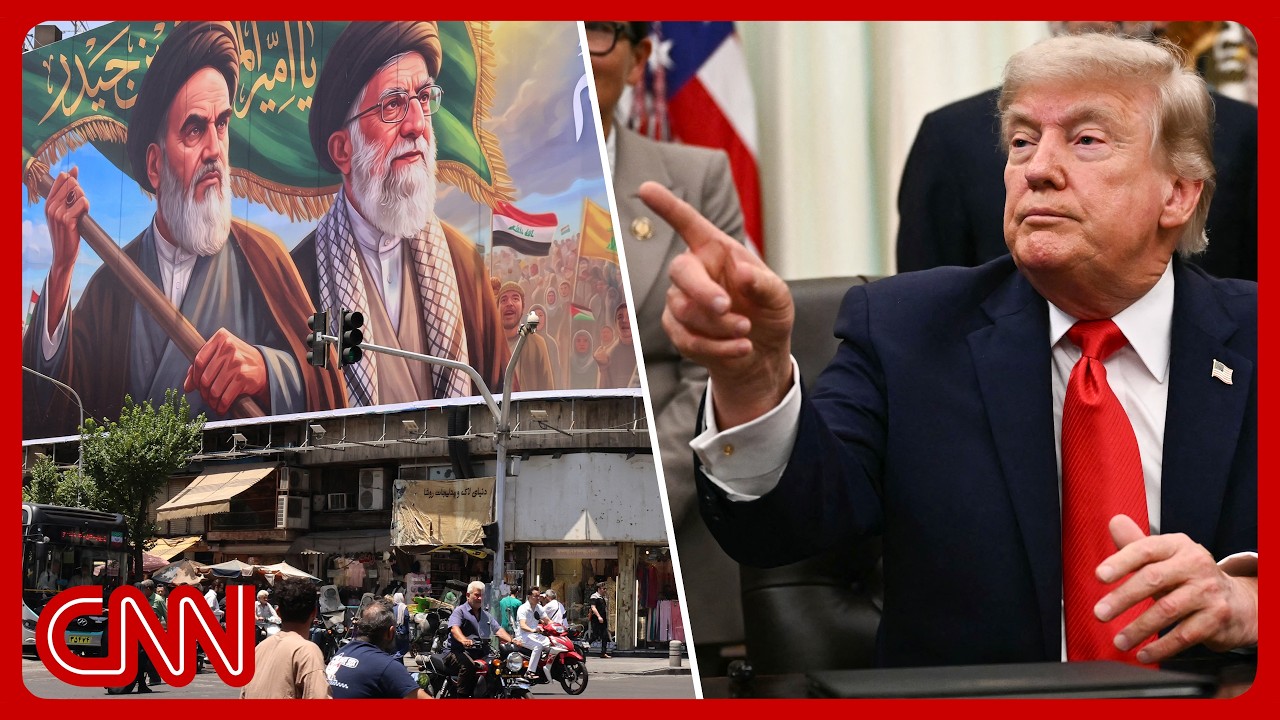

The question dominating global headlines right now — did the US and Iran reach a nuclear deal? — doesn't have a clean answer. President Trump declared a major agreement had been struck, only to turn around hours later and blast Iran as "dishonorable" on Truth Social, warning the country to "get their act together and do so fast." What looked like a historic diplomatic breakthrough on Friday morning has rapidly devolved into a high-stakes blame game, with both sides presenting contradictory versions of the same supposed agreement.
Here is everything we know about how this situation unfolded, what the deal was supposed to include, and what happens next.
 00:45
CNN's Kristen Holmes breaks down the memorandum of understanding terms as reported by a diplomat briefed on the document
Watch at 00:45 →
00:45
CNN's Kristen Holmes breaks down the memorandum of understanding terms as reported by a diplomat briefed on the document
Watch at 00:45 →
Did the US and Iran Actually Reach a Nuclear Deal?
According to a diplomat briefed on the proposed memorandum of understanding, the two sides had come to terms on a sweeping agreement. The key reported elements included a 60-day ceasefire covering multiple fronts — including Lebanon — the immediate opening of the Strait of Hormuz, and a return to pre-war levels of shipping traffic within 30 days. The deal was also said to lift parts of the US blockade on Iranian ports and ease certain sanctions, while satisfying Washington's core demands on the nuclear issue.
Preparation for a signing ceremony was reportedly already underway. Four US Air Force C-17 transport planes had departed Washington bound for Europe, seen as advance logistics for a potential trip by Vice President Vance to Geneva to formalize the agreement with the speaker of the Iranian parliament, Mohammad Bagher Ghalibaf.
So yes — by all accounts, a deal was close. The problem is what happened next.
Why Is Trump Lashing Out at Iran Right Now?
Iranian state media published their own version of the deal's terms — and it looked strikingly different from what US officials had described. Two points in particular appear to have triggered Trump's fury.
03:10
Barak Ravid explains why both sides spinning the same deal for domestic audiences has derailed negotiations before
Watch at 03:10 →
- Control of the Strait of Hormuz: Iran's version of events notably did not include any commitment to cede control of this critical global waterway — a point the US side had highlighted as a win.
- Frozen assets: Iranian state media reported that the agreement would require the release of $24 billion in frozen Iranian funds — a significant figure that has been a contentious issue with Trump for months.
Trump fired back on Truth Social, writing that the terms Iran leaked to the media "have nothing to do with the terms that were agreed to in writing," and adding that Iran's statement on the deal "bears no relation to the truth." He also criticized what his team described as Iran's refusal to confirm the deal was finalized, with Iranian officials insisting the text "still requires review and finalization."
CNN analyst Barak Ravid offered useful context: this pattern — where both sides spin the same agreement for their respective domestic audiences right before a signing — has derailed negotiations before. Each party emphasizes what it gains and stays quiet about what it concedes, and that tension can boil over publicly at the worst possible moment.
What Were the Terms of the Proposed US-Iran Ceasefire?
Based on the diplomat's readout of the memorandum of understanding, the proposed deal included the following key provisions:
- A 60-day ceasefire across multiple theaters, including Lebanon and Israeli strikes on Hezbollah targets
- Immediate reopening of the Strait of Hormuz to international shipping
- A return to pre-war shipping traffic levels within 30 days
- Partial lifting of the US naval blockade on Iranian ports
- Relief from certain US sanctions on Iran
- Satisfying US requirements on the nuclear issue — though specific details were not publicly confirmed
Iran's state media version told a different story, particularly on the Hormuz question and the $24 billion in frozen assets. Whether those discrepancies represent genuine disagreements or domestic spin remains unclear — but they are now threatening to blow up the entire framework.
06:20
Ravid describes the moment Netanyahu learned about the Iran deal from social media while meeting with his security team
Watch at 06:20 →
Are the US and Iran on the Verge of All-Out War?
It's the question nobody wants to answer — but it has to be asked. With a deal apparently collapsing, US airstrikes still ongoing, and the rhetoric heating up fast, is the region sliding toward full-scale war?
Ravid's assessment: not yet, but the situation is volatile. While Trump authorized new strikes in recent days, all have remained below the threshold of open warfare. Israeli Prime Minister Benjamin Netanyahu, however, is described as actively wanting the conflict to continue. Netanyahu reportedly does not trust the Iranian government and believes the regime needs to be further weakened militarily before any diplomatic solution can hold.
That said, US officials involved in the negotiations are described as still cautiously optimistic that a deal can be signed over the weekend. Multiple mediators — from Qatar and Pakistan — are reportedly sending the same message: the framework is still alive. What's happening now may be a turbulent but survivable hiccup, not a final collapse.
Did Netanyahu Learn About the Iran Deal From Social Media?
In a remarkable detail that speaks volumes about the current state of the Trump-Netanyahu relationship: yes. According to a source briefed on the situation, Israeli Prime Minister Benjamin Netanyahu was not notified in advance of Trump's Truth Social post announcing a deal with Iran. He reportedly learned about it the same way millions of ordinary users did — from his phone, while sitting with Israeli security officials who were actively discussing anticipated US military strikes on Iran.
One of his advisers walked into the room mid-meeting and told him: there are no strikes. There's a deal. The president just posted it.
A phone call between Trump and Netanyahu took place hours later. US officials described Netanyahu as having accepted the situation, understanding that a deal had been reached and there was little he could do to reverse it. But with Trump's latest Truth Social post walking back the celebration, Netanyahu's mood — according to Ravid — has likely improved considerably.
What Is Kharg Island and Why Did Trump Threaten It?
On the same day the deal was announced, Trump reportedly threatened to deploy US troops to seize Kharg Island — Iran's most critical oil export terminal, responsible for the vast majority of the country's petroleum exports. Capturing it would be an extraordinarily aggressive escalation, essentially strangling Iran's economy in a single military operation.
However, analysts and officials close to the negotiations downplayed the threat. Ravid stated he had seen no evidence of an imminent operational plan or genuine appetite within the US military command to execute such a move. It may have been leverage — a show of force to push Iran toward signing — rather than a real operational intention.
Who Is Brokering the US-Iran Negotiations?
The negotiations have been conducted through Qatari and Pakistani mediators, who have played a central role in shuttling proposals between Washington and Tehran. Both sets of mediators are reported to still believe a deal is achievable, even in the wake of today's public blowup.
The prospective signing was reportedly planned for Geneva, with Vice President JD Vance representing the United States and the speaker of the Iranian parliament representing Tehran — a significant diplomatic moment that now hangs in the balance.
What Happens Next?
The situation remains fluid. US officials are cautiously optimistic. Iran says the text isn't finalized. Trump says Iran is lying. Netanyahu is watching from the sidelines, quietly hoping the deal falls through. And somewhere in Geneva, four C-17s may be sitting idle on a runway, waiting to find out if they have a reason to be there.
What's clear is this: the gap between a historic diplomatic deal and a catastrophic regional escalation has rarely felt smaller. The next 48 hours will likely determine which side of that line the Middle East ends up on.