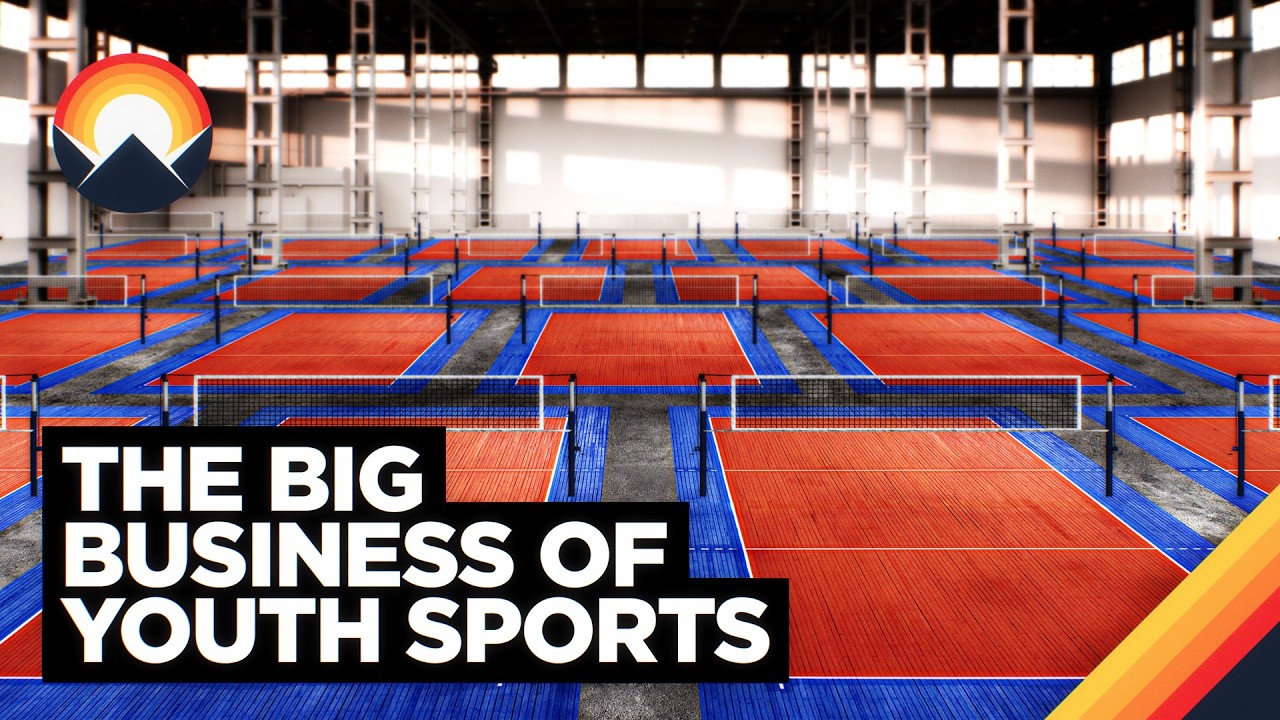

Youth sports in America are so expensive because the system has been deliberately structured to extract money from families chasing a dream — the dream of a college scholarship. What started as recreational competition has become a multi-billion dollar industry where club dues, travel costs, tournament fees, and now private equity investors all feed off the hope that your child might be the one-in-a-hundred who earns a Division I scholarship. A single competitive club volleyball season can cost a family $11,500 or more, and the people profiting from the system have every incentive to keep parents believing it's worth it.
Why Are Youth Sports So Expensive in America?
The cost of youth sports in America isn't accidental — it's architectural. As kids age out of free recreational leagues and into middle school athletics, publicly funded school programs become so competitive that many kids effectively need to play club sports just to make the team. And club sports don't come cheap.
The expenses stack up fast. There are club dues ranging from $2,500 to $7,000 depending on the club, age group, and travel schedule. There are tournament entry fees. There are hotel bookings through mandatory stay-to-play arrangements. There's food at the venue (outside food is often prohibited), tournament merchandise, spectator entry fees, and streaming subscriptions for family members watching from home. By the time you tally everything for one tournament weekend alone, a family is looking at a minimum of $2,000 out of pocket.
Multiply that across four tournaments per season, add in club dues, and a typical competitive club volleyball experience lands somewhere around $11,500 for a single season. If a player starts at 12 and competes through her 18s year, that's potentially six more seasons — pushing the total investment toward $70,000 before she ever steps on a college court.
And it's not just volleyball. Travel baseball, club soccer, youth hockey — the pattern repeats across every sport. The American youth sports market is now a $40 billion per year industry growing at 8 to 10% annually, and the system is self-perpetuating. Parents spend more, clubs expand, and the barrier to entry rises higher every year.
What Is a Stay-to-Play Tournament and Is It a Scam?
A stay-to-play tournament is exactly what it sounds like: a quid pro quo arrangement where teams are only permitted to compete if they book their accommodations through the tournament's approved housing partners. At the Red Rock Rave in Las Vegas — one of the largest youth volleyball national qualifiers in the country — teams must book through a company called KC Sports Housing, limiting options to properties like the Mandalay Bay, Luxor, and other partnered hotels.
The tournament organizers and regional hosts benefit financially from these arrangements, receiving a cut of the hotel bookings in exchange for directing nearly 1,000 teams and their families toward specific properties. For families, it eliminates the flexibility to use Airbnb, stay with relatives, or find cheaper alternatives. In some markets, critics argue the rates feel artificially inflated as a result.
Stay-to-play is technically legal and operationally practical for organizing large events — but it's also one more mechanism in a system designed to capture as much family spending as possible around a single weekend of youth competition.
How Much Does Club Volleyball Actually Cost Per Year?
Here's a real breakdown of what a competitive club volleyball season costs a family:
- Club dues: $2,500–$7,000 (covers gym rental, coaching stipends, insurance, and club overhead)
- Tournament entry fee per team: ~$950 split among players (roughly $95 per player)
- Hotel and travel per tournament: $1,000–$1,500 minimum per family
- Food at venue: $12 chicken sandwiches, $10 pizza slices, $16 açaí bowls — budget $50–$100 per day
- Spectator entry: $27.50 per day or $65.40 for a 3-day pass
- Streaming for family at home: $44.85 per subscription
- Tournament merchandise: ~$50 per hoodie
Add it up across four tournaments plus club dues and the season total lands at roughly $11,500. The dues themselves are notoriously opaque — families are told the total but rarely given a clear breakdown of where the money actually goes.
What Is League One Volleyball and Why Is Private Equity Involved?
League One Volleyball — stylized as LOVB and pronounced "love" — is a two-year-old professional women's volleyball league with a uniquely engineered business model. The league owns six professional teams, with more in development. But what makes it genuinely novel, and what attracted major private equity interest, is that LOVB also owns approximately 90 youth volleyball clubs across the United States.
The professional league presents this as grassroots investment — a direct pipeline from youth clubs to the pros, making the dream feel more tangible for players and parents. For a kid playing at Club V in Salt Lake City, nothing changes on the surface: same coaches, same club name. But now a professional player from LOVB Salt Lake might walk into that gym, making the big leagues feel suddenly real.
What's actually driving the private equity interest, though, isn't the upside of the professional league. It's the confidence in the youth side. LOVB has attracted nearly $200 million in funding from investors including the Atwater Group, Aries Management, Left Lane Capital, and others. LOVB CEO Caitlyn Gao came from Bain Capital. The investors aren't just betting on volleyball — they're betting on the self-perpetuating spending machine of American youth sports, and they believe owning the clubs is the most direct path to capturing those club dues and growing them over time.
In the investors' own words, the goal is to "leverage experience in media and entertainment to engage fans in exciting ways and inspire the next generation of exceptional athletes." Translated: keep the dream alive, keep the dues flowing.
What Are the Real Odds of a College Volleyball Scholarship?
The uncomfortable truth is that fewer than 6% of youth volleyball players will ever play college volleyball at any level. Only 1.2% to 2% will play Division I. And even among those who do play in college, full scholarships that cover tuition, room, and board are limited to Division I programs. Division II, Division III, and NAIA programs either offer partial scholarships or none at all.
Meanwhile, college itself costs anywhere from $25,000 to $65,000 per year — a staggering number that makes any scholarship feel worth pursuing, however long the odds. Tournament organizers, clubs, and league marketers are well aware of this psychology. They'll loudly advertise how many college coaches will be in attendance at a given tournament. They'll highlight the college players their club has produced. What they won't highlight are the statistics. The math simply doesn't support the investment for most families — but the dream is too powerful, and too profitable, to let facts interrupt it.
Why Do 70% of Kids Quit Sports Before Age 13?
In a 2025 congressional hearing, the subcommittee on early childhood and secondary education examined the consequences of declining youth sports participation. The headline finding was stark: 70% of all kids in the United States quit organized sports by age 13.
The reasons are intertwined with everything wrong about the current model. Hyper-specialization burns kids out early. Results-obsessed coaching cultures prioritize winning over development. And the sheer cost filters out families who can't afford the entry price of competitive participation. For kids who do stay in, the pressure to perform — not just to improve, or to have fun, but to win and justify the investment — creates a joyless experience that drives many away from the sport entirely.
The downstream consequences are serious. Kids who stop playing organized sports are more likely to struggle with self-esteem, more likely to become obese, less likely to succeed academically, and less likely to raise active children of their own. When youth sports become a luxury product rather than a public good, it becomes a public health problem.
How Does Norway Beat the US at the Olympics With 6 Million People?
At the most recent Winter Olympics, Norway — a country of under 6 million people — won 18 gold medals and 41 total, compared to 12 gold and 33 total for the United States. This isn't a quirk of cultural heritage or winter climate. Norway's best triathletes are world-class. Their distance runners compete with East Africans and Americans. Their best beach volleyball pairing outperforms anything the US can field.
The difference is a youth sports philosophy rooted in joy and intrinsic development rather than results and rankings. Norway's model prioritizes helping kids fall in love with movement and improvement for its own sake, rather than grinding toward tournament wins that serve club revenue models. It's a model where the system serves the athlete — not the other way around.
The United States is the most sports-obsessed nation on earth, with the talent pool to match. But when the system is built to extract money from aspiring families rather than develop players at scale, the talent doesn't get the opportunity it deserves. That's not just bad for national teams. It's bad for every kid who quits at 12 because the sport stopped being fun — or because their family simply couldn't afford to keep playing.