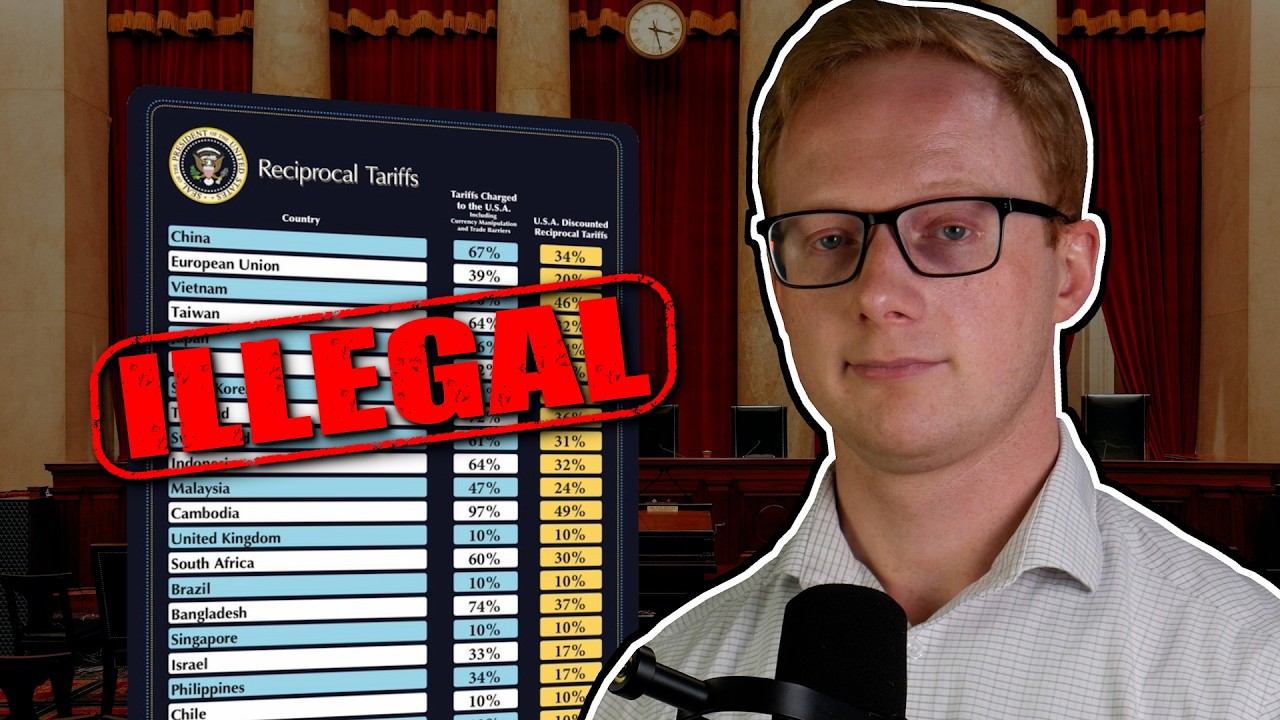

Yes — the US Supreme Court has officially ruled that Trump's tariffs are illegal, at least the ones imposed under the International Emergency Economic Powers Act (IEEPA). In a 6-3 decision, the justices upheld a lower court ruling and forced the White House to lift all tariffs previously imposed under this law. It was a massive moment in the ongoing global trade war — celebrated widely online as a serious blow to Trump's tariff agenda. Then, a few hours later, Trump held a press conference and announced even more tariffs. So, buckle up.
Did the Supreme Court Rule Trump's Tariffs Illegal?
Yes, but with important nuance. The case — Learning Resources v. Trump — was brought by an Illinois-based toy company and later combined with a case from liquor company VOS Selections and 12 US states. The Supreme Court ruled 6 to 3 that while the president does have broad powers under IEEPA to restrict imports and exports in response to an "unusual and extraordinary threat," the explicit power to tax — which is what tariffs are — rests solely with Congress under the Constitution.
 01:45
Richard explains the Supreme Court's 6-3 ruling on IEEPA tariffs and why taxing power rests with Congress
Watch at 01:45 →
01:45
Richard explains the Supreme Court's 6-3 ruling on IEEPA tariffs and why taxing power rests with Congress
Watch at 01:45 →
The justices leaned on the major questions doctrine, which requires that actions of significant consequence by the executive branch be clearly authorized by Congress rather than inferred from ambiguous statutory language. In plain terms: because IEEPA never explicitly gave Trump the power to levy tariffs, and because Trump was handing them out like Oprah Winfrey gives away cars, the court said he needed Congressional approval. As the justices wrote: "The president must point to clear congressional authorization to justify his extraordinary assertion of that power. He cannot."
What Is IEEPA and Why Were These Tariffs Ruled Illegal?
IEEPA — the International Emergency Economic Powers Act — is a 1977 law that grants the president sweeping powers to respond to national security threats, including restricting cross-border transactions and trade. Trump used it aggressively to impose tariffs on countries ranging from China to Canada, and even the remote, penguin-populated Heard and McDonald Islands.
The legal problem? No president had ever used IEEPA to impose tariffs before Trump. The court found this telling. IEEPA gives the president authority to block transactions — but the justices concluded that explicitly taxing imports through tariffs goes beyond that authority. That distinction, subtle as it sounds, was enough for a majority of the court to strike the tariffs down.
05:10
Breakdown of which tariffs were struck down versus which sectoral tariffs remain under Section 232
Watch at 05:10 →
Which Tariffs Are Still in Effect After the Ruling?
Not all tariffs are created equal — and not all of them were struck down. The ruling specifically targeted two main categories:
- The fentanyl-linked tariffs announced early in Trump's term: the 10% tariff on Chinese goods, 25% on Mexican goods, and the elevated 35% on Canadian goods.
- The country-specific "reciprocal" tariffs announced on April 2nd (so-called "Liberation Day"), including all subsequent updates — affecting any country that appeared on those now-infamous bristle board poster presentations.
However, the sectoral tariffs imposed under Section 232 of the Trade Expansion Act of 1962 remain fully intact. These include levies on steel, aluminum, auto parts, copper products, softwood lumber, furniture, and semiconductors. According to Reuters, these non-IEEPA tariffs made up about a third of Trump's total tariff revenue in the last quarter of 2025 — meaning the ruling still eliminates the lion's share of the tariff structure.
What Happens to the $175 Billion Already Collected?
This is where things get complicated — and frankly, a little frustrating. Penn Wharton Budget Model economists estimate that IEEPA tariffs generated approximately $175 billion in revenue for the US government since their implementation. Now that those tariffs have been deemed illegal, many expect the government will be required to refund that money. But the Supreme Court's ruling itself says nothing about how that should happen.
09:30
Trump announces the replacement 10% tariff under Section 122 and lists other legal tools at his disposal
Watch at 09:30 →
That means the question gets kicked down to lower courts like the US Court of International Trade, and we're likely looking at years of litigation before anyone sees a dime returned. Trump and his administration have already signaled they'll fight the matter in court, which doesn't exactly speed things up.
And here's the kicker: even if refunds are eventually ordered, the money will most likely flow back to importing companies — not consumers. That's because tariff fees are technically charged to the businesses importing goods, even though the costs were overwhelmingly passed along to consumers through higher prices. Larger corporations with legal resources — like FedEx, which became the first major US company to file a reclamation lawsuit following the ruling — will be best positioned to recover those funds. Smaller businesses? Not so much.
While some have floated the idea of distributing a "tariff dividend" directly to the public, that would require Congressional approval and almost certainly wouldn't qualify as a legal reimbursement. So while large corporations get made whole, everyday consumers who absorbed higher prices are likely to get very little in return.
What Is the New 10% Tariff Trump Announced to Replace Them?
Within hours of the ruling, Trump announced a temporary 10% across-the-board tariff on most countries, this time under Section 122 of the Trade Act of 1974. This section allows the president to impose tariffs of up to 15% for up to 150 days to address large and serious balance-of-payments deficits — essentially situations where a country is sending more money abroad than it's receiving. Trump has since suggested the rate could rise to 15%, though as of the initial effective date of February 24th, only the 10% rate had been implemented.
The new tariff does include notable exemptions, such as:
- Critical minerals, metals, and energy products
- Certain agricultural products and pharmaceuticals
- Electronics, passenger vehicles, and aerospace products
- Goods already subject to Section 232 sectoral tariffs
- Duty-free goods under USMCA (Canada and Mexico) and DR-CAFTA agreements
For Canada, the practical impact is somewhat muted — even though the rate dropped from 35% to 10% on paper, most Canadian exports already entered the US duty-free under USMCA. For countries like Brazil, however, the reduction is meaningful.
Countries like the UK and EU that had already negotiated trade deals with the US were notably not granted carve-outs under the new tariff, leaving them at the same rate as everyone else — and understandably frustrated. The EU even delayed ratifying its deal due to the uncertainty.
Can Trump Reimpose Tariffs After the Supreme Court Ruling?
Absolutely — and Trump wasted no time making that clear. While IEEPA is now off the table for tariff purposes, the president has several other legal tools available:
- Section 201 of the Trade Act of 1974: Allows product-specific tariffs when imports are causing serious injury to domestic producers. Requires a formal investigation.
- Section 301 of the Trade Act of 1974: Allows tariffs when trade deals are being violated or a country imposes unjustifiable burdens on US commerce. Also requires a formal investigation — which Trump has already announced for some cases.
- Section 338 of the Tariff Act of 1930: Permits country-specific tariffs of up to 50% when a country unreasonably discriminates against US trade. Less formal process, but would likely face legal challenges if applied broadly.
- Section 232 sectoral tariffs remain in place and can be expanded with Department of Commerce investigations into new sectors.
The 150-day window under Section 122 also gives Trump time to pursue formal investigations under these other statutes before the temporary tariff expires. Congressional extension of the Section 122 tariff seems unlikely given that the House has already voted to cancel some Trump tariffs and midterm elections loom in November — but Trump clearly has a long runway to work with regardless.
How Will Removing These Tariffs Affect Prices?
If IEEPA tariffs are fully eliminated, the impact on consumer prices would be significant. The Budget Lab estimates that removing these tariffs would cut the average effective tariff rate from 16.9% to 9.1% and reduce expected tariff-driven price inflation from 1.2% down to 0.6% — roughly cutting the price impact in half. For specific product categories, the savings could be even more pronounced.
Of course, with Trump's new 10% baseline tariff now in effect and additional tariffs potentially on the horizon, some of those gains will be offset. The situation remains fluid, and with the president publicly floating the idea of replacing a substantial portion of income taxes with tariff revenue — a vision he reiterated during his State of the Union address — there's little indication that tariffs are going away anytime soon. They're just going to look a little different.
The Supreme Court ruling is a genuine and meaningful blow to Trump's tariff agenda. It strips away one of his most flexible tools — the ability to slap tariffs on countries at will over virtually any grievance, from a country's digital services tax to a phone call he didn't enjoy. Future tariffs will require more formal processes, more paper trails, and more legal exposure. Whether that slows Trump down meaningfully, or whether he simply routes around the ruling with other statutes, is the central question in global trade policy right now. Watch this space.