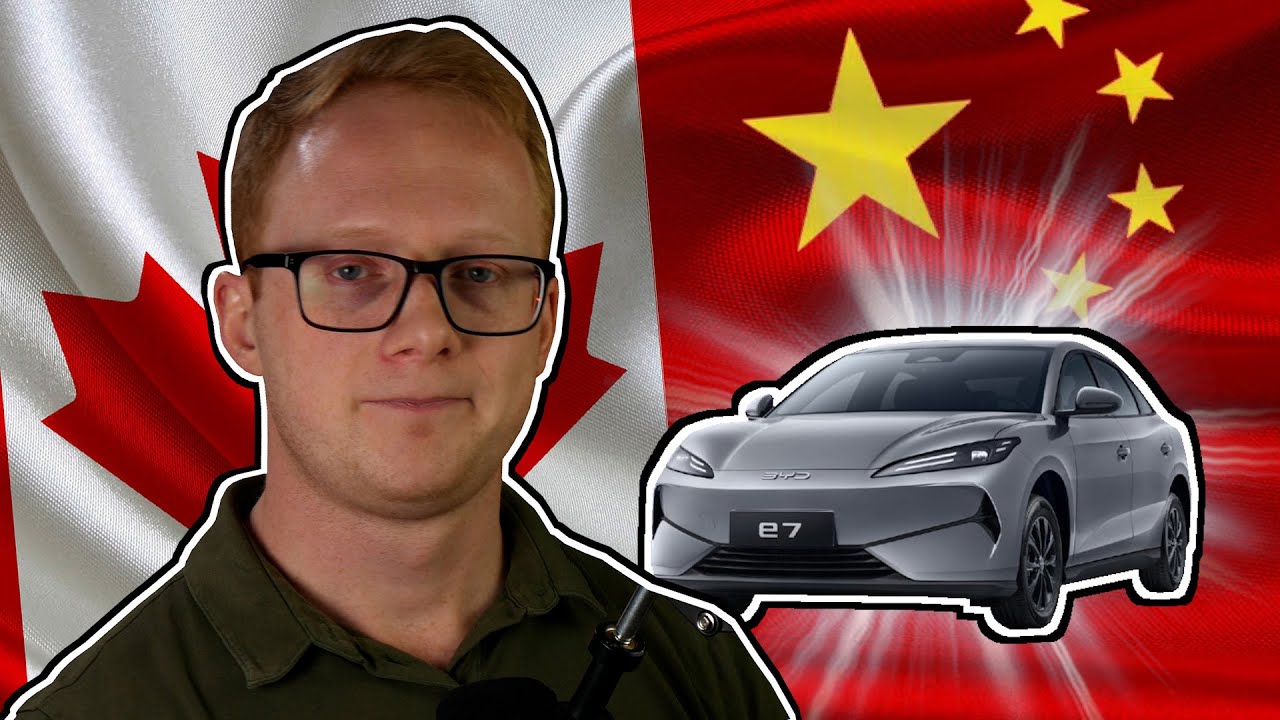

The Canada-China trade deal announced in January 2025 grabbed headlines across North America — but the reality is a lot more nuanced than the coverage suggests. Canada agreed to allow up to 49,000 Chinese-made electric vehicles into the country at a reduced tariff rate of 6.1%, while China agreed to slash tariffs on Canadian canola oil and remove levies on lobster, crab, and peas. It sounds dramatic. In practice, it mostly just reverses tariffs that were only introduced a couple of years ago. Here's what actually happened, why it matters, and what it signals about Canada's economic future.
What's Actually in the Canada-China Trade Deal?
When Canadian Prime Minister Mark Carney landed in Beijing on January 14th — the first Canadian PM to visit China since 2017 — the headline outcome was a reciprocal easing of trade restrictions between the two countries. Let's break down each side of the agreement.
What Canada Agreed To
- Canada will allow imports of up to 49,000 Chinese-produced electric vehicles per year at a reduced tariff of 6.1%, down from the punishing 100% tariff imposed in 2024.
- That import quota represents roughly 3% of total new cars sold in Canada annually.
- Carney has signaled the cap could rise by 43% — to as many as 70,000 vehicles — within five years.
- Notably, many of those Chinese-produced EVs aren't actually Chinese brands. Companies like Tesla and Volvo manufacture vehicles in China that would fall under this quota.
What China Agreed To
- China will reduce its combined tariff rate on Canadian canola oil from 84% down to 15% by March.
- China will remove tariffs entirely on canola meal, lobsters, crab, and peas effective the same month.
- These tariff exemptions are guaranteed until at least the end of the year.
- The measures are expected to generate nearly $3 billion in new export orders for Canada.
- Tariffs on Canadian pork remain in place for now, though there's an expectation those will eventually be lifted too.
When you step back and look at the full picture, what this deal really represents is the unwinding of a mini trade war that began in 2024 — not some radical new economic alliance. Canada still maintains a 25% tariff on Chinese steel and aluminum. Canola seed, Canada's largest canola export, still faces higher tariffs than before 2023. The trade relationship, while warming, is hardly being rebuilt from scratch.
Why Did Canada Slap 100% Tariffs on Chinese EVs?
To understand the deal, you have to understand what triggered the conflict in the first place. In August 2024, Canada — in lockstep with the United States and the European Union — announced a 100% tariff on Chinese electric and hybrid vehicles. Prior to that, Chinese EVs had only faced a standard most-favored-nation tariff of 6.1%.
The Canadian government cited three main concerns:
- Unfair competition: Chinese EV manufacturers benefit from heavy state subsidies and state-directed production, giving them a significant cost advantage over Canadian and North American automakers.
- Labor and environmental standards: Canada argued that Chinese producers don't operate under the same rigorous labor or environmental standards, creating an uneven playing field.
- Data privacy risks: The government flagged concerns about the data collected by Chinese-connected vehicles, given the lack of transparency around data ownership in China.
The tariff had an immediate effect. In 2023, Canada had imported around 44,000 electric vehicles from China. After the tariff hike, those numbers plummeted. So in a sense, the new quota of 49,000 vehicles isn't some bold new opening — it's essentially a return to where things were before the tariff wall went up.
How Did the Canada-China Trade War Start?
The Canada-China trade war didn't make many front pages, but it was real and it hurt. After Canada imposed its EV tariffs and a 25% tariff on Chinese steel and aluminum in 2024, China hit back hard. In March 2025, Beijing announced:
- A 100% tariff on Canadian rapeseed oil, oil cakes, and peas
- A 25% tariff on Canadian pork and seafood
- A later addition of a 75.8% tariff on Canadian canola seed in August
These weren't random choices. China was targeting Canada's most economically sensitive agricultural exports — the ones that would cause the most political pain at home, particularly in the Prairie provinces. The results were stark: canola seed exports to China dropped from 67.7% of Canada's total canola exports in early 2024 to effectively zero by September 2025. That's the kind of hit that gets the attention of farmers, premiers, and prime ministers alike.
What Does Canada Actually Sell to China?
Canada's trade relationship with China is often misunderstood. While China is technically Canada's second-largest trading partner, it only accounts for about 4% of Canada's total exports — compared to over 75% that go to the United States. So the stakes, while real, need to be kept in perspective.
Canada's most important exports to China include:
- Crude oil — Canada's single largest export category overall. Currently, 96% of crude exports go to the US, but infrastructure is being built to shift more west toward Pacific markets.
- Canola oil and canola products — Canada's largest agricultural export and its second-largest export category to China. Canada produces roughly one-fifth of the world's rapeseed oil and China has historically taken over a third of its canola exports.
- Pork, seafood, and legumes — China imports billions of dollars worth of these products annually from Canada, representing between a fifth and a third of total Canadian exports in each category.
These aren't trivial numbers, which is exactly why China's retaliatory tariffs stung — and why this deal to ease those tariffs matters so much to Canadian agriculture.
Is Canada Trying to Break Free from US Trade Dependence?
Yes — and the China deal is a key part of that strategy. Prime Minister Carney has made trade diversification a central plank of his economic platform, aiming to double Canada's non-US exports from their current 23% share over the next decade. That would bring non-US trade roughly on par with US-bound exports.
China is one of the only countries that can realistically absorb that kind of trade shift. In 2024, the US led global imports at $4.1 trillion. China came second at $3.3 trillion. Germany was a distant third at $1.8 trillion. No other individual country comes close to matching either market's appetite — which makes China a logical, if complicated, partner for Canada's diversification goals.
Beyond the trade deal itself, Carney's Beijing visit produced a number of softer but significant agreements:
- Canada-China beef exports restarted after a four-year shutdown
- The two countries revived their Joint Economic and Trade Commission, dormant for eight years
- A commitment to bolster Canadian exports to China by 50% by 2030, targeting around $30 billion annually
- China agreed to visa-free access for Canadian travelers — meaningful given that 9% of Canada's recent immigrant population comes from China
- The expectation of Chinese joint venture investment in Canada within three years, with hopes for Chinese EV factories built on Canadian soil
Does the China Deal Put the CUSMA Agreement at Risk?
This is the biggest concern among critics of the deal, and it's a legitimate one. The Canada-United-States-Mexico Agreement (CUSMA, or USMCA on the American side) currently provides Canada with tariff-free access to the US market for approximately 85% of its exports. A premature termination — or a hostile renegotiation — would be devastating for the Canadian economy.
US officials like Howard Lutnik have warned that the China trade deal could give the US grounds to push for changes when CUSMA comes up for review in 2026. And Canada is currently the only CUSMA member allowing Chinese vehicles in without prohibitive tariffs, which is a point of friction.
But here's where context matters. Canada's faith in the US as a reliable trade partner has taken a serious hit. The justifications offered for tariffs on Canada have ranged from misleading to outright false. Meanwhile, the US has floated the idea of making Canada the "51st state" through economic coercion — not exactly the language of a trusted ally. As Carney himself has acknowledged: China may be a national security concern, but so is an unpredictable partner that controls three-quarters of your export market.
Should Canada Be Worried About Getting Too Close to China?
The concerns are real and shouldn't be dismissed. China is an authoritarian state with a documented history of cyber espionage, intellectual property theft, and bulk data collection. It's the world's largest international lender, giving it significant leverage over nations that become financially dependent on it. Ontario Premier Doug Ford's warnings about "subsidized spy cars" may be politically colored, but the underlying data security concerns about connected vehicles are shared by security experts across the West.
That said, it's worth noting that many of Canada's closest allies — the UK, Germany, Israel — are already significant importers of Chinese electric vehicles. And the US itself currently has a deeper trade relationship with China than Canada does. The question isn't whether to engage with China at all, but how to do so with clear eyes and proper safeguards.
The Canada-China trade deal of 2025 is less of a dramatic pivot and more of a careful hedge — a first step toward reducing economic vulnerability to a single partner, taken at a moment when that partner has given Canada genuine reasons to diversify. Whether it leads to something more transformative will depend on how both relationships evolve in the years ahead.