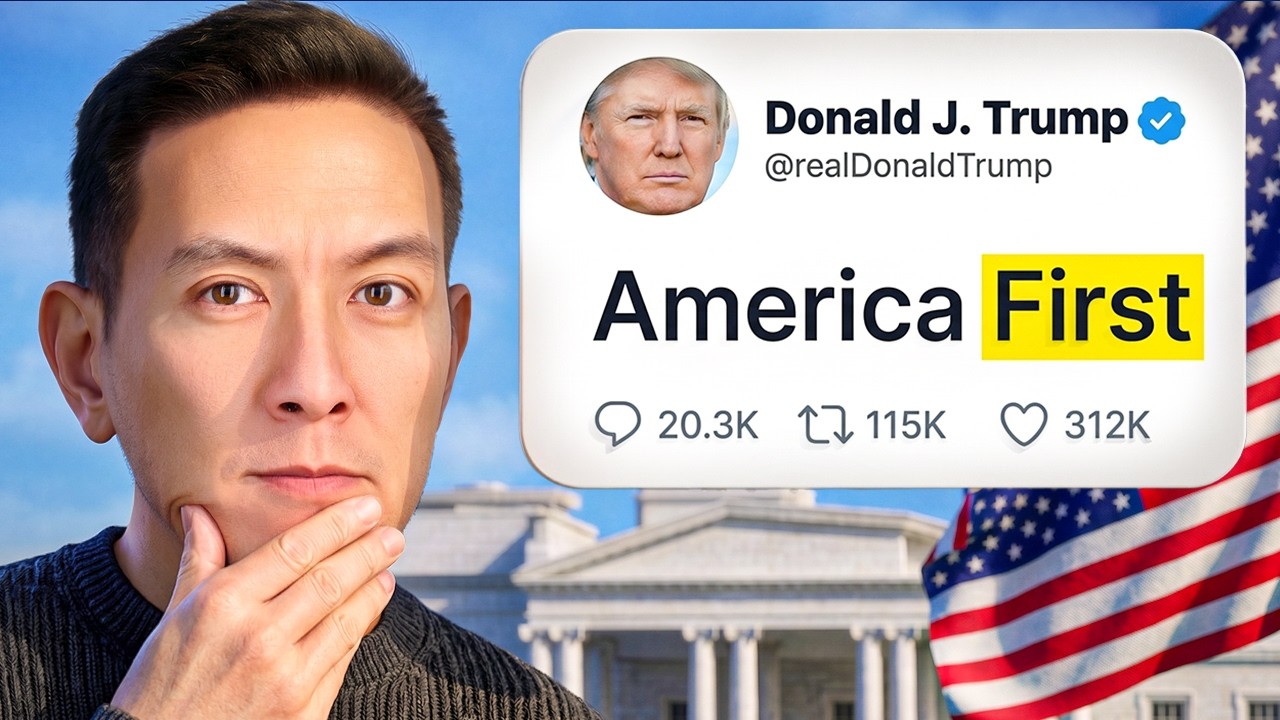

One of the best electric vehicles available globally right now cannot be purchased in the United States — not because it fails safety standards, but because the US government has erected a deliberate wall of tariffs, software bans, and tax credit exclusions to keep it out. That wall is just one piece of a much larger shift toward economic protectionism that is already raising prices on cars, electronics, and potentially your medication. And the last time America tried something like this, global trade collapsed by 66%.
The Chinese EV Wall
In 2024, the Biden administration raised tariffs on Chinese-made electric vehicles from 25% to 100%. When Trump took office, those tariffs stayed. Then came additional layers: a connected vehicle software ban finalized in January 2025, and an EV tax credit structure requiring North American assembly and approved battery sourcing.
The software ban is particularly significant. Even if the 100% tariff were removed tomorrow, any vehicle using Chinese- or Russian-linked software or hardware would still be barred from sale in the US — the same national security logic that drove the TikTok divestiture debate. Together, these three mechanisms form a near-impenetrable wall.
What's being kept out is notable. Tech YouTuber Marques Brownlee reviewed a Chinese EV and concluded it was a $42,000 car that would cost $75,000 if built in the US. The BYD Seagull, one of the more entry-level models, sells for $10,000–$12,000 and draws strong reviews. Meanwhile, BYD has surpassed Tesla as the world's top EV seller, and China now accounts for nearly 70% of global EV production.
The Broader Tariff Campaign
The Chinese EV wall is one component of the most aggressive US tariff campaign in roughly 100 years. Average US tariff rates have risen from 2.4% to 9.6% — the highest level in 80 years — applied across virtually every trading partner.
In February 2026, the Supreme Court ruled 6–3 that the White House lacked legal authority to impose most of these tariffs under the law being used. The administration responded the next day by invoking a separate law to reinstate a 10% baseline tariff on all imports. April 2026 brought a new wave targeting steel, aluminum, copper, and pharmaceuticals at up to 100%. The administration has also introduced AI chip export controls requiring companies to pay the US government 15% of revenues from chip sales abroad — an unprecedented use of export controls as a revenue tool.
The overarching philosophy is protectionism: using tariffs and quotas to shield domestic industries from foreign competition by making imported goods more expensive, theoretically redirecting demand toward American-made products and preserving American jobs.
What History Tells Us: The Smoot-Hawley Lesson
The last time the US pursued this strategy at scale was 1930, when President Herbert Hoover signed the Smoot-Hawley Tariff Act, raising import duties on over 20,000 categories of goods. The stated logic was identical to today's: protect American farmers and manufacturers, put America first.
More than 1,000 economists signed a petition urging Hoover not to sign it. Hoover himself called the bill "obnoxious" and privately opposed it. He signed it anyway under political pressure from his party and cabinet.
The results were measurable and severe. US imports fell 66% — from $4.4 billion in 1929 to $1.5 billion in 1933. US exports to Europe dropped from $2.3 billion to $784 million. Trading partners retaliated, global commerce contracted, and the legislation is now widely regarded as having deepened and prolonged the Great Depression. By the early 1930s, the next president, FDR, passed the Reciprocal Trade Agreements Act of 1934, and the US spent the next 70 years constructing a global free trade architecture — the WTO, NAFTA, and the General Agreement on Tariffs and Trade — largely as a direct response to how badly protectionism had failed.
What It's Already Costing Consumers
Automobiles
No car assembled in the United States is 100% domestic. Even Tesla sources some components internationally. When tariffs hit imported steel, aluminum, and auto parts, both foreign and domestically assembled vehicles become more expensive.
JP Morgan estimates combined tariffs on vehicles and parts will cost the auto industry $41 billion in year one, rising to $52 billion by year three — translating to roughly $3,258 added per vehicle. Kelley Blue Book estimates vehicles priced under $40,000 are seeing up to $6,000 added to sticker prices. Audi has already raised prices on most of its 2026 lineup by $800 to $4,100 per model. Auto sales forecasts for the remainder of the year have been revised downward.
Electronics
Morningstar projects durable goods prices — electronics, toys, tools, small appliances — to rise 4.5% in 2026. This is already visible: Sony raised PS5 prices in August 2025, Microsoft raised Xbox Series prices in October, and the Nintendo Switch 2 launched at $450 — $150 more than its predecessor. All five major PC manufacturers (Lenovo, Dell, HP, Acer, Asus) have warned of 15–20% price increases in the second half of 2026. Trend Force found that a mainstream $900 laptop could see costs rise nearly 40%, pushing it past $1,200.
Tariffs are compounding an existing memory shortage driven by AI data center demand. Chip manufacturers are shifting production toward high-margin AI chips and away from consumer chips, reducing supply and raising prices for everyday devices.
 18:45
Wall Street Journal charts showing memory as 20-35% of consumer electronics manufacturing costs, rising DRAM contract prices, and declining global smartphone and PC shipment projections
Watch at 18:45 →
18:45
Wall Street Journal charts showing memory as 20-35% of consumer electronics manufacturing costs, rising DRAM contract prices, and declining global smartphone and PC shipment projections
Watch at 18:45 →
Pharmaceuticals
On April 2, 2026, the administration imposed 100% tariffs on patented pharmaceutical products and active ingredients. Companies that have signed pricing deals with the administration or are actively building US manufacturing face reduced or deferred rates; those that haven't face the full 100% immediately.
Some outcomes have been positive: GLP-1 drugs like Ozempic and Wegovy dropped from over $1,000 per month to around $350, insulin from Novo Nordisk was capped at $35, and Eli Lilly's Zepbound fell to $300–$350 per month. However, more than 80% of active pharmaceutical ingredient manufacturing sites are located outside the US, with China and India together supplying over 70% of active ingredients used in US drug production. Generic drugs are currently exempt — but the White House has indicated it will reassess that within a year. If generics lose their exemption, antibiotics, cancer treatments, blood pressure medications, and arthritis drugs could all see significant price increases.
What You Can Do About It
The Tax Foundation estimates current tariffs add roughly $1,500 in costs per American household in 2026. Yale's Budget Lab puts the figure between $600 and $1,300. Either way, consumers are paying more across a wide range of goods.
Three practical steps worth considering:
- Accelerate major purchases. If you're planning to buy a car, laptop, or smartphone, act sooner rather than later. Prices are projected to rise through the second half of 2026, not fall.
- Ask about generic drug alternatives. Talk to your doctor now about whether generics can substitute for any branded medications you take. Generic drugs are currently tariff-exempt, but that may not last.
- Reduce consumption of imported goods. Tariffs function as consumption taxes. Fewer impulse purchases and a preference for quality over quantity is both good financial discipline and a practical hedge against a tariff environment.
From an investing standpoint, these policies are inflationary, which erodes the purchasing power of cash. Staying invested in markets and adding some international stock exposure can provide a partial hedge. The S&P 500 may be near all-time highs, but the stock market is not the economy — and rising prices, mass layoffs, and decelerating global trade are real economic signals worth watching.
While the rest of the world continues trading — the EU just signed a free trade agreement with India covering 97% of goods, and Canada struck a deal with China on EVs and canola oil — the US is increasingly trading with fewer partners. As the Smoot-Hawley episode demonstrated, walls invite retaliation, and retaliation contracts the global economy for everyone. It is still early, and some domestic manufacturing investments may pay off in a decade. But right now, Americans are paying more, falling behind in key technologies, and watching the world make deals without them.