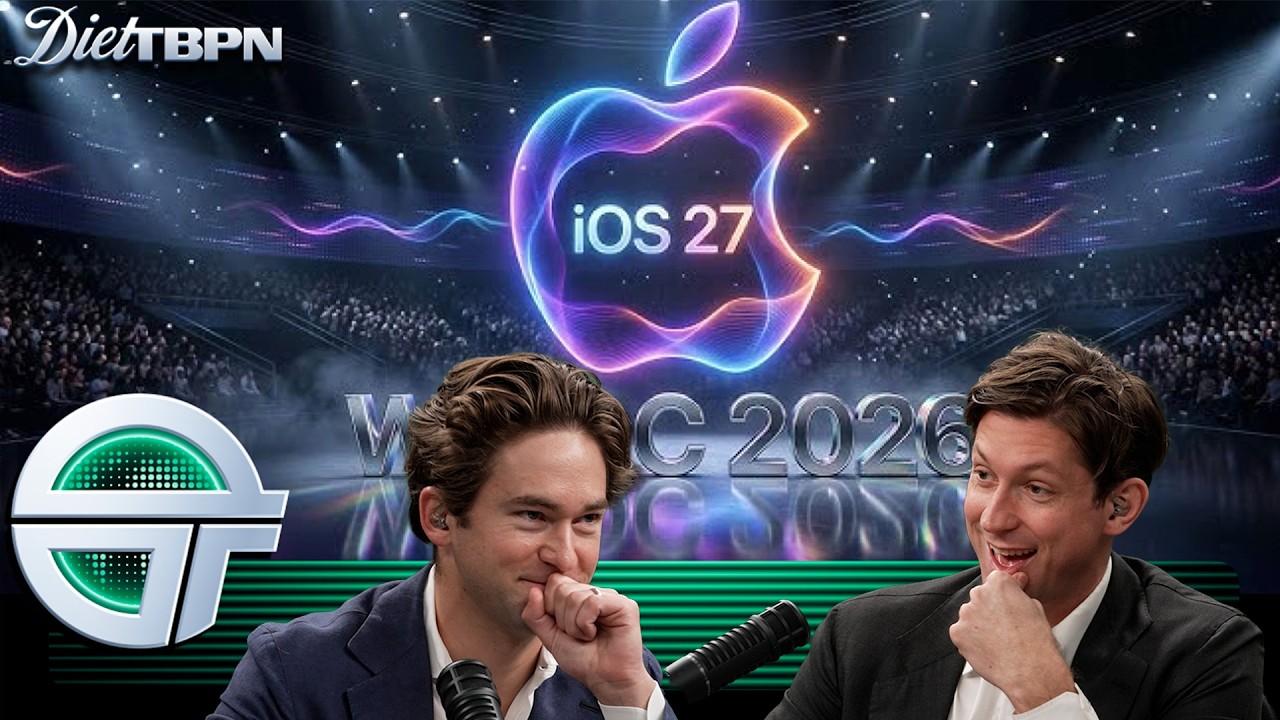
Apple's WWDC 2025 is here, and the question everyone is asking — what is new with Siri and Apple Intelligence at WWDC 2025 — finally has real answers. After two years of billboard campaigns, missed promises, and a Siri that never quite delivered, Apple's annual Worldwide Developers Conference (running through Friday under the theme All Systems Glow) is putting the full package on display. Tim Cook kicked off the keynote, and the early reactions suggest Apple may have actually threaded the needle between sky-high expectations and genuine delivery.
What's Actually New with Siri at WWDC 2025?
The core promise is simple: Siri finally behaves like a modern AI assistant. Apple isn't trying to reinvent the wheel — they're implementing best practices already proven by ChatGPT, Gemini, Claude, and even Grok. The expectations heading into this conference are calibrated differently than, say, the Apple Vision Pro launch. Nobody is demanding a breakthrough no other company has achieved. People just want Siri to work the way they already expect AI to work.
What's interesting is that Apple appears to have let the hype build organically this time rather than plastering billboards for features that weren't ready. A year or two ago, Apple was running ads for Genoji and Apple Intelligence features that, frankly, set themselves up for failure. This year the product strategy feels more grounded: models are good now, so just make them available at the click of a button — ideally the Siri button, which has been functionally nerfed for years.
On the performance side, expect tangible speed gains alongside the AI features. Analysts clocked numbers like 30% faster lock screen opening and improved app launch times across the board. As Bloomberg's Mark Gurman has noted, the AI features often feel abstract to everyday users — what moves the needle is battery life, camera quality, and raw speed. Apple seems to know this.
What Is Apple's Private Cloud and Is It Really Private?
Every time a new AI feature was demoed during the keynote, Apple emphasized one phrase: private cloud. It's doing a lot of work. But what does it actually mean?
The honest answer is: it's complicated. Apple is clearly not doing all of this on-device — if they were, they'd just say "on-device," which is an even stronger privacy claim. The word cloud means the inference is happening somewhere off your phone. Apple has enormous data center capacity supporting iCloud, Photos, and its productivity suite, so they have the infrastructure. But serving a billion iPhone users pushing the Siri button at frontier-model quality is a staggering compute problem.
Some sharp-eyed observers noted that Apple mentioned rate limits and a subscription plan during the presentation — a detail that matters. You don't need rate limits if inference is purely on-device. Rate limits signal server-side compute with real costs attached. So the picture is likely a hybrid: lighter queries handled on-device, heavier reasoning pushed to Apple's cloud infrastructure.
The bigger open question is whether any of this routes through Google Cloud Platform, given the Gemini partnership. Apple appears to be white-labeling and fine-tuning Gemini models under their own branding — a smart deal if true. But the inference chain and the emissions footprint of running that at scale are things Apple will eventually have to account for publicly.
Will ChatGPT, Claude, and Gemini Get Deeper iPhone Access?
This is one of the most consequential questions coming out of WWDC, and it doesn't have a clean answer yet. The core tension is straightforward: how many hooks will third-party AI apps get into core iPhone functionality?
Think about the camera roll analogy. Many apps ask for full, permanent access to your photo library. Some people grant it without a second thought. The AI equivalent — letting ChatGPT or Claude read your iMessages, access your calendar, or act on your behalf across apps — is orders of magnitude more sensitive. Will Apple allow that with a one-time permission? A per-session prompt? Or will the friction be high enough that deep integration never really happens in practice?
The framework here builds on Siri App Intents and deeper iOS APIs. How Apple calibrates access will determine whether the iPhone becomes a genuinely open AI platform or whether third-party AI apps remain walled off from the features that would make them most useful. Apple's historical instinct is toward control — but the competitive pressure from Android's more open AI integrations is real.
What Happened to Apple's Liquid Glass Design?
Apple's bold new liquid glass design language — the translucent, refraction-heavy aesthetic previewed for macOS and iOS — appears to have been softened after user feedback. Early screenshots of the new Mac operating system drew complaints about contrast issues, with some calling it too bright or too dark depending on the context.
The new Apple Maps icon offers a window into the compromise: it retains a touch of liquid glass styling without going full immersion. Apple is clearly listening — or at least adjusting — before the final release. Whether the aesthetic holds up at scale across all system apps remains to be seen, but the early concession on usability grounds is a good sign for people who spend long hours staring at their screens.
What Did the May 2025 Jobs Report Actually Show?
Stepping back from Cupertino for a moment: Friday was a significant day in markets, and not for good reasons. The US Labor Department reported 172,000 seasonally adjusted jobs added in May, with unemployment holding at 4.3%. Third straight month of job growth. Wall Street Journal headline: "US Hiring Gathers Steam."
The market's reaction was brutal. The NASDAQ dropped 4.2% — its worst single day in over a year. The logic: a strong jobs market reduces the likelihood of Federal Reserve rate cuts. In fact, with inflation still running above the 2% target (and the closure of the Strait of Hormuz spiking energy costs), rate hikes are back on the table. Higher rates compress valuations for tech companies whose earnings projections stretch a decade out.
As of Monday, markets had recovered about 1.5%, which puts things in perspective. The long-term silver lining of elevated rates is that the Fed has room to cut if conditions deteriorate — a tool that wasn't available during COVID when rates were already at zero.
One irony worth noting: all the AI leaders who have been publicly predicting mass unemployment are 0-for-3 on consecutive months of job growth. The AI job apocalypse, at least for May 2025, is officially canceled.
The Best VC Horror Stories Founders Are Sharing Right Now
Greg Eisenberg kicked a hornet's nest on social media by soliciting VC pitch horror stories, and the replies delivered. The highlights:
- Greg Eisenberg: Pitched a top-three VC firm for a $15M Series A. One GP fell asleep — fully out cold — for 30-plus minutes. Nobody acknowledged it. The pitch continued.
- Matthew Prince (Cloudflare CEO): Vinod Khosla allegedly offered to invest in Cloudflare's Series C on the condition that Prince fire specific team members who had briefly stepped out to use the restroom.
- Travis Kalanick: In 2001, intercepted a fleeing VC partner in the parking lot and pitched him from the passenger seat of a parked Lexus. The partner placed the laptop on his stomach, pressed against the steering wheel, and flipped through the slides himself.
The distinction worth drawing: pitch horror stories are table stakes in startup life. If you're doing 50 investor meetings, a few are going to be disasters. A checked-out VC who writes the check and disappears might even be preferable to one who micromanages. Board-level horror stories — where the VC has real governance power — are a different and more serious category.
What Is the 'Sequoia Scam' Founders Are Calling Out?
Merkor CEO Brendan Foody's post about what he called the "Sequoia Scam" went viral — and then he walked it back, somewhat. The mechanics: Sequoia and other top firms sometimes invest in two tranches at different valuations. A firm might buy in at $500M and again at $1B. The blended price is significantly below the headline number. When founders then tell employees or other investors they raised "at a $1B valuation," that's misleading — sometimes materially so.
Is this illegal? Not by itself. Structured, tranched investments have been standard practice for decades — you can see it in Sequoia's original YouTube investment memo. The risk of fraud arises when founders misrepresent the structure to other investors who are making decisions based on the headline valuation. That's where securities law exposure begins.
Foody himself added a reply 30 minutes after his post went viral clarifying that this is common industry practice across many top firms — not a Sequoia-specific scheme. The original framing was aggressive and the walkback was, as one observer noted, brutal in its timing. The lesson for founders: understand the structure of every deal you sign, and never misrepresent it downstream.
The Bottom Line on WWDC 2025
Apple is finally delivering the Apple Intelligence package it has been promising, with realistic expectations, a strengthened Gemini partnership, and a product strategy that leans on proven AI playbooks rather than moonshots. The private cloud infrastructure and third-party app access questions will define whether Apple becomes a genuine AI platform or a curated experience with AI aesthetics. Either way, WWDC 2025 feels like a pivot point — and the week is still young.