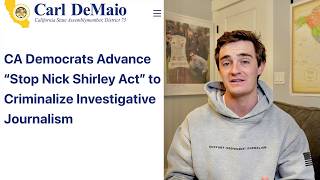
California just passed one of the most controversial pieces of legislation in recent memory. AB2624, also known as the Stop Nick Shirley Act, sailed through the California State Assembly with 49 votes in favor and only 19 against — and it's now headed to the California Senate. So what does AB2624 actually do? In plain terms, it makes it significantly harder — and potentially illegal — to publicly expose fraud being committed by designated immigration support service providers. That includes filming their locations, posting their images online, or sharing identifying information after they hand you a written demand to stop. Critics across the political spectrum are calling it a direct assault on the First Amendment.
What Is California AB2624 and What Does It Actually Do?
AB2624 is officially called the Safe at Work Act. It expands California's existing Safe at Home program — a nearly 30-year-old privacy initiative — to cover immigrant service providers, their employees, and volunteers. Under Safe at Home, participants can use a substitute address designated by the Secretary of State, keeping their real home, work, and school addresses out of public records.
 01:45
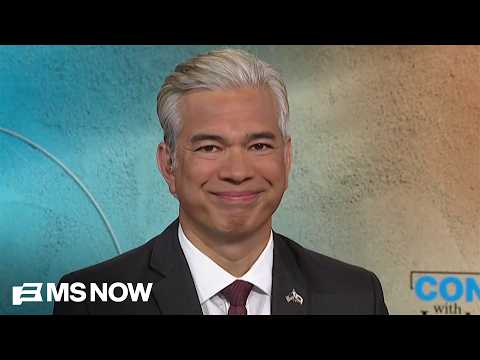
Assembly Member Mia Bont acknowledges First Amendment concerns and announces amendments to AB2624 on the Assembly floor
Watch at 01:45 →
01:45
Assembly Member Mia Bont acknowledges First Amendment concerns and announces amendments to AB2624 on the Assembly floor
Watch at 01:45 →
Sounds reasonable on the surface. But here's where it gets problematic. The bill's definition of "designated immigration support services" is extraordinarily broad. According to the bill's own language, it covers:
- Legal representation and legal assistance
- Advocacy and case management
- Humanitarian relief and immigration resources
- Referrals and translation services
- Counseling services
- Healthcare
- Nonprofit organizational offices
- Department of Justice recognized entities
- Community legal clinics and law offices
- Any facility deemed protected by the attorney general
That last point is critical. The attorney general can essentially designate any facility as protected. And since the bill includes nonprofit organizations with no limitations, hundreds of millions of dollars in California nonprofit funding could be shielded from public scrutiny overnight.
Does AB2624 Violate the First Amendment?
The bill's author, Assembly Member Mia Bont, has already acknowledged the First Amendment concerns — because she had to revise the bill four separate times since March 26 just due to blowback from First Amendment organizations. That alone should tell you something.
04:12
Assembly Member Cardea reads the bill's key language aloud and coins the phrase 'Stop Nick Shirley Act' — watch Democrats react immediately
Watch at 04:12 →
Here is the exact language from the bill that has constitutional experts and citizen journalists alarmed:
"A person, business, or association shall not publicly post or publicly display, disclose, or distribute on the internet the personal information or image of a designated immigration support service provider."
The bill goes even further. If a provider hands you a written demand — a simple piece of paper stating they fear for their safety — you are legally barred from posting any footage or information about them online. If you do post it anyway, you face civil liability, a minimum $4,000 fine, and you have to cover their attorney fees when they take you to court.
Originally, the bill included fines of $10,000 to $50,000 and up to one year in jail. Public pressure forced those provisions out, but the civil liability structure that remains is still a powerful legal weapon against journalists and investigators.
09:30
Assembly Member Topinga calls AB2624 a 'Trojan horse' and is cut off mid-speech when he begins citing fraud dollar amounts
Watch at 09:30 →
Why Is AB2624 Called the Stop Nick Shirley Act?
Assembly Member Cardea (referred to as "Deayo" in the session) gave one of the most direct floor speeches of the session, coining the term "Stop Nick Shirley Act" — and the reaction from Democrats in the chamber was immediate and telling.
Nick Shirley is a citizen journalist and fraud investigator who has spent years documenting large-scale fraud inside communities receiving government-funded services. His investigations — including exposing empty hospices in the Armenian community in Van Nuys, California, and Feeding Our Future-style fraud in Minnesota's Somali community — directly preceded the creation of this bill.
As Cardea explained on the Assembly floor: if Nick Shirley shows up at one of the 90 alleged fake hospices operating in Los Angeles, films empty beds, no patients, no medical supplies, and no staff — and then someone inside hands him a business card — under AB2624, posting that footage online would be illegal.
"This is outrageous," Cardea said. "I'm urging you to uphold the First Amendment and to protect the right of citizen journalists like Nick Shirley and others to do the work that they've been doing. They've been exposing fraud. This is fraud that taxpayers ought to know about."
How Much Immigration Fraud Is Happening in California?
This is the context that supporters of the bill consistently avoid discussing. California's immigration support services sector receives hundreds of millions of dollars in taxpayer funding annually — much of it flowing through nonprofits. And documented fraud in this space is staggering.
Assembly Member Topinga noted on the floor that investigators alone identified over $4 billion in fraud across just three cases in California. The hospice fraud scandal in the Armenian community in Van Nuys is one of the most documented examples — ghost hospices billing Medi-Cal for patients who didn't exist, services that were never rendered, and facilities with no staff, no equipment, and no patients.
It's also worth noting that the organization Chura — one of the groups connected to backing this bill — has been separately exposed for funding and organizing political protests in Los Angeles. These are the same types of nonprofits that would receive sweeping legal protection under AB2624.
Who Is Mia Bont and What's Her Conflict of Interest?
Here's where the story gets even more complicated. Mia Bont, the Assembly Member who authored AB2624, is the wife of California Attorney General Rob Bont. Let that sink in for a moment.
The California Attorney General's office is responsible for investigating, prosecuting, and exposing fraud. Meanwhile, his wife is actively pushing legislation that would make it harder for journalists and investigators to surface fraud — and easier for fraudulent organizations to hide behind legal threats. That's not a small conflict of interest. That's a massive one.
When investigators and journalists showed up to confront the co-authors of this bill, not one of them could articulate basic facts about the legislation they had signed onto. Every co-author avoided direct questions and retreated behind closed doors. The bill's supporters on the Assembly floor framed opposition to it as anti-immigrant — despite the fact that the core concern is about politicians and connected nonprofits using immigrant communities to commit fraud.
What Are the Penalties for Violating AB2624?
Under the current version of the bill (after the $10,000–$50,000 fines and jail time were removed due to public pressure), violations still carry serious consequences:
- $4,000 minimum civil fine per violation
- Payment of the provider's attorney fees
- Civil liability for "actual damages"
The mechanism works like this: you film a location you believe is committing fraud. Someone at that location hands you a written demand stating they have a "reasonable fear for their safety" based on your presence or filming. You post the video anyway. They sue you. You're now responsible for their legal costs plus a $4,000 minimum penalty — even if the footage clearly shows fraud.
This creates what legal scholars call a chilling effect. Even if you'd ultimately win in court, the financial risk of being sued is enough to stop most citizen journalists from ever publishing their findings.
Can California Legally Ban Filming Fraud Investigations?
That's the central constitutional question now headed to the California Senate. The bill attempts to carve out a narrow exception — it only applies after a written demand is issued — but First Amendment attorneys argue this still fails constitutional scrutiny. You cannot create a private right of action that effectively bans truthful reporting and documentation of matters of public concern.
The bill has already gone through four revisions. It passed the Assembly 49 to 19. And now it moves to the Senate, where the fight over whether California can legally suppress fraud investigations in the name of immigrant safety will continue.
The bottom line: AB2624 is not just about protecting vulnerable immigrant service workers. It creates a legal shield broad enough to protect fraudsters operating under the umbrella of immigrant services — and it does so at the direct expense of your First Amendment right to know how your tax dollars are being spent.