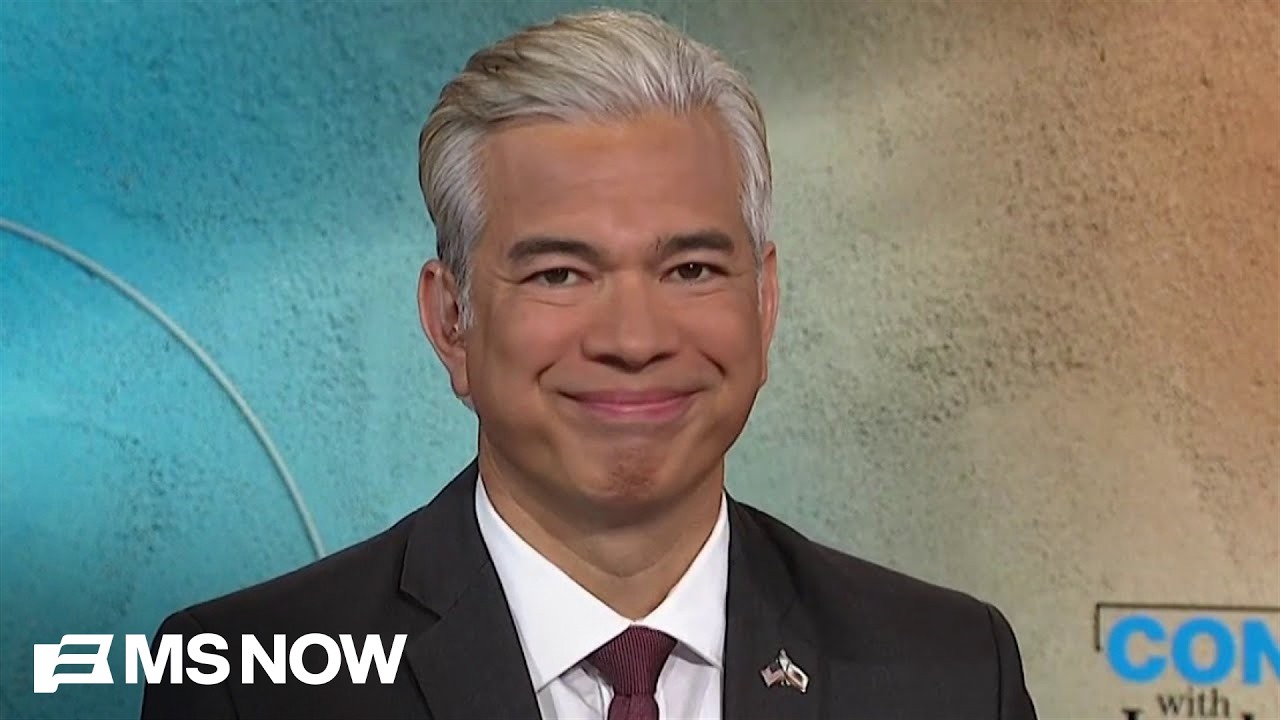

A federal judge has ruled that Trump's voting executive order is unlawful — and California Attorney General Rob Bonta says the decision was exactly what his office argued from the beginning. The ruling struck down sweeping restrictions Trump attempted to impose on the right to vote across the country, reinforcing a core constitutional principle: the president does not have the authority to unilaterally dictate how elections are run. Here's everything you need to know about the ruling, what comes next, and the other major legal fights Bonta is waging right now.
Was Trump's Voting Executive Order Ruled Unlawful?
Yes — and decisively so. Trump issued two executive orders aimed at adding significant new restrictions to voting nationwide. The orders included measures like creating a citizenship verification list designed to filter out certain mail-in ballots, imposing new documentary proof-of-citizenship requirements, and declaring that timely cast mail-in ballots wouldn't be counted if they arrived after Election Day.
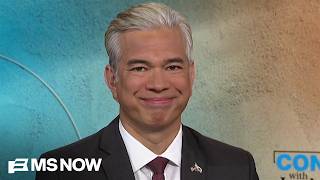 00:45
AG Bonta explains the constitutional basis for striking down Trump's voting executive orders
Watch at 00:45 →
00:45
AG Bonta explains the constitutional basis for striking down Trump's voting executive orders
Watch at 00:45 →
Attorney General Bonta, who led the coalition challenging the orders, described the court's ruling as a clear and complete vindication. "What the court said is what we argued," Bonta explained. "The president does not have the right to do this. It is not within his constitutional authority."
The legal foundation is straightforward. Article I of the U.S. Constitution contains what's known as the Elections Clause, which explicitly assigns the power to set the time, place, and manner of elections to the states — and to some degree Congress — but not the president. Trump's executive orders attempted to exercise authority the Constitution never granted him.
Can the President Change Election Rules on His Own?
According to both the federal court and the Constitution, no. The Elections Clause is explicit, and the judge's ruling reinforced that presidential power has real limits when it comes to how Americans vote.
Bonta framed Trump's pattern of behavior around elections as part of a longer and more troubling history. "He has tried time and time again to undermine the right to vote, to disenfranchise voters," Bonta said, pointing to Trump's calls to Georgia election officials to "find" more than 11,000 votes, the attempted seizure of ballots in Fulton County, and his role in fueling the January 6th attack on the certification of President Biden's election victory.
03:20
Bonta describes sitting in the same row as Trump at the Supreme Court birthright citizenship oral arguments
Watch at 03:20 →
"This is more of the same," Bonta said. "It's desperate, it's dangerous, it's reckless — and we stopped him yet again."
The ruling also has direct local implications. Bonta noted that Trump's federal reach extended even into Los Angeles municipal elections, where officials from the U.S. Attorney's Office showed up at the Los Angeles County recorder and clerk's office in the City of Industry to conduct what was described as an "investigation" into the mayoral election results.
What Really Happened With the LA Election Investigation?
The Los Angeles election results — covering both the governor's race and the mayoral contest — were fully certified after a thorough counting process. California, Bonta noted, counts every ballot and does so with complete transparency. There is even a live feed available so anyone can watch the vote-counting process in real time.
05:10
Bonta responds to reports that he demanded CNN be sold as part of the Paramount-Warner Bros merger deal
Watch at 05:10 →
Despite this openness and accuracy, federal officials arrived at the county recorder's office, apparently driven by Trump's dissatisfaction with certain outcomes. Bonta was blunt about what he sees as the underlying logic: "If we win, the election was fair. If me or the people that I support lose, it was rigged."
As for whether an actual federal investigation is ongoing, Bonta said he has received no information from federal counterparts confirming one. "There's been no evidence of any widespread voter fraud," he said. "Every count, recount, hand count, audit, court case has shown that. But Trump continues to make this a figment of his imagination."
What Will the Supreme Court Decide on Birthright Citizenship?
One of the most consequential legal battles still pending is the birthright citizenship case, where Trump has attempted to use an executive order to reinterpret the 14th Amendment and end automatic citizenship for children born in the United States to non-citizen parents. California is among the states challenging this move, and Bonta was actually present at the Supreme Court for oral arguments in early April 2025.
That hearing made history for an unusual reason: Trump became the first sitting president in U.S. history to attend a Supreme Court oral argument in person.
Bonta, who was seated in the same row as Trump during the proceedings, offered a candid account of the moment. "There was a lot of folks stealing glances over at him throughout the oral argument. I was guilty of that as well," he admitted. "Honestly, he looked a little bored."
Bonta's read of the argument itself was far more significant. He came away convinced that the challengers will win. "It was clear from the oral argument that he's going to lose this case," Bonta said. "It's only a matter of what the count of the judges will be — 5-4, 6-3, 7-2, something else."
The core legal issue mirrors what came up in the voting rights case: the president cannot unilaterally amend the U.S. Constitution. "I was gratified that he got to personally witness what I believe will be a defeat on one of his major initiatives," Bonta said.
Is the Paramount Warner Bros Merger Under Investigation?
Yes, California's Attorney General office is actively investigating the proposed Paramount-Warner Bros merger. Bonta confirmed that the deal has not yet cleared regulatory scrutiny and that his office has identified serious concerns, including potential job losses, higher prices for consumers, and reduced quality and choice in the media marketplace.
"There are red flags in the air everywhere," Bonta said, while emphasizing that his office is conducting a rigorous but fair antitrust analysis. A decision is expected in the coming weeks.
Did Rob Bonta Really Demand CNN Be Sold in the Merger Deal?
A report from media outlet Puck claimed that Bonta was pushing for CNN to be sold as part of any antitrust resolution — essentially as a "consolation prize" if a court wouldn't block the full transaction. Bonta pushed back firmly on that characterization.
"I don't know where that comes from, to be honest," he said. "There's been a lot of opining about what I'm thinking or what I'm saying or what I'll do, and I have no idea where it comes from."
He was careful not to comment specifically on CNN, stressing that his office's work is a "straight-up antitrust analysis" — not a media policy intervention or a reaction to concerns about editorial independence. That said, Bonta acknowledged the broader context is impossible to ignore, particularly given what has played out at CBS News regarding editorial independence under corporate pressure.
"We have to be concerned about that. We're not naive. We see what's happening in the world," he said. "I have always been a supporter of the independent free press as a critical guardrail in our democracy. That needs to continue."
But the official lane for his office remains antitrust law — and whatever decision emerges will be grounded in that framework alone.
The Bottom Line
From striking down Trump's voting restrictions to preparing for what may be a landmark Supreme Court ruling on birthright citizenship, California's Attorney General is at the center of some of the most consequential legal fights in the country right now. Bonta's message across all of them is consistent: the president has limits, the Constitution means what it says, and states like California intend to enforce that — in court, every time.