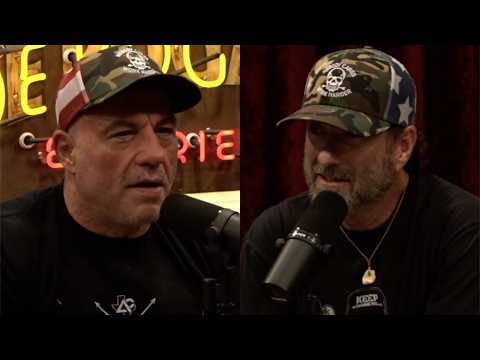
Standing at the weigh-ins for a major UFC card offers a window into fighter psychology that television rarely captures. Joe Rogan, who has announced and commentated on hundreds of fights, describes the pre-fight environment as a place where emotion runs raw — and where one massive weight miss sent an entire card into controlled chaos.
What You Actually See in a Fighter's Eyes
Most people assume elite fighters at major weigh-ins are consumed by fear. Rogan pushes back on that. "You never see fear," he says, with one notable exception: opponents stepping in against Anderson Silva during his untouchable prime. "When guys reach that unstoppable level, you see some fear." Outside of moments like that, what fills the room is something different — anxiety, tension, and a focused, coiled intensity.
The fighters who bring that intensity most visibly, according to Rogan, are Conor McGregor and Nate Diaz. Both carry genuine animosity into the room when the matchup demands it, and that emotional authenticity makes the face-offs electric. "It all depends on whether or not they have real animosity towards each other," he notes. "Nate Diaz is probably somebody that gets pretty intense."
The Feeling Before a Big Fight
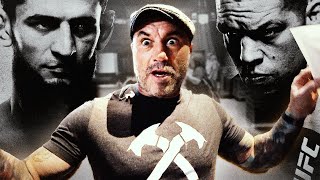
Rogan describes the moment before a major event as one of the few times the scale of what he does fully lands on him. Before fights like Leon Edwards versus Kamaru Usman, he says, goosebumps start building and his whole body tingles. "Your whole body jolts" when something extraordinary happens — like a fifth-round head-kick knockout that nobody saw coming — and those reactions have turned him into a recurring meme, frozen mid-disbelief alongside Daniel Cormier behind the commentary desk.
"More innovation is happening in combat sports in the past 20 years than in every prior era of history combined," Rogan says, and being at the center of that shift is something he feels viscerally before every major card.
 04:10
Joe Rogan and commentator reacting ringside during a dramatic UFC finish
Watch at 04:10 →
04:10
Joe Rogan and commentator reacting ringside during a dramatic UFC finish
Watch at 04:10 →
Hamza Chimaev Misses Weight by 8.5 Pounds — and the Card Reshuffles
The weigh-in session Rogan was attending wasn't business as usual. Hamza Chimaev missed weight by eight and a half pounds — a staggering margin at the elite level — forcing a complete restructuring of three fights on the card.
The ripple effects: Li Jingliang versus Daniel Rodriguez was assembled on short notice; Rodriguez had originally been scheduled to fight Kevin Holland; and Chimaev, who was supposed to headline against Nate Diaz, was redirected to face Holland instead. Diaz was matched with Tony Ferguson.
Rogan's assessment of the reshuffle was pointed. "Tony Ferguson versus Nate Diaz is a much better fight — much more competitive." On the Chimaev-Holland pairing, he sees genuine danger for Chimaev: "Kevin Holland is a big guy. He fought at 185 and knocked people out, including Joaquin Buckley. I think that's a real test for Hamza."
Why Do Fighters Miss Weight by That Much?
A miss of 8.5 pounds at the professional level is unusual enough that it demands explanation. Rogan outlined the most plausible scenarios: the fighter was sick or injured going into fight week, he didn't prepare the weight cut properly, or — more psychologically interesting — the buildup and animosity around the Nate Diaz matchup mentally derailed his preparation. "Maybe he was so worked up by all the Nate Diaz stuff that he didn't want to get in the sauna," Rogan speculates. "We really don't know. You'd have to be someone he could confide in to get the truth."
Whatever the cause, the consequences were immediate and significant. Three fights, three entirely different opponents, and fighters competing against styles and game plans they had no time to properly prepare for. As Rogan put it: "It's chaos — and it's a totally different kind of fight for everyone involved."
The Broader Moment in Combat Sports
What comes through in Rogan's commentary isn't just expertise — it's genuine enthusiasm for a sport he believes is evolving faster than any other. The weigh-ins, the last-minute reshuffles, the face-offs loaded with real tension — for him, none of it feels routine. Each card still produces goosebumps. Each shocking finish still jolts him out of his seat. That reaction, unguarded and caught on camera for millions to see, has become as much a part of UFC culture as the fights themselves.