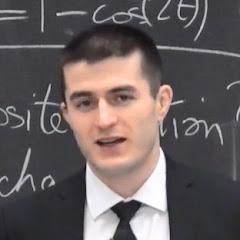
Justin Gaethje walked into his UFC lightweight title fight as a six-to-one underdog against one of the pound-for-pound best fighters in the world — and walked out as champion. Speaking with Joe Rogan alongside his longtime coach Trevor Wittman, Gaethje reflected on what made that night possible: years of grinding, an unusually honest coaching relationship, and a counterintuitive moment where getting hurt may have actually won him the fight.
The Title Hasn't Felt Real Yet
Despite the magnitude of the win, Gaethje admitted the reality still hadn't fully landed. He'd expected to feel a wave of relief — some internal release from the pressure of chasing the belt for years — but it didn't come the way he anticipated.
"I haven't even thought about it," he told Rogan. "I was sitting there thinking, wow, I'm the champion. It's crazy." He traced the journey back nineteen years, to when his father dropped him off in Colorado with no connections, just a drive to wrestle. From that starting point to UFC champion, he said, there's no clean explanation — only relentless work, mistakes corrected along the way, and coaches who kept him on track.
The Coaching Relationship That Made the Difference
Trevor Wittman has built his reputation not just on technical coaching but on knowing his fighters as people. He describes his role less as a trainer and more as a father figure — someone obligated to tell hard truths even when it costs him in the short term.
"I've had to let fighters go like a child," Wittman explained. "Tell them the truth so hard that I say, go live life, and when you return I'll still love you." That philosophy extends to how he manages Gaethje's emotional and mental state throughout camp — knowing when to push, when to pull back, and when to simply stay out of the way.
What makes their dynamic unusual is that it runs both directions. Wittman openly credited Gaethje with teaching him new dimensions of the mental game — something Wittman considers one of his strongest areas as a coach.
 08:30
Wittman and Gaethje discussing their coach-athlete dynamic in the studio
Watch at 08:30 →
08:30
Wittman and Gaethje discussing their coach-athlete dynamic in the studio
Watch at 08:30 →
Gaethje's mental approach has always been self-directed. Since age four, no coach has ever had to pull him aside to address his mental state in competition. Whether that's because coaches saw he didn't need it or simply didn't understand what was happening, the result is the same: an unusually composed competitor who treats fights as games rather than crises.
Expectations as a Liability — The Lesson Ilia Topuria Couldn't Hear
Before the fight, Gaethje told Topuria directly: having fixed expectations about how a fight unfolds is a vulnerability. Once a fight stops matching your mental script — especially deep into rounds — you lose your footing. Topuria, confident and locked in on a specific outcome, rejected the warning. In Gaethje's view, that rejection pushed Topuria further from the truth.
"He wanted to prove himself right," Gaethje said. "And he was unwilling to be open to opinions."
Wittman used a blunt analogy to describe the difference in mindset. The person who stands in the ice cream aisle debating options will always be slower than the person who already knows they want mint chocolate chip. Topuria's certainty and confidence carried him through three dominant fights — but that same rigidity became a weakness when the fight didn't go as expected. "You get that stale, nasty, rotten milk mint chocolate chip," Wittman said, "and then where do you go?"
The Liver Shot That May Have Won the Fight
The most surprising claim from the conversation: Gaethje believes getting dropped by a liver shot in the second round was one of the primary reasons he won the fight.
It wasn't the first body shot Topuria had landed — it was the fourth or fifth. When Gaethje went down, Topuria had genuine reason to believe he was close to a finish. That belief, Gaethje argued, caused Topuria to commit everything — to dump his entire tank chasing the stoppage — rather than stay patient over five rounds.
28:45
Replay or discussion of the second-round body shot sequence and Gaethje's defensive work on the ground
Watch at 28:45 →
"Him hurting me to the body was one of the main reasons I won," Gaethje said plainly.
On the ground, Gaethje made a series of sharp defensive decisions — avoiding being flattened, working off a triangle attempt, defending an armbar — all while absorbing one of the most painful shots a fighter can take. Wittman was precise about the physiology: a head shot is a jolt; a liver shot feels like dying. The composure Gaethje showed in that moment, making good decisions while his body was screaming, was the product of years in difficult fights.
Wittman framed Topuria's choice to go to the ground as understandable but ultimately costly. With Gaethje's grappling reputation against him — the Khabib fight, the Charles Oliveira fight, widespread skepticism about his ground game — Topuria had logical reasons to follow. But Gaethje had already resolved that he would have pulled guard, grabbed legs, or forced a grappling exchange regardless. He was never going to stand and trade again in that moment. Topuria's aggression, driven by urgency, burned through reserves that would have been decisive in the championship rounds.
Wars Prepare You for Wars
One structural advantage Gaethje carried into this fight was simply experience. He has been in brutal, grinding, back-and-forth wars throughout his career. Topuria, dominant as he has been, had faced only isolated rough patches — a difficult exchange with Jai Herbert, some pressure from Youssef Zalal — nothing that tested whether he could endure sustained adversity across multiple rounds.
When Gaethje didn't break in the second round despite being hurt, it introduced a variable Topuria had never encountered before. The fight not going according to plan, against someone who clearly wasn't going to fold — that's a different psychological problem than anything in his previous experience.
Gaethje's coachability, his willingness to absorb lessons from losses and setbacks, his refusal to lie to himself about where he stands — these qualities compounded over nearly two decades into a fighter who could handle exactly the moment Sunday night demanded. "Every person, place, or thing that has happened to me," he said, "has ultimately molded my mind and body to deal with that situation."