Can mathematics be popularized for a general audience the same way Cosmos brought physics and astronomy to millions? According to Grant Sanderson — the mathematician behind the massively popular YouTube channel 3Blue1Brown — the answer is an emphatic yes. In a lively math meme review session recorded after a podcast conversation, Sanderson made the case that public appetite for genuine mathematical understanding is not only real, it's currently underserved. And he has the data to back it up.
Could Math Ever Get a Cosmos-Style Netflix Show?
When asked directly whether a Netflix-style show for mathematics was possible, Sanderson didn't hesitate. "I will host it for you. You just call me," he said, addressing any Netflix executives who might be listening. But beyond the joke, his argument is serious.
 02:15
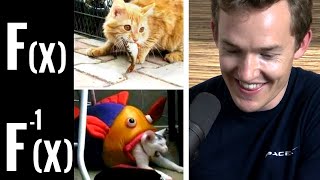
Grant Sanderson reacting to the division-by-zero meme and referencing projective geometry
Watch at 02:15 →
02:15
Grant Sanderson reacting to the division-by-zero meme and referencing projective geometry
Watch at 02:15 →
The challenge, he acknowledges, is walking "a tight line between are you doing it substantively or are you just waving your hands." A show that dumbs math down into visual spectacle without real content would betray the audience. But Sanderson believes there is "enough really interesting math that you can substantively get across" to a curious general public — math that doesn't require hand-waving, just good communication.
He pointed out that the cosmos parallel works precisely because Carl Sagan and Neil deGrasse Tyson didn't avoid the real science. They trusted viewers to rise to the material. Sanderson believes the same approach would work for mathematics, and that a mainstream platform hasn't seriously tried yet.
Why Is Numberphile More Popular Than Brady's Other Channels?
The strongest evidence Sanderson offered for mass appetite in math content comes from an unexpected source: YouTuber Brady Haran's network of educational channels. Brady runs roughly ten channels, each covering a different scientific discipline in a similar style — chemistry, physics, astronomy, and more. You might expect physics or chemistry to top the charts. They don't.
05:40
Sanderson explaining why Numberphile outperforms all of Brady Haran's other science channels
Watch at 05:40 →
"Number file is the biggest among them by far," Sanderson noted, and crucially, all of the channels are successful. "But I would have guessed if you were just pitching these products ten years ago — the channel on physics will be very popular, the chemistry one will be pretty popular, the numbers one... maybe third."
Instead, Numberphile — the channel dedicated to mathematics — outperforms them all. For Sanderson, this is not a coincidence. It speaks to "an unsatiated appetite for real understanding of what gets mathematicians going." People don't just want science made accessible; they specifically want the logical depth and puzzle-solving nature of mathematics, and they're not getting enough of it.
Machine Learning vs Insanity: What Does the Meme Actually Mean?
One of the most discussed memes in the session contrasted two definitions. Insanity, the classic saying goes, is doing the same thing over and over again and expecting different results. Machine learning, the meme declares, is doing it over and over again — but bigger.
03:10
The machine learning vs insanity meme that sparked the GPT-3 and Einstein comparison
Watch at 03:10 →
Sanderson's review was sharp and concise: "Sometimes quantity has a quality all of its own." He referenced GPT-3 and its 175 billion parameters as a real-world example. There is something almost philosophically strange about the fact that simply scaling up a process — doing the same basic mathematical operations millions more times — can produce emergent behaviors that feel qualitatively different.
"Einstein didn't have 175 billion parameters," Sanderson quipped. The meme lands because it captures something genuinely true about modern AI: brute-scale iteration, the thing that sounds like a joke, is actually part of what makes large language models work. It's absurd and accurate at the same time — which is the sweet spot for a great math meme.
What Does 3Blue1Brown Think Is Wrong With Math Education?
Woven through the meme review were recurring observations about what's missing from standard math education. One meme showed a college student almost done with their bachelor's degree in mathematics, only to realize how much they still don't know. Sanderson's review: "uncomfortably true."
His broader point — echoing the podcast conversation that preceded the meme review — is that getting a math degree leaves enormous gaps. The curriculum covers techniques and procedures but often fails to convey the spirit of mathematical inquiry: why certain ideas are beautiful, how mathematicians actually think, and what it feels like to be genuinely curious about a problem.
This is precisely the gap that channels like 3Blue1Brown attempt to fill. Rather than walking through proofs mechanically, Sanderson's videos try to build visual and intuitive understanding — the kind of understanding that a formal degree sometimes accidentally trains out of students in favor of symbol manipulation.
Why Is Dividing by Zero Not Allowed in Math?
The session opened with a meme about dividing by zero — the classic forbidden operation that "breaks the universe." Sanderson's review took an unexpected turn: he criticized the meme's devils for not being "sufficiently appreciative of projective geometry."
It's a real mathematical point wrapped in humor. In standard arithmetic, dividing by zero is undefined because no consistent value can be assigned to it without creating contradictions. But in projective geometry — a branch of mathematics that extends the standard number line — mathematicians actually do work with a "point at infinity" that behaves somewhat like the result of dividing by zero.
The joke is that the meme treats division by zero as purely chaotic and forbidden, when in fact mathematicians have entire frameworks for reasoning carefully about the concept. The universe doesn't break — you just need the right mathematical structure to handle it.
Should Calculus Drop Secant and Cosecant? Grant Has Thoughts
Near the end of the meme review, the conversation turned to trigonometric functions — specifically the ongoing debate among math educators about whether secant, cosecant, and cotangent are worth teaching at all.
Sanderson came down clearly on one side. When a meme celebrated the trig identities that make calculus notation "more compact," he pushed back: "Just write it as one over cosine squared. It's not that many more symbols. You're contributing to the problem."
His argument is practical. Secant is simply the reciprocal of cosine. Teaching it as a separate named function adds cognitive load — students have to memorize "wait, what was secant again?" — without adding mathematical insight. Writing 1/cos²(x) is marginally longer but immediately transparent. The abbreviation saves a few characters while costing students clarity.
It's a small but telling example of Sanderson's broader philosophy: mathematical notation and pedagogy should serve understanding, not tradition.
The Bigger Picture: Math Deserves Better Communication
What makes this meme review more than just entertainment is the consistent thread running through it. Whether Sanderson is talking about Netflix shows, Numberphile's surprising dominance, or the sins of secant notation, the underlying argument is the same: mathematics is fascinating, people know it's fascinating, and the infrastructure for communicating that fascination at scale is still being built.
The appetite is there. The content creators are emerging. And if anyone from Netflix is reading this — Grant Sanderson has already said he'll host.