What can we really learn from people who survived hardship most of us will never come close to experiencing? The answer, it turns out, isn't complicated — but it is profound. When a grandmother who lived through Stalin's forced famine, Nazi occupation, and decades of ordinary struggle passes away at 91, the lessons she leaves behind aren't found in self-help books. They're found in the quiet way she carried logs without complaining, the glimmer that stayed in her eyes despite everything, and the fire she lit in the people she loved. This is a tribute to one of those women — and the five lessons she passed down that are worth carrying forward.
What Can We Learn From People Who Survived Real Hardship?
The short answer: everything. People who have lived through genuine, civilization-scale suffering — famine, war, occupation — develop a relationship with life that most of us never access. They know, in their bones, that life is fragile and precious. They don't perform gratitude. They live it.
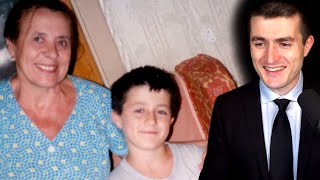 02:15
Describing the Holodomor and what his grandmother survived as a child in Ukraine
Watch at 02:15 →
02:15
Describing the Holodomor and what his grandmother survived as a child in Ukraine
Watch at 02:15 →
This grandmother was born near Kharkiv, Ukraine. As a child in 1932–1933, she survived the Holodomor — Stalin's famine that killed millions and, according to historians, drove communities to unthinkable extremes. As a teenager, she lived under fascist occupation during World War II. She rarely spoke about those times. But she carried them — and somehow, she also carried hope.
One historian wrote that during the Holodomor, the good people died first — the ones who gave their food to others, who refused to compromise their humanity even at the cost of their own lives. She was one of the ones who made it through. And for the rest of her 91 years, that experience shaped every lesson she passed on.
How Do You Build Unbreakable Mental Strength?
The first and perhaps most foundational lesson she taught was simple: never complain. Not as a performance of toughness. Not to impress anyone. But because complaining is a waste of the life you've been given.
When you consider what she had lived through — and then watch someone spiral into frustration over a delayed flight or a bad day at work — the contrast is almost absurd. Mental strength isn't the absence of pain. It's the decision to keep moving anyway, to find the glimmer of hope even in the darkest circumstances.
08:40
Recalling memories of his grandmother doing physical labor and planting his love of martial arts
Watch at 08:40 →
There's something that extreme experience does to a person. It hardens the heart enough to protect it from the outside world, while simultaneously softening it — opening it up for deeper, more genuine human connection. You may have seen this quality in others. It's unmistakable when you encounter it. It looks like calm. It looks like presence. It looks like someone who has already been through the worst and chosen, deliberately, to still be here.
If you find yourself drawn to figures like David Goggins or extreme athletes who push through impossible limits, you may be recognizing the same quality — that hard-won, unshakeable inner stillness that only comes from having truly suffered and survived.
Why Does Physical Toughness Still Matter in Modern Life?
The second lesson was about physical strength — not gym aesthetics, but the kind of strength that shows up when work needs to be done. Carrying logs. Moving heavy things. Getting the job done without fanfare or complaint.
There's a reason ancient warrior archetypes — whether it's the Bogatyri of Russian folklore, the Vikings, the knights of medieval Europe — still resonate with us. They represent a primal ideal: the capacity to bear weight, to fight, to endure. What's often forgotten is that this capacity isn't limited by gender. Strong women have always existed. They just don't always get the credit.
Watching his grandmother work with her hands, carry heavy loads, and move through the world with quiet physical power planted a seed early in life — a deep admiration for strength that eventually led to a love of martial arts, wrestling, and combat sports. The mat felt like home from the very first day, even when losses were frequent. That fire — the drive to train harder, go further — traced back to a woman who never set foot in a gym but embodied physical resilience every single day.
18:55
Emotional tribute ending with a toast in his grandmother's memory
Watch at 18:55 →
How Do You Stop Reacting and Start Thinking Clearly?
The third lesson was about the wisdom of silence. Not the silence of having nothing to say, but the silence of someone who thinks before they speak — who waits until they actually know what the right thing to say is.
Young minds are impatient. Emotional reactions feel urgent. Everything is personal, everything is immediate, and the instinct is to respond to every situation from the inside of the feeling rather than from above it. She modeled something different: a quiet observation of the world, a patience that allowed the full picture to come into focus before forming a response.
The lesson here is practical and timeless: your immediate emotional reaction to a situation is not the truth of the situation. It's a starting point. The ups and downs of how you feel in any given moment color everything — your perception, your interpretation, your judgment. Taking time, being quiet, and speaking only when you have something genuinely worth saying — that's not weakness. That's wisdom.
How Do You Believe in Yourself When No One Else Does?
This might be the most personally powerful lesson of all. From the very beginning, she told him he was capable of anything. That he was special. That the dreams he had were not delusions — they were visions of a future he could actually build.
It sounds simple. Maybe even a little naive. But for someone wired with deep self-doubt, someone who spent years quietly disliking themselves, that unconditional belief was oxygen. Most people — even loving, well-meaning people — give the advice that sounds wise: be reasonable, find stability, take the safe path. She never did. She said: go big.
That fire doesn't go out. On the hardest days — the days full of self-doubt, the days when the voice in your head says you're a fraud for daring to reach beyond what's expected — that's the ember that keeps going. The belief that what you're working toward is real, that the vision is achievable, that the work will get you there. That's the gift she gave. And it's the kind of gift that outlasts the person who gave it.
What Does It Mean to Love Unconditionally?
The fifth lesson is about love — not romantic love specifically, but love as a total orientation toward life. Her husband, Grandpa Gregory, died in 1986 at 58 years old. She loved him for the rest of her life. That love was quiet — not performative, not constantly spoken about — but it was always there. Unshakeable.
That kind of loyalty, that depth of human connection, leaves a mark. It sets a standard — not just for romantic partnership, but for friendship, for community, for how you move through the world. Love that deep isn't blind. It acknowledges that life is hard. It knows that suffering is real. And it chooses, every day, to appreciate everything anyway — the whole of it, not just the good parts.
She had a glowing joy about her. Not a simple, uncomplicated happiness — but the deep joy of someone who understood loss, who had seen the worst of what humans can do to each other, and who still chose to love people, love life, and love the world without condition.
How Do You Honor Someone After They're Gone?
You carry them forward. You let the lessons they gave you become the way you live. You grind through the self-doubt with the fire they lit. You stay quiet when you need to think. You carry the heavy things without complaining. You believe in the people around you the way they believed in you. And you put love out into the world — simply, without fear of being called naive or sentimental.
Her name was Anna. She was 91 years old. She survived things most of us will only ever read about in history books — and she came out the other side not bitter, not broken, but luminous. The poem she loved, loosely translated, says it best: learn to treasure love. Treasure the few years of life you have on this earth.
At any moment, life can end. Tell the people you love that you love them. And make sure the fire someone else kindled in you never goes out.