
What Is a Star Fort and How Does It Work?
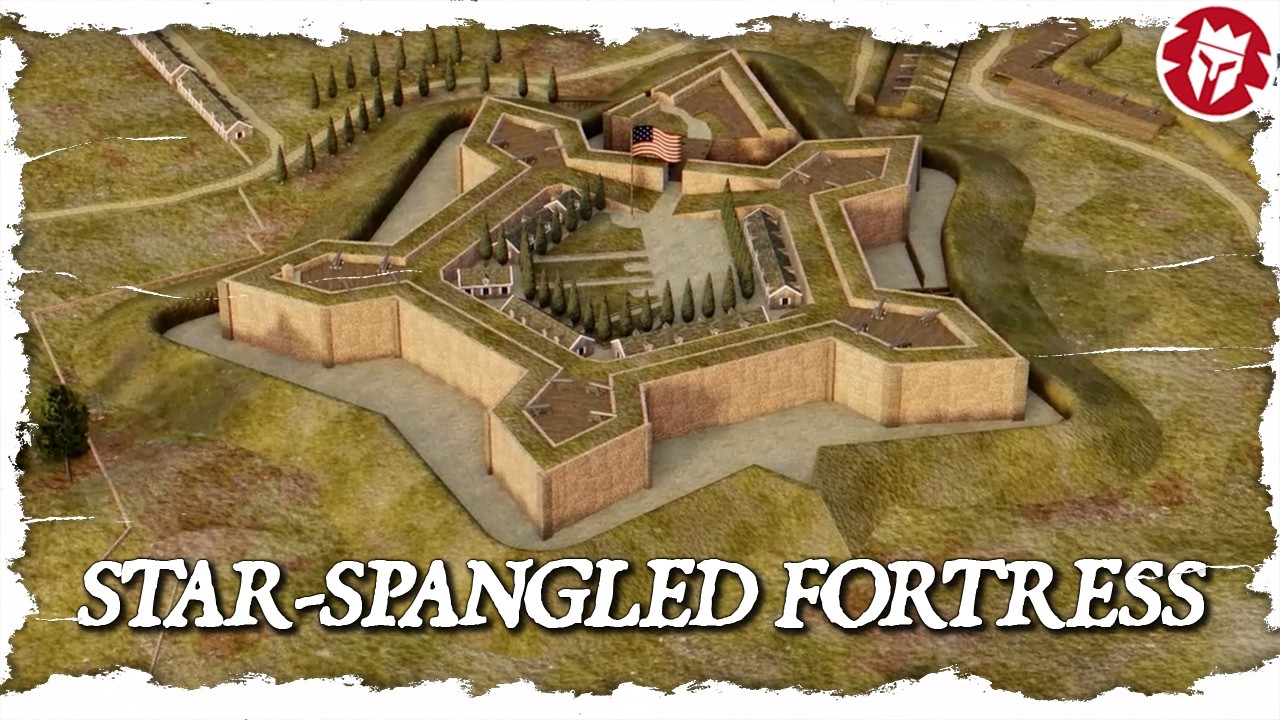
A star fort — also called a bastion fort or trace italienne — is a low, angular military fortification designed specifically to withstand cannon fire. Unlike the tall, thin walls of medieval castles, a star fort features thick earthen ramparts, protruding angular bastions, and interlocking fields of fire that leave no blind spots for attackers to exploit. Developed by Italian engineers in the late 15th century, the star fort dominated military architecture across Europe and the Americas for nearly four centuries. Its genius lies in geometry: every surface is angled to deflect cannonballs, and every bastion covers the walls beside it, meaning attackers are always under fire from multiple directions simultaneously.
The key components of a star fort work together as a complete defensive system. The glacis — a long, gently sloping earthen bank — forces incoming cannonballs to ricochet or bury themselves harmlessly before they reach the walls. Behind it lies a wide dry moat, a killing ground swept by fire from every angle. A covered way runs along the outer edge of the ditch, allowing defenders to sortie and contest enemy sappers. The ramparts themselves rise low and thick — often 20 to 30 meters of packed earth — absorbing artillery impacts that would shatter stone. Triangular ravelins guard the gateways, and the angled bastions project outward so each one can sweep the face of its neighbor. Nothing is left undefended.
Why Did Medieval Castle Walls Fail Against Cannons?
For centuries, the logic of fortress design was vertical. Medieval engineers built walls tall and relatively thin, with round towers projecting at intervals so defenders could shoot along the curtain wall. Hilltop castles exploited elevation to extend the range of arrows and exhaust attacking forces. Against battering rams, scaling ladders, and siege engines, this system worked well enough. Then gunpowder artillery changed everything.
Early cannons were too imprecise and too slow to threaten masonry seriously. But as metallurgy improved and engineers learned to cast larger, more reliable bronze-barreled guns, the tall walls that medieval architects had called impregnable became easy targets. The very height that once protected a castle now offered enemy gunners a wide, easily ranged profile. Round towers, shaped to deflect arrows, crumbled under direct cannon shot. Medieval forts had two fatal flaws: perpendicular masonry shattered under sustained bombardment, and once attackers reached the base of a wall, defenders could not depress their own guns far enough to engage them — leaving besiegers free to mine and tunnel at leisure.
The crisis became undeniable in 1494, when the French king Charles VIII invaded Italy with a train of mobile bronze artillery. Fortress cities that had once endured sieges lasting months or years fell within days. The Italian city-states needed a radically new answer, and their engineers delivered one.
What Is the Trace Italienne and Who Invented It?
The trace italienne — the Italian system of bastion fortification — emerged from decades of desperate experimentation under the pressure of French guns. Francesco di Giorgio Martini was among the first to propose angular projecting bastions with sloped faces, articulating the concept in his Trattato di architettura civile e militare. The fortress at Sarzanello, constructed in the 1480s, was one of the earliest surviving structures to test this approach. Giuliano da Sangallo and later his nephew Antonio da Sangallo the Younger advanced the system further with the Fortezza da Basso in Florence, integrating massive earthen ramparts with protruding bastions.
The core insight was elegant: a cannonball striking a surface at an oblique angle loses much of its destructive energy. By angling every face of the fortification and filling the walls with earth rather than hollow stone, engineers forced cannonballs to glance off or bury themselves harmlessly. Italian sieges quickly confirmed the principle — earthen ramparts absorbed bombardment that demolished stone walls outright.
The design spread rapidly across Europe in the 1530s and 1540s, carried by Italian military engineers in enormous demand. Michelangelo Buonarroti, appointed Governor General of Fortifications for Florence in 1527, contributed early designs. Portuguese engineers carried the system even further, fortifying Salvador da Bahia in Brazil and Goa in India. Within two generations, the bastion fort had reshaped military architecture from the Atlantic coast to the borders of the Ottoman Empire.
Who Were Vauban and Coehoorn, the Masters of the Bastion Fort?
By the 17th century, siege warfare had become less a test of courage than a contest between competing engineering systems. Two figures rose above all others in perfecting the art. Sébastien Le Prestre de Vauban, serving the French crown, developed the concept of the pré carré — a systematic belt of mutually supporting border fortresses protecting France's northern frontier. He oversaw the construction and renovation of over 300 fortifications, including Lille and Strasbourg, and simultaneously mastered the parallel-trench siege method, demonstrating that even the strongest bastion fort could be reduced with mathematical precision given sufficient time and resources.
His Dutch counterpart, Menno van Coehoorn, achieved equivalent results on the other side of the frontier. The Low Countries had already become the crucible of bastion design during the Eighty Years' War, where the Dutch built and rebuilt bastioned works against relentless Spanish assault. Coehoorn completed Naarden's celebrated double ring of bastions and moats between 1675 and 1685. The arms race between attacker and defender — sappers digging zigzag trenches toward the walls, engineers deepening covered ways and digging countermine galleries in response — had by 1700 turned siegecraft into one of the most technically demanding professions in the world.
How Was Fort McHenry Designed and Built?
The bastion fort crossed the Atlantic with the engineers who helped build the young United States military, and its most famous American expression rose on Whetstone Point — a narrow peninsula controlling the primary maritime approach to Baltimore Harbor. An earthen star redoubt had stood there since 1776, but by the late 1790s it was inadequate for a port of Baltimore's growing commercial importance.
In 1798, during the Quasi-War with France, Secretary of War James McHenry ordered Major Louis Tousard to design improved fortifications on the site. The engineer who gave the fort its final form was Jean Foncin, a French artillerist who arrived in 1799, corrected significant errors in the original plan, and oversaw construction of a masonry-faced pentagonal fort. The finished structure was named in McHenry's honor — a Scots-Irish immigrant, surgeon-soldier, and statesman who had served as Secretary of War under Presidents Washington and Adams.
Fort McHenry's five bastions delivered overlapping crossfire along every curtain wall, eliminating blind spots against both naval and land-based attack. A dry moat surrounded the perimeter. The glacis extended outward to deflect incoming shot. The brick construction — a significant advance over the earthen original — withstood artillery better, required less maintenance, and lasted far longer. Low, thick walls rose approximately forty feet above water level: high enough for coastal defence, low enough to avoid presenting an easy target. Casemates built into the bastions gave artillery crews protected firing positions during bombardment.
What Happened at Fort McHenry in the War of 1812?
Fort McHenry's design was tested to its limits on September 13, 1814. After burning Washington, D.C. the previous month, a British fleet under Vice Admiral Cochrane turned toward Baltimore — one of the most strategically and commercially vital cities on the American coast. At 6:30 in the morning, British warships opened fire, beginning a bombardment that would last twenty-five hours.
The engagement exposed both the strengths and limitations of the bastion system in a naval context. British guns could reach Fort McHenry at a range of two miles; rockets extended to 1.75 miles. But at that distance, accuracy was catastrophically poor for both sides. More critically, the British could not advance closer: a defensive chain of 22 sunken ships and concentrated American cannon fire blocked the harbor entrance, forcing the fleet to remain at the outer limit of effective range. As British ammunition dwindled, the advantage of superior firepower evaporated.
By dawn on September 14th, having exhausted their stores and failed to silence the fort or force the harbor, the British ceased fire and withdrew. Fort McHenry had held. The garrison's flag still flew above the battered walls — a sight witnessed by a young American lawyer named Francis Scott Key, detained on a British vessel during the bombardment. His verses, scrawled that morning, would become the United States national anthem.
"O say, does that star-spangled banner yet wave / O'er the land of the free and the home of the brave?"
What Is Fort McHenry Today and Can You Visit It?
Fort McHenry continued as an active military installation long after 1814. During World War I it was converted into a vast military hospital, with over a hundred temporary buildings constructed on the surrounding land to treat returning troops. During World War II it served as a United States Coast Guard base. In 1925 the site was designated a national park, and in 1939 it received the unique dual designation of National Monument and Historic Shrine — a distinction held by no other site in the American national park system.
Today the original pentagonal brick fort has been carefully preserved and restored to essentially its 1814 condition. Visitors can walk the ramparts, explore the casemates, and stand on the gun deck where the garrison held off the British fleet. Fort McHenry stands not only as a monument to early American military engineering but as the birthplace of the national anthem — a place where the bastion fort's four-century legacy of geometric ingenuity intersected, in one rainy September morning, with the birth of a nation's identity.