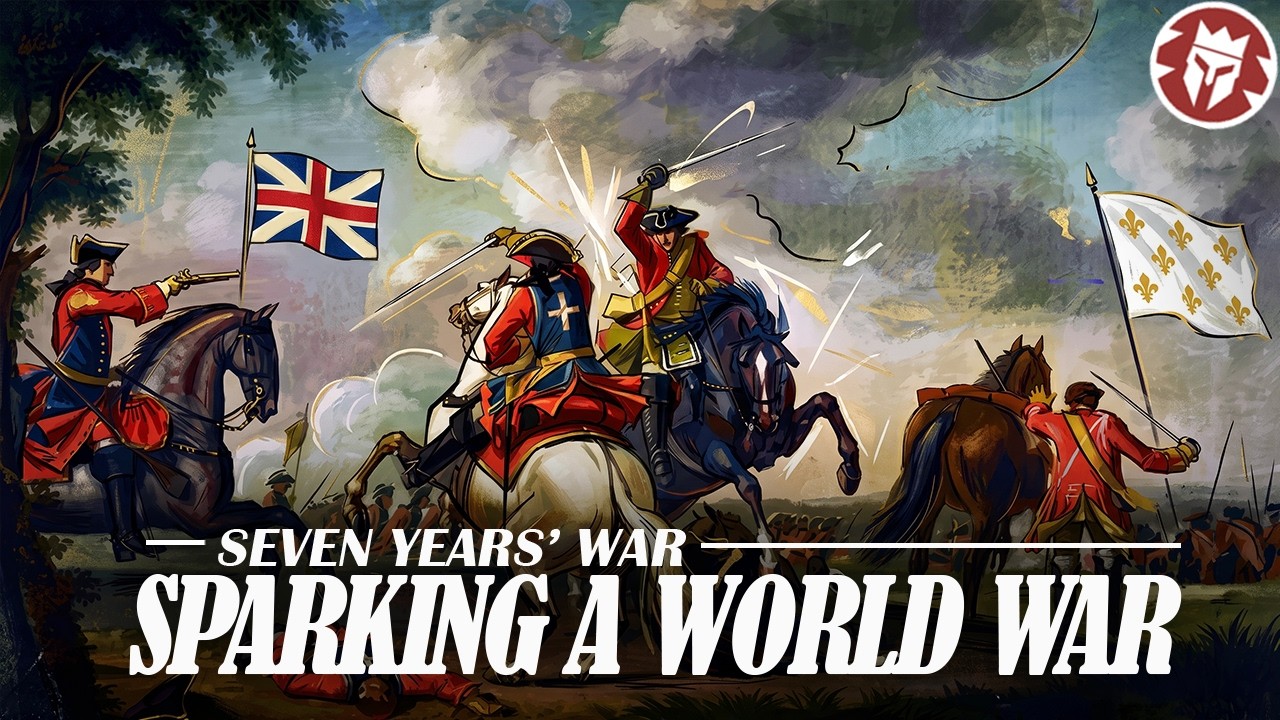

George Washington's first battle was the Battle of Jumonville Glen, fought on May 28th, 1754, deep in the wilderness of the Ohio Country — modern-day Pennsylvania. Washington was just 22 years old, a Lieutenant Colonel in the Virginia Militia, and almost entirely unknown. In a 15-minute skirmish, his men ambushed a small French detachment, killing ten soldiers and capturing twenty-one more. It was a modest frontier clash. But that single engagement, and the diplomatic catastrophe that followed it, helped ignite the Seven Years' War — a global conflict fought across five continents that many historians consider the true first World War.
What Was George Washington Doing Before the Revolution?
To understand how Washington ended up at Jumonville Glen, you have to understand who he was before history made him famous. Born on February 22nd, 1732, at Popes Creek Plantation in Virginia, Washington grew up in a colonial gentry family with ambition but limited means. His father, Augustine Washington, died when George was just eleven, leaving the family's fortunes somewhat scattered across land, enslaved people, and an iron mine.
The dominant figure in young George's life was his older half-brother, Lawrence Washington, who had studied in England and served in a military expedition to Cartagena. Lawrence returned with polished manners, battlefield stories, and a romantic view of British military glory that captivated the young George entirely. When Lawrence died of tuberculosis in 1752, George inherited his share of Mount Vernon and a burning desire to make something of himself.
Washington spent his teenage years training as a land surveyor, earning an income and building connections among Virginia's powerful planter class — most importantly with the influential Fairfax family, whose patronage opened doors that would otherwise have been firmly shut to a young man of his standing. By 1753, he had caught the attention of Virginia's Lieutenant-Governor, Robert Dinwiddie, who needed a capable, ambitious young officer for a dangerous mission.
Why Did France and Britain Fight Over the Ohio Country?
In the early 1750s, the Ohio River Valley was one of the most strategically important pieces of real estate in North America — and both France and Britain knew it. The French controlled Canada to the north and Louisiana to the south, and the Ohio Country was the critical corridor connecting those two colonial territories. If they could hold it, they could effectively cage the British colonies along the Eastern Seaboard and prevent any westward expansion.
Britain, meanwhile, had colonial interests of its own. Virginia's Ohio Company, founded by wealthy planters including Lawrence and Augustine Washington, had already obtained a royal charter for over half a million acres in the region. Beginning in 1749, France responded by building a chain of forts throughout the Ohio Valley — Presque Isle, Fort Le Boeuf, and eventually Fort Duquesne at the strategically vital Forks of the Ohio, where Pittsburgh stands today.
Governor Dinwiddie first attempted diplomacy. In the autumn of 1753, he dispatched the young Washington on a winter mission to deliver an ultimatum to the French commander at Fort Le Boeuf, demanding that France withdraw from British-claimed territory. The French response was polite, firm, and entirely dismissive. War, it seemed, was now inevitable.
What Really Happened at the Battle of Jumonville Glen?
By the spring of 1754, Washington had been promoted to Lieutenant Colonel and placed in command of around 130 Virginia militiamen, ordered to march into the Ohio Country and hold the ground until reinforcements arrived. He set up camp at a large clearing called the Great Meadows, roughly 50 miles from the Ohio Company's supply base at Wills Creek.
On May 28th, Washington received intelligence from his Native American ally, the Mingo chieftain Tanaghrisson — known to Europeans as the "Half-King" — that a French patrol was camped in a rocky ravine nearby. Washington made a bold decision. Taking 40 of his men and joining Tanaghrisson's warriors, he moved through the dark forest overnight to encircle the French position.
At dawn, Washington's men and the Mingo warriors held the high ground above the French camp. Who fired the first shot remains unknown to history. What followed was a chaotic, 15-minute firefight. The Virginians fired two volleys; the French threw down their arms and tried to flee, only to be cut off by the Mingos. Ten Frenchmen were killed, one escaped, and twenty-one were captured.
The wounded French commander, Ensign Joseph Coulon de Villiers, Sieur de Jumonville, showed Washington his orders — he was on a diplomatic surveillance mission, not a combat patrol. But as his letter was being translated, Tanaghrisson stepped forward, looked at the wounded Jumonville, and said in French: "Thou are not dead yet, my father." He then drove his tomahawk into Jumonville's skull and scalped him. The other Mingo warriors immediately began killing and scalping the remaining French wounded.
Washington, stunned, could do nothing to stop it. But despite the horror of what he had just witnessed, he later wrote to his brother John with astonishing enthusiasm: "I heard the bullets whistle, and, believe me, there is something charming in the sound." His first taste of battle had thrilled him.
Who Was Tanaghrisson, the Half-King, and Why Did He Matter?
Tanaghrisson was a Seneca-born chieftain of the Mingo people, a group of Iroquois who had settled in the Ohio Country. His title of "Half-King" reflected his status as a deputy leader — influential but not fully sovereign. He was pursuing his own political agenda: by allying with the British against the French, he hoped to strengthen his position and reputation within the broader Iroquois Confederacy.
His killing of Jumonville was almost certainly deliberate and strategic. The French had previously humiliated Tanaghrisson and undermined his authority in the region. By personally executing Jumonville, he was ensuring that any chance of a peaceful French-British resolution in the Ohio Country was destroyed — locking both European powers into a conflict that he hoped would benefit his people. It was a calculated act of political violence, not a spontaneous moment of rage. And it worked, at least in the short term, in escalating the crisis.
How Did the Battle of Fort Necessity End Washington's First Command?
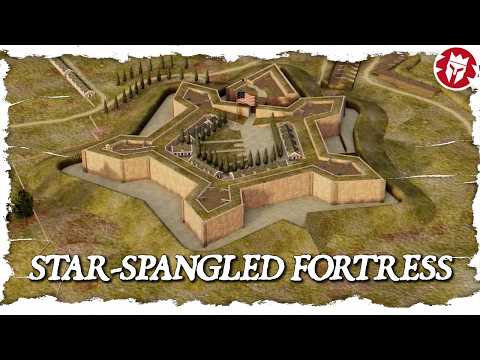
The killing of Jumonville made French retaliation inevitable. At the Great Meadows, Washington's men hastily constructed a circular timber palisade they called Fort Necessity — a small, poorly positioned stockade surrounded by rifle pits and earthworks. It would prove woefully inadequate for what was coming.
On July 3rd, 1754, a French and Native American force of roughly 700 men — commanded by Captain Louis Coulon de Villiers, the older half-brother of the murdered Jumonville — descended on the Great Meadows. Washington had just 300 men fit for duty. Tanaghrisson, sensing disaster, had already slipped away with his Mingos, wanting no part of the losing side.
The battle was a punishing affair. A torrential downpour flooded the trenches, soaked the men's powder and muskets, and turned the meadow into a muddy quagmire. By nightfall, Washington's position was untenable. The French offered surrender terms, which Washington's interpreter, Jacob Van Braam, translated by candlelight from rain-soaked French documents. Washington and Captain James Mackay — a British Regular officer who had quarrelled with Washington over command throughout the campaign — both signed.
Washington did not realize until later that buried in the surrender document was a clause in which he admitted to assassinating Ensign Jumonville. It was a diplomatic catastrophe. The French had it translated and printed across Europe, painting Britain as the aggressor who had murdered a peaceful envoy.
On July 4th, 1754 — nine years to the day before American independence would be declared — Washington and his men marched out of Fort Necessity under the full military honors of the surrender terms, as the French torched the fort behind them. The battle had cost Washington 30 men killed and 70 wounded. French losses were just three killed and 17 wounded.
How Did Washington Accidentally Start the Seven Years' War?
Neither Washington nor anyone else alive in 1754 could have imagined the full consequences of that dawn ambush at Jumonville Glen. The skirmish escalated Anglo-French tensions beyond the point of diplomatic repair. Two years later, in May 1756, Britain and France formally declared war on each other — a conflict that would engulf Europe, North America, South America, West Africa, India, and the Philippines.
The Seven Years' War reshaped the entire world. Britain emerged as the dominant global colonial power, France lost most of its North American holdings, and the massive war debts Britain accumulated led directly to the taxation policies that would drive the American colonies toward revolution just two decades later. In a very real sense, the shot fired at Jumonville Glen — by an unknown 22-year-old Virginia surveyor trying to make a name for himself — set in motion the chain of events that would eventually make George Washington the most famous man in the Western world.
It is one of history's most remarkable ironies: the man who would one day lead America to independence from Britain first made his name by fighting for the British Crown — and nearly destroyed Britain's moral authority in the process.