What Was Operation Bulmus 6 and the Green Island Raid?
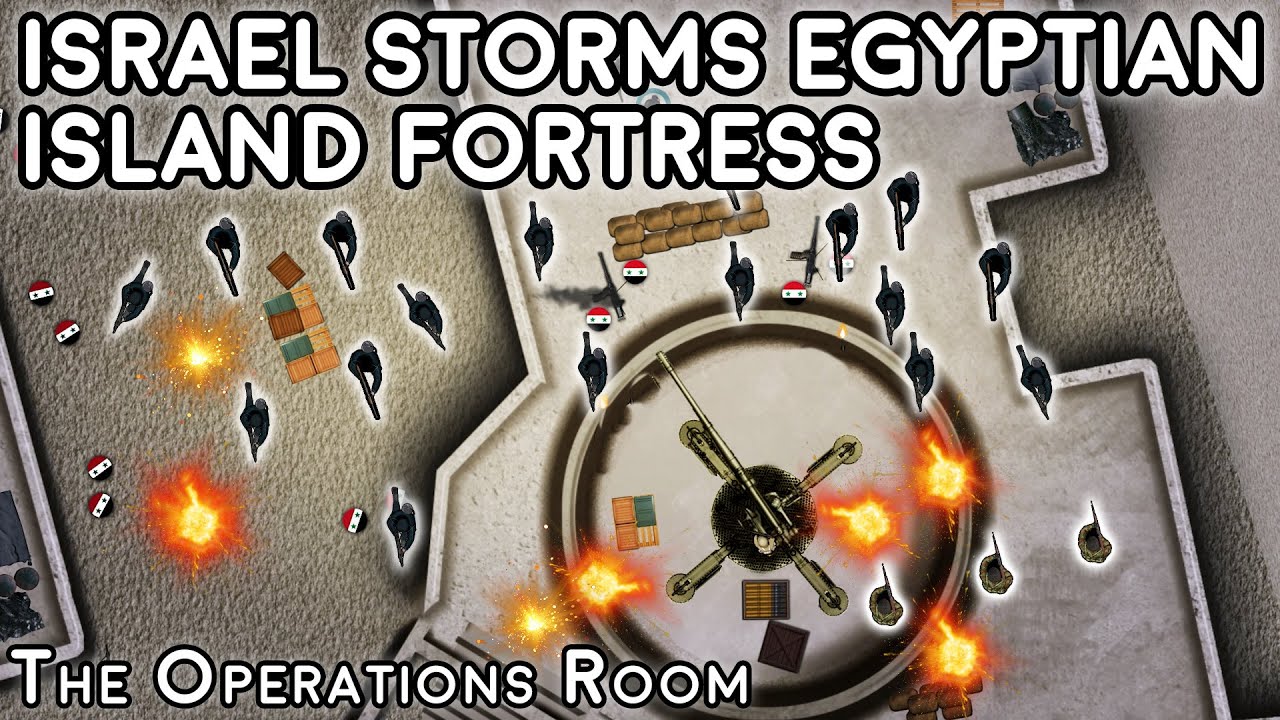
Operation Bulmus 6 was a daring Israeli special forces raid carried out on the night of July 19, 1969, targeting Egypt's heavily fortified Green Island in the Gulf of Suez. What made this operation so remarkable was its target: a coastal fortress the Egyptian military considered utterly impregnable — a symbol of their military might. In response to a deadly Egyptian cross-canal raid that killed seven Israelis just nine days earlier, Israeli Chief of Staff Haim Bar-Lev and Defense Minister Moshe Dayan selected Green Island for a retaliatory strike. Forty-five elite commandos from two of Israel's most secretive units — Shayetet 13 and Sayeret Matkal — were given the task of dismantling it in a single night.
The operation unfolded in two phases. At 8:00 p.m., 25 Shayetet 13 naval commandos departed from the settlement of Ras Sudar, swimming underwater to approach the island in total secrecy. Thirty minutes later, 20 Sayeret Matkal operators followed in seven boats, holding short until called forward. What followed was 90 minutes of brutal close-quarters combat against a garrison of over 100 Egyptian defenders manning machine guns, anti-aircraft cannons, and radar installations.
 00:45
Map showing Green Island's position in the Gulf of Suez and the two-phase Israeli assault approach
Watch at 00:45 →
00:45
Map showing Green Island's position in the Gulf of Suez and the two-phase Israeli assault approach
Watch at 00:45 →
What Was Israel's War of Attrition After 1967?
To understand why Green Island mattered, you have to understand the strategic context of the War of Attrition. Following Israel's stunning victory in the Six-Day War of June 1967, neither side was willing — or politically able — to pursue peace. For the Arab world, any peace agreement risked implying recognition of Israel's right to exist. For Israel, a diplomatic settlement could erode its hard-won strategic advantages.
The result was a grinding, low-intensity conflict fought primarily along the Suez Canal. The canal had become a de facto frontline, with Israel's Bar-Lev Line of fortifications on the eastern bank facing Egyptian positions on the west. The fighting took the form of artillery exchanges, air strikes, and commando raids — each side probing the other's defenses and targeting intelligence infrastructure. Egyptian early warning radar stations and electronic intelligence posts were particularly valuable targets for Israel, whose air force depended on operating without detection to maintain its edge. Green Island housed exactly this kind of infrastructure.
What Is Shayetet 13, Israel's Elite Naval Commando Unit?
Shayetet 13 — sometimes called the Israeli equivalent of the U.S. Navy SEALs or Britain's SBS — is the Israel Defense Forces' premier naval special operations unit. Specializing in maritime commando operations, combat diving, and underwater demolitions, Shayetet 13 operators are among the most rigorously trained soldiers in the world. For the Green Island raid, their role was to lead the assault: swimming underwater to the island, breaching its outer defenses, and securing an internal perimeter before signaling the second force to advance. Their ability to approach the island completely submerged using rebreathers — which produce no telltale bubbles — was central to the operation's early secrecy.
04:10
Diagram of Green Island's fortifications including AA cannon positions, radar array, and perimeter defenses
Watch at 04:10 →
On the night of July 19, the 25-man Phase 1 force navigated toward the island under the cover of darkness. An unforeseen current pushed them north of their intended approach, but they corrected course and surfaced beneath the island's bridge at 11:30 p.m., now just 15 meters from shore. Two armed Egyptian sentries stood watch above them.
Who Are Sayeret Matkal and Why Were They at Green Island?
Sayeret Matkal is Israel's elite general staff reconnaissance unit — a deeply secretive special forces formation specializing in deep reconnaissance, counter-terrorism, and direct action missions. Seven years after Green Island, Sayeret Matkal would earn international fame by storming Entebbe Airport in Uganda to rescue hostages in one of history's most celebrated hostage rescue operations. At Green Island, their role was to act as the exploitation force: held in reserve until Shayetet 13 had breached the defenses, then rushed in to reinvigorate the assault and help clear remaining positions. Lieutenant Colonel Zev Almog commanded the entire operation and led the Sayeret Matkal contingent.
Why Was Green Island Considered an Impregnable Fortress?
Green Island was no ordinary outpost. Built by the British Army and Royal Navy during the Second World War to protect the city of Suez and the Suez Canal itself, it was a purpose-built artificial island topped with a stone and concrete fort. By 1969, the Egyptian garrison consisted of 70 infantrymen, 30 signals personnel, and 12 commando-qualified soldiers. The island bristled with 14 machine guns and six anti-aircraft emplacements including 37mm and 85mm cannons. It also housed an early warning radar array and an electronic intelligence station — precisely the kind of asset that threatened Israeli air operations over Sinai. Egypt's confidence in the island's defenses was total. That confidence was about to be shattered.
How Did the Green Island Raid Unfold Step by Step?
The raid began to unravel its secrecy almost immediately. As Lieutenant Agoi's team silently cut through the perimeter barbed wire, one of the Egyptian sentries grew suspicious. Forced to act, Agoi shot him — but the second sentry hurled a grenade into the darkness, wounding Agoi in both legs. The element of surprise was gone.
08:30
Phase-by-phase breakdown of the assault showing team movements and key engagements inside the fort
Watch at 08:30 →
With the alarm raised, the suppression force south of the island opened fire with RPGs and small arms to draw Egyptian attention away from the breaching commandos. Agoi's team pushed through the wire and stormed an Egyptian machine gun nest in brutal close-quarters fighting. One Israeli commando, advancing along a wall and throwing grenades through windows, had one thrown back at him — and kicked it into the sea before it detonated.
Lieutenant Amit's team rushed the radar array, silencing machine guns and launching grenades at the installation to knock it out. Captain Bar's team scaled the fort's steep walls, destroyed a machine gun position with an RPG, and cleared anti-aircraft Cannon Number One of its crew. Meanwhile, a separate team climbed to the rooftop using a ladder they had brought specifically for the purpose, where they came under heavy fire from yet another machine gun position. Despite being struck in the forehead by shrapnel, Lieutenant Alon still managed to throw a grenade toward the enemy — and then advanced on the position with Sergeant Zalman Rot to silence it.
Tragedy struck repeatedly. As Captain Bar dispatched Haim Sturman and Yoav Shahar toward a machine gun position he believed was still held by Egyptians — unaware two Israeli commandos had already taken it — a grenade landed beside them, killing both men instantly. When Phase 2 arrived — the 20 Sayeret Matkal operators disembarking from seven boats — they found half the Shayetet 13 force already wounded. Several Sayeret Matkal immediately began evacuating casualties while the rest grabbed ammunition and raced into the fight. Captain Ram, one of the Sayeret Matkal team leaders, was killed instantly by anti-aircraft fire from Cannon Number Six just as he received a mission update. Three more were killed and six wounded in the assault on Cannon Number Four before a well-placed RPG finally silenced the position.
With the route to Cannons Five and Six blocked by a chain of explosions triggered when a grenade detonated the cannon's ammunition, Lieutenant Colonel Almog gave the order to withdraw. Room-clearing continued through the eastern and northern buildings as teams fought their way back toward the boats, with one Israeli operator killed by Egyptian fire during the evacuation. Explosives were set beneath Cannons One through Four — the team unable to reach the remaining two. As the last commandos boarded their rubber craft and departed, Egyptian artillery from the mainland began zeroing in on the island. Within minutes, the Israeli explosives detonated — and Egyptian shells, now landing on the island itself, unwittingly killed a number of their own soldiers.
What Were the Casualties and Outcome of the Green Island Raid?
The raid cost the lives of six Israeli commandos: Haim Sturman, Yoav Shahar, Danny Levi, Ehud Ram, Danny Vaza, and Yuval Miron. Dozens more were wounded. On the Egyptian side, 75 soldiers were killed. Despite the painful Israeli losses, the operation was judged a strategic success. Egyptian forces along the Bar-Lev Line were thrown into a state of panic, firing blindly and wildly through the night and into the following morning.
More significantly, the destruction of Green Island's early warning radar and electronic intelligence station created an immediate operational window for the Israeli Air Force. Operation Boxer — a major aerial assault — was launched in the hours that followed, inflicting serious damage on Egyptian air defenses, artillery positions, and fortifications across the Suez front. The message sent to Cairo was unmistakable: no position, however fortified, was beyond Israel's reach. Green Island, Egypt's symbol of military impenetrability, had fallen in a single night.