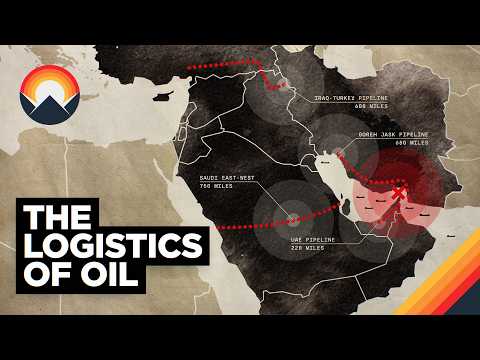
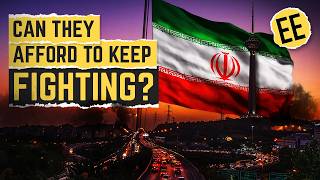
The war in Iran has dominated global headlines, but most of the economic coverage has focused outward — global oil prices, European energy security, the future of the petrodollar. The question that keeps getting skipped over is the one that might actually matter most: how is the war affecting Iran's economy, and how long can the country realistically sustain it? The short answer is that Iran entered this conflict already on its knees — and the war has made almost every existing problem dramatically worse.
How Has the War Devastated Iran's Economy?
Almost immediately after hostilities began in late February, the international community tightened sanctions further, introducing secondary measures designed to close off nearly every remaining avenue for Iranian crude exports to reach non-Chinese buyers. The effect was immediate and brutal. Retaliatory strikes damaged refineries, power stations, and government infrastructure on the Iranian side, piling onto a grid and industrial base that was already barely functioning.
 04:12
Chart showing the Iranian rial's collapse from 430,000 to 1.6 million per USD between 2022 and 2025
Watch at 04:12 →
04:12
Chart showing the Iranian rial's collapse from 430,000 to 1.6 million per USD between 2022 and 2025
Watch at 04:12 →
The civilian fallout has been severe. Point-to-point inflation through the first weeks of open conflict ran above 60%, meaning prices weren't rising by the year — they were rising by the week. That kind of acceleration is what economists describe as inflation expectations becoming unanchored: a condition where people stop trusting the currency to hold its value long enough to be worth saving. Basic staples, imported goods, and fuel all saw prices spike rapidly, triggering a second wave of mass protests on top of those already simmering before the war started.
The Strait of Hormuz, largely closed off to commercial traffic by Iranian action, has choked off oil exports from several Gulf nations simultaneously — undermining not just Iran's neighbours economically, but also their longer-term diversification strategies built around tourism and international finance. The disruption has rippled far beyond Iran's borders, but Iran itself is absorbing the most concentrated damage.
Why Is the Iranian Rial the Weakest Currency on Earth?
As of late April, the Iranian rial was trading at approximately 1.6 million to the US dollar on the free market — by most measures, the single least valuable currency on the planet. When the current central bank governor took office in late 2022, the exchange rate was around 430,000 rials to the dollar. That means the rial has lost roughly three-quarters of its value in just over three years, with the steepest drops coming after the war began.
08:45
Overview of Iran's pre-war economic conditions including poverty rates and power outage frequency
Watch at 08:45 →
A currency collapse at this scale isn't just an embarrassing statistic. It translates directly into extreme inflation for ordinary people. Official annual inflation was already running at around 44% before the conflict. When the currency enters freefall simultaneously, the combined effect is that savings become worthless almost overnight, and the purchasing power of wages erodes faster than employers can adjust. For a population where more than a third already lived on less than $9 a day — even adjusted for purchasing power — this represents a genuine humanitarian catastrophe layered on top of an existing one.
What Was Already Broken in Iran's Economy Before the War?
To understand the war's economic impact, you have to understand just how fragile the foundation was before the first bomb dropped. Iran is one of the most resource-rich countries on Earth — holding the second-largest natural gas reserves on the planet and enormous oil wealth. And yet, before the war, more than half its population was considered malnourished according to its own Ministry of Social Welfare. Youth unemployment exceeded 20%. Capital was fleeing the country. Educated professionals were leaving in large numbers. Power outages were routine, even in Tehran, even in summer.
The central paradox of Iran's pre-war economy was that it was simultaneously energy-rich and energy-poor. Its electricity grid was old, underinvested, and patched together with components that managed to slip through the sanctions net. Power stations running on natural gas competed directly with export pipelines and domestic heating demand, meaning that in winter, when heating spiked, exports got cut and the lights went out. In summer, the same creaking infrastructure simply couldn't cope with air conditioning loads.
Water tells a similar story. Iran is not especially arid by regional standards, but decades of poor agricultural planning, inefficient irrigation, and overextraction from underground aquifers have produced a genuine water crisis. Major rivers and lakes have visibly shrunk. Farmland is being abandoned. Several major cities were already experiencing serious water shortages before the war added a new layer of infrastructure destruction to the mix.
14:30
Explanation of how bonyads function as hybrid state-religious-corporate institutions
Watch at 14:30 →
How Do Sanctions Cripple Iran's Oil Revenue?
For roughly four decades, Iran has traded places with Russia and North Korea as one of the most heavily sanctioned economies in the world. Those sanctions specifically target its ability to sell oil internationally, meaning that despite OPEC membership and vast hydrocarbon reserves, Iran struggles to move crude at volumes anywhere near its regional peers.
Sanctions also restrict imports, which drives up domestic prices for imported goods and cuts off the industrial components needed to maintain oil extraction equipment. This creates a particularly bleak feedback loop: Iran can't get the parts needed to keep its rigs running efficiently, which limits the oil it can extract, which limits the revenue it needs to buy more parts. China has served as the one real economic lifeline — purchasing Iranian crude at a discount and supplying manufactured goods in return — but even Chinese companies face limits. Any firm that wants access to US markets or the US financial system can't openly do business with Iran, and for most companies, that trade-off is not even close.
What Are Bonyads and Why Do They Wreck Iran's Economy?
Beyond sanctions, Iran has created significant economic damage entirely on its own. The country's domestic market is dominated by institutions called bonyads — strange hybrid organisations that combine elements of private business, religious charity, state enterprise, and government department into a single structure. Because of this hybrid status, bonyads don't pay taxes, aren't subject to the same regulations as ordinary firms, and have access to far more funding than any normal competitor could match.
The result is that legitimate private businesses get pushed out of the market, leaving behind inefficient, anti-competitive organisations that funnel profits back to the political elite rather than reinvesting them productively. It is a textbook example of an extractive economic system: the state doesn't just tax businesses, it actively displaces them. Reports suggest that the organisation controlled by the former Supreme Leader alone held assets worth approximately $95 billion — a staggering figure in a country where real estate prices are far below those of wealthy Western nations, which means the scale of physical asset seizure required to reach that number was enormous.
Why Is OPEC Fragmenting Because of the Iran War?
One of the most significant economic side effects of the conflict has been the visible fracturing of OPEC. The United Arab Emirates announced its departure from the cartel effective May 1st, citing a long-standing desire to expand production toward its target of 5 million barrels per day by 2027 — ambitions that OPEC production quotas had been constraining.
But the timing is impossible to read as coincidental. The announcement followed weeks of Iranian missile and drone attacks on UAE territory and months of Gulf OPEC members watching their tanker traffic stall behind a strait that a fellow member had effectively closed. OPEC has held the global oil price together for half a century. Watching it openly fragment because of a war started by one of its founding members removes one of the last meaningful mechanisms through which Iran had any leverage over global energy markets — and strips it of the one major international organisation it was still a functioning part of.
How Long Can Iran Actually Afford to Keep Fighting?
The common argument in Iran's favour is the asymmetric cost equation: a drone costing $20,000 requires a $500,000 interceptor to shoot down, which mathematically should favour the side doing the launching. Iran also has large existing stockpiles of military equipment and a military doctrine specifically built around this kind of attrition warfare. On a pure balance-sheet basis, it can probably keep costing the world more than the world is costing it — for a while.
But here is the critical flaw in that logic: the economic systems that support Iran's military and the economic systems that support Iran's civilian population are not the same system. The military draws on stockpiles, shadow funding routed through the Revolutionary Guard, and a separate supply chain largely insulated from the civilian economy. The civilian population draws on a currency in freefall, a food system under severe strain, a water table that is dropping, and a power grid that was already failing before anyone started bombing it.
What this means in practice is that Iran is far more likely to run out of food, water, electricity, and public patience than it is to run out of drones. The regime can probably keep launching for another year or two. The harder problem is keeping the population that does the launching fed, watered, and supplied with electricity at the same time — and the room to do both of those things simultaneously is shrinking by the month. The timer on this conflict is real. It just isn't running in the direction that Iran's leadership would prefer.