Is Anti-Gravity Actually Possible?
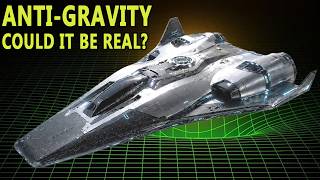
Is anti-gravity possible? The honest answer, based on everything science currently knows, is: not with any technology we have today. Gravity is one of the four fundamental forces of nature, and unlike electromagnetism — which has both positive and negative charges that can be manipulated and shielded — gravity appears to have only one flavour: attractive. There is no known negative mass, no confirmed gravity-blocking material, and no verified engineering method to reduce, redirect, or reverse gravitational pull. But the story doesn't end there. Because while true anti-gravity remains out of reach, the edges of our understanding — dark energy, quantum gravity, frame dragging, and classified aerospace research — suggest that gravity is far from a finished subject.
Recent government releases of UAP videos and congressional hearings have reignited public interest in the question. One of the most striking features attributed to these unidentified craft is their apparent ability to manipulate gravity in ways we simply cannot explain. Whether that reflects genuine unknown physics, disinformation, or something else entirely, it forces us to look honestly at the gaping holes in what we actually know about gravity — and the long, largely unsuccessful history of attempts to make it work for us.
 01:15
Overview of technologies commonly mistaken for anti-gravity, including planes, rockets, and maglev trains
Watch at 01:15 →
01:15
Overview of technologies commonly mistaken for anti-gravity, including planes, rockets, and maglev trains
Watch at 01:15 →
What Is the Biefeld-Brown Effect Really Doing?
One of the most visually convincing anti-gravity demonstrations involves lightweight devices called lifters, which appear to float without any moving parts using the Biefeld-Brown effect. A high positive voltage is applied to a lightweight structure, which ionises the surrounding air. Those ions are then attracted toward the negatively charged ground, and as they travel they collide with neutral air molecules — generating enough airflow to levitate the device. It looks remarkable. It looks like something is interacting with gravity itself.
But NASA tested it in a vacuum equivalent to lower Earth orbit conditions, and the effect completely disappeared. That single result proved conclusively that the Biefeld-Brown effect is not a gravity interaction at all — it is ion wind propulsion. It needs air to push against. No air, no lift. Impressive, certainly, but firmly in the category of using known forces rather than defeating gravity.
The same verdict applies to other commonly cited anti-gravity candidates. Planes use wing aerodynamics. Rockets use chemical thrust. Maglev trains exploit magnetic repulsion. These are all genuinely useful technologies, but they are working against gravity using other forces — not switching gravity off.
04:30
Demonstration of a Biefeld-Brown lifter floating using ion wind — and why it fails in a vacuum
Watch at 04:30 →
Does Antimatter Fall Up? What CERN Found in 2023
For decades, one of the most tantalising loopholes in the anti-gravity question was antimatter. The logic was elegant: if antimatter experienced gravity in reverse — falling upward in Earth's gravitational field — that would represent a genuine, physical form of repulsive gravity and a major crack in our current theories.
In 2023, CERN's Alpha-g experiment settled the question directly. Scientists measured the motion of antihydrogen atoms and found that, within the precision limits of the experiment, antimatter falls downward — just like normal matter. Gravity treats antimatter the same way it treats everything else.
This doesn't explain why the observable universe contains so little antimatter, which remains one of physics' biggest open questions. But it does make the most straightforward route to anti-gravity significantly less likely. The universe, it seems, is not offering us that particular shortcut.
07:45
CERN Alpha-g experiment setup used to measure whether antihydrogen falls up or down
Watch at 07:45 →
What Is Frame Dragging and Why Does It Matter?
Here is where things get genuinely interesting. Einstein's general relativity predicts that a massive rotating object — like the Earth — doesn't just curve space-time around it. It also drags space-time along as it spins, like a ball rotating in a thick fluid such as oil. This effect is called frame dragging, and Einstein predicted it nearly a century ago.
It took until the 21st century and multiple independent satellite missions to confirm that frame dragging actually exists. The measurements showed a small but real and detectable dragging effect around Earth. This matters enormously, because it means that rotation and gravity are not entirely separate phenomena. A moving object near a massive rotating body experiences accelerations that Newtonian physics simply does not predict.
On cosmic scales, the frame dragging effects of rotating supermassive black holes are thought to be responsible for the enormous jets of gas ejected from quasars and galactic nuclei. The question that researchers like Ning Li and the teams behind Project GRASP were asking was: could a spinning superconducting disk simulate this effect on a tiny, laboratory scale?
12:20
Visual explanation of frame dragging — how a spinning massive object drags space-time around it
Watch at 12:20 →
Did Podkletnov Really Reduce Gravity by 2%?
In the early 1990s, Russian scientist Evgeny Podkletnov published claims that a rotating superconducting disk inside a magnetic field reduced the weight of objects placed above it by approximately 2%. The effect appeared to project upward like a beam, persisting for a considerable distance above the disk. The research attracted serious attention from aerospace companies and defence agencies.
The problem: no independent laboratory was able to reproduce the results. Podkletnov argued that other researchers had not replicated his exact experimental setup, which is why they failed. NASA was reportedly close to completing its own verification experiments when funding ran out. The project was then absorbed by the Department of Defense, and Podkletnov — a Russian citizen — was excluded from further involvement in US-based research.
The results have never been publicly confirmed, and the work remains officially unverified. But it didn't disappear quietly. It, along with the work of American scientist Ning Li, reportedly prompted Boeing to launch a formal research initiative.
What Was Boeing's Secret Gravity Project GRASP?
Boeing's Project GRASP — Gravity Research for Advanced Space Propulsion — was reportedly initiated to investigate whether the rotating superconductor effects claimed by Podkletnov and Li could be real and scalable. The potential applications were extraordinary: fuel-free space launches, artificial gravity aboard spacecraft, novel aircraft propulsion, and even electricity generation without fuel.
Others pointed out a darker application: if a gravity beam could be demonstrated and directed, it could theoretically be used as a weapon — destabilising missiles, aircraft, or satellites through steerable artificial gravitational forces.
After information about the project became public, Boeing backtracked, stating it had been offered the research proposal but had declined to fund it with company money. Boeing refused to confirm or deny whether the work continued as a classified black project. The story sits at the uncomfortable intersection of verifiable aerospace history and unverifiable classified research — exactly the kind of territory where UAP narratives tend to take root.
Is Dark Energy a Cosmic Form of Anti-Gravity?
The strangest entry in the anti-gravity conversation might be the one hiding in plain sight across the entire observable universe. Cosmological observations have confirmed that the expansion of the universe following the Big Bang is accelerating, not slowing down as gravity should cause it to do. Something is pushing the universe apart in all directions, overpowering gravity on the grandest of scales.
We call it dark energy, and we have almost no idea what it actually is. We cannot detect it directly. We only see its effects — much like gravity itself. On the largest cosmic scales, dark energy behaves like a repulsive effect, and in that sense it is the closest thing to genuine anti-gravity that we know exists in the universe.
The catch is profound: we have no idea how to collect it, concentrate it, or switch it on inside any kind of machine. If dark energy is a form of anti-gravity, it is an entirely cosmic one — a property woven into the fabric of space-time at universal scales, not an engineering resource we can tap on demand.
So Where Does That Leave Us?
The gap between theoretical possibility and real-world engineering remains enormous. Antimatter falls downward. Simple gravity shielding violates what the Microscope satellite measured down to one part in a quadrillion. The superconducting disk claims from the 1990s remain unverified. And we still do not have a complete theory of what gravity fundamentally is — only highly accurate descriptions of what it does.
True anti-gravity would require something genuinely new: negative mass, negative energy, a previously unknown force, or a method of directly manipulating the geometry of space-time itself. Some theoretical frameworks — warp drive mathematics, quantum gravity experiments testing whether gravity can create entanglement between tiny masses, and modified gravity theories — suggest the subject is not closed. But none of these are engineering blueprints.
For now, anti-gravity in the science fiction sense remains exactly that. The physics tells us it is not simply impossible in principle — but the gulf between principle and practice is still vast enough that, absent a major unexpected breakthrough, it belongs in the realm of what we do not yet know rather than what we can build.