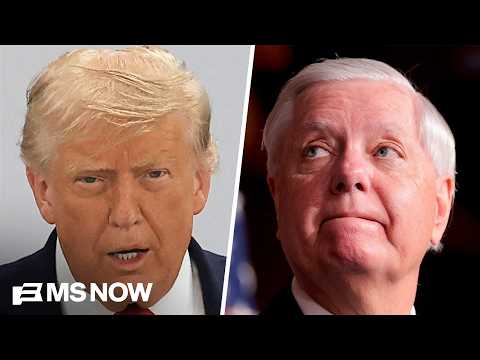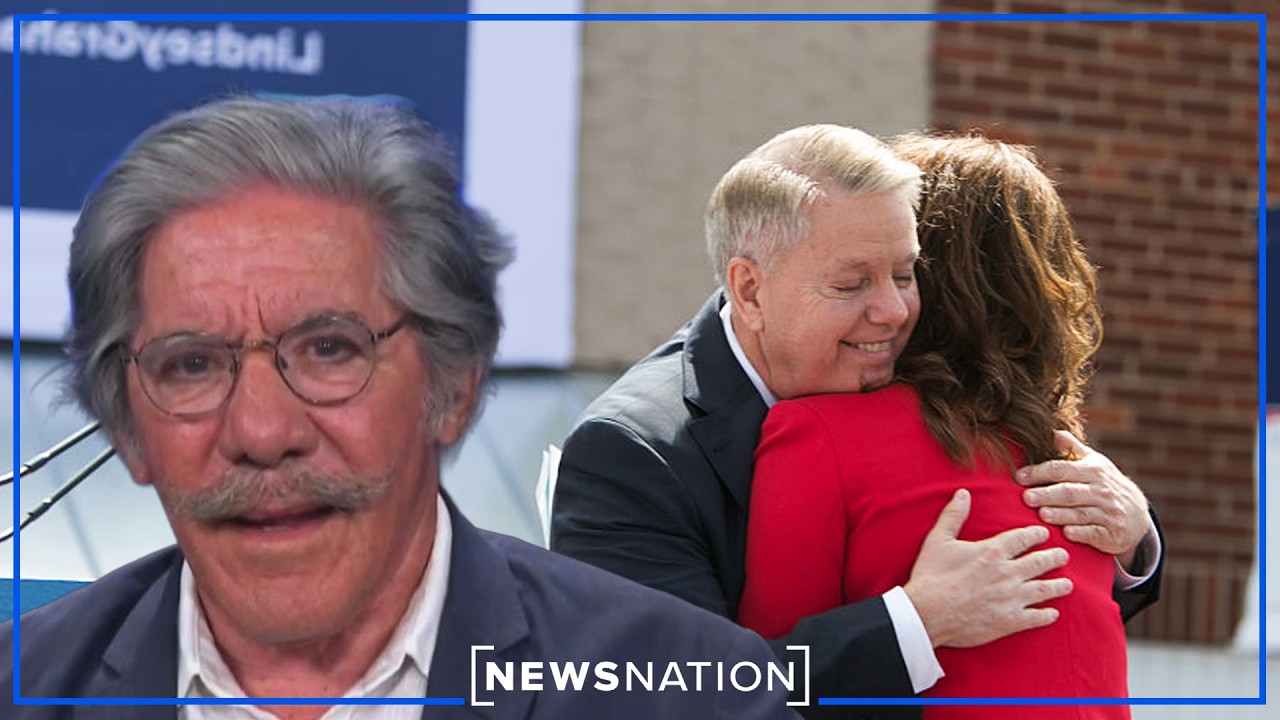

The question of who will replace Lindsey Graham in the Senate has a clear first answer: his younger sister, Darlene Graham. The South Carolina governor appointed her to serve out the remainder of Graham's term — a decision that, by most accounts, would have passed unanimously had it been put to a public vote. But her appointment is just the beginning of a much larger political story unfolding in South Carolina and across the Republican Party.
Who Will Replace Lindsey Graham in the Senate?
Darlene Graham has been appointed by South Carolina's governor to fill her brother's Senate seat for the remainder of his current term. While the appointment may seem surprising to those outside Graham's inner circle, those familiar with his life story find it entirely fitting. Lindsey Graham was one of the most influential and longest-serving senators in South Carolina history, and the governor's decision to appoint family reflects the deep personal legacy he leaves behind.
The appointment was met with broad approval across party lines. As one political commentator put it, if the decision had been put to a vote, it would have been unanimous — a rare thing in today's divided political climate. But the temporary appointment only answers part of the question. The bigger political drama is what happens when South Carolina holds a competitive race for the full remaining years of Graham's six-year term.
Who Is Darlene Graham and Why Was She Chosen?
Darlene Graham's story is intertwined with her brother's in a profound way. When their parents died, Darlene was only around 12 or 13 years old. Lindsey was in college at the time, and rather than abandon his sister to the system, he stepped up — ultimately adopting her and raising her himself. It was an extraordinary act of personal responsibility that defined both of their lives.
Darlene has spoken publicly about her brother's sacrifice, saying simply: "He was always there for me. Now I'll be there for him." That sense of loyalty and reciprocity resonated deeply with South Carolinians and Republican leadership alike. Her appointment is as much a tribute to Lindsey Graham's personal character as it is a political decision.
Whether Darlene plans to stay beyond the interim period and run for the full term remains an open question — and one that political observers are watching closely.
Could Nancy Mace Win Lindsey Graham's Senate Seat?
When the special or regular election comes around for Graham's seat, South Carolina Republicans will face a field of candidates. One name that keeps coming up is Nancy Mace, the firebrand congresswoman who has built significant national name recognition — rare for a House member from South Carolina.
However, analysts are skeptical about her chances of winning the full backing of the Republican establishment. Mace has been a vocal advocate for releasing the Epstein files, has clashed with party leadership on multiple occasions, and is generally viewed as a wild card rather than a team player. While her name recognition beyond South Carolina is notable, that alone may not be enough to secure former President Trump's endorsement — widely seen as essential to winning a Republican primary in the state.
Trump's support will likely be the deciding factor. Whoever he backs in South Carolina will have a massive advantage. And based on Mace's track record of going off-script, she may not be the candidate the former president chooses to elevate for such a high-profile seat.
What Was Lindsey Graham's Foreign Policy Legacy?
To understand why Graham's departure matters beyond South Carolina, you have to understand his role in shaping American foreign policy over the past two decades. Graham was one of the most hawkish voices in the Republican Party — a consistent advocate for military solutions in conflicts ranging from Syria to the Middle East to Southeast Asia.
He was famously part of what some called the "Three Caballeros" — a bipartisan foreign policy alliance with the late Senator John McCain and Senator Joe Lieberman. Together, they pushed for robust American engagement abroad, strong support for allies, and a willingness to use military force when diplomacy failed. That voice is now absent from the Senate floor.
Graham's hawkish stance put him at odds with the more isolationist wing of the current Republican Party. As the GOP has shifted under Trump's influence toward a more "America First" foreign policy posture, Graham remained an outlier — someone who still believed strongly in American leadership on the world stage.
How Did Lindsey Graham Champion Ukraine Support?
Perhaps nowhere was Graham's foreign policy vision more visible than in his unwavering support for Ukraine. From the earliest days of Russia's invasion, Graham was one of Ukraine's most vocal cheerleaders in the Senate — traveling to the country, meeting with President Zelensky, and demanding that the U.S. provide the weapons and resources Ukraine needed to fight back.
His position created tension with the direction of the Trump administration, which gradually pulled back support for Ukraine after Biden had initially ramped it up. Commentators have been blunt in their assessment: the withdrawal of U.S. support was embarrassing, and Graham stood out as one of the few prominent Republicans pushing back against that trend.
Remarkably, Ukraine has managed to battle Russia to something approaching a standstill — aided significantly by drone warfare and the resilience of its forces. Graham's advocacy played a real role in keeping the issue alive in Washington. With him gone, Ukraine's remaining Senate allies will have to work harder to maintain momentum.
What Is the Russia Sanctions Bill Moving Through the Senate?
In the wake of Graham's departure, Senate Majority Leader John Thune made an emotional tribute on the Senate floor — and then, speaking to reporters, announced his intention to move quickly on a Russia sanctions bill as a tribute to Graham's legacy. The bill has been stalled for some time, but there are now indications that President Trump may finally be on board with its passage.
The timing is significant. The sanctions bill would serve as a fitting legislative memorial to Graham's decades of advocacy on Russia and Ukraine. If it passes, it would also mark a rare moment of bipartisan alignment on a foreign policy issue that has become deeply polarized.
What Happens to Graham's Senate Committee Power?
One of the less-discussed but critically important consequences of Graham's departure is the loss of his Senate seniority and committee influence. Over his long career, Graham chaired and served on some of the most powerful committees in the Senate — accumulating the kind of institutional weight that takes decades to build.
That seniority does not transfer to Darlene Graham or whoever eventually wins the seat outright. South Carolina will effectively be starting over in terms of committee assignments and legislative leverage. For a state that benefited enormously from Graham's positioning — on defense, judiciary, and foreign relations — this is a real and tangible loss.
The personality and approach of whoever wins the seat will matter enormously. South Carolina is expected to remain a reliably Republican state, but the style of representation — and the foreign policy instincts that come with it — may look very different in the years ahead.