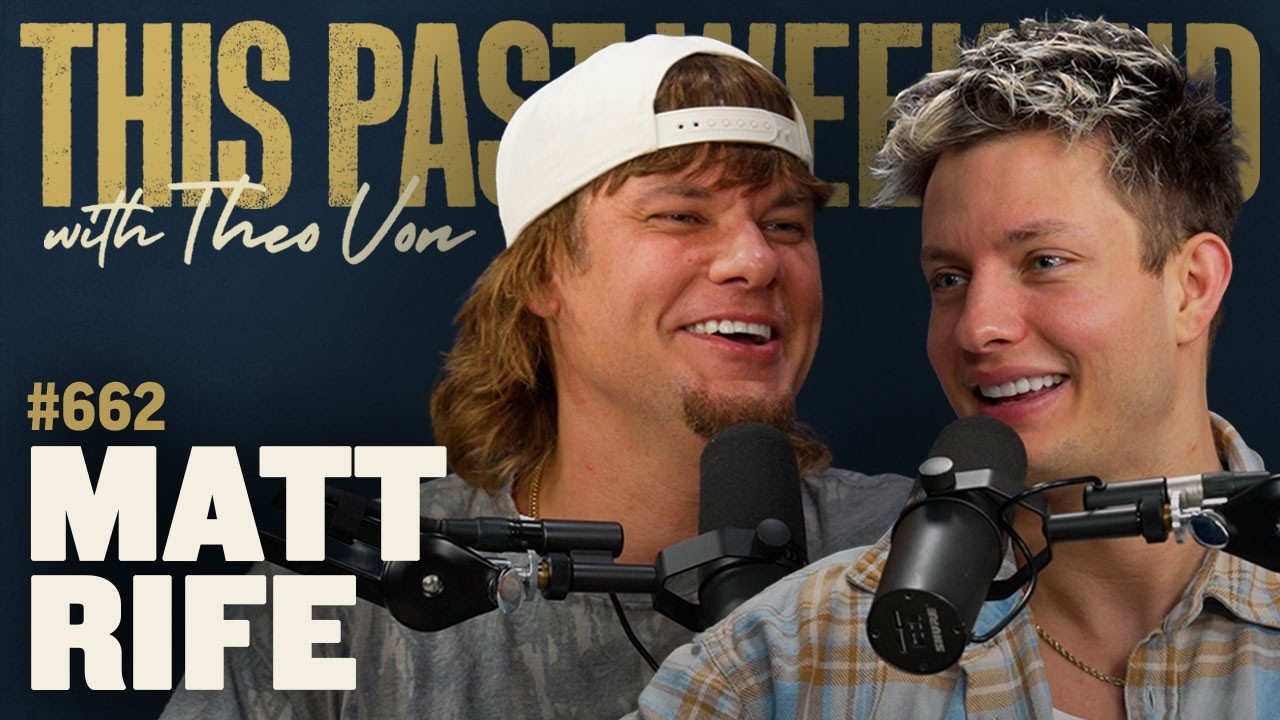

Matt Refe has spent half his life doing stand-up comedy — opening for legends as a teenager in Ohio, selling out Madison Square Garden and the Hollywood Bowl, and now starring in a Netflix limited series about the FTX crypto collapse. But when he sits down for a rare long-form conversation, what emerges is something more candid than a career highlight reel: a working comedian wrestling with what comes next, grieving a mentor, and trying to explain why he owns the most haunted house in America.
A Teenager, a Theater, and Ralphie May
Refe's entry into professional comedy reads like a fever dream. At 16, he was opening for Ralphie May at Zanies in Nashville — alongside Tommy Davidson, Paulie Shore, Jim Breuer, and Bill Bellamy — earning around $500 to $600 a show. To a high schooler, he says, that was a million dollars: enough to go home and buy his family Christmas presents.
The Ralphie connection almost didn't happen. A teenage Refe spotted May on Twitter during an era when every comedian was reachable, cold-tweeted him asking to open a Cleveland show, and got a yes. His mother, understandably suspicious of a grown man inviting her teenage son to another city, asked so many logistical questions on his behalf that May eventually withdrew the offer. About six months later, May let him open a Youngstown theater date and paid him $100.
"He used to pick me up when I first moved to LA," Refe says. "We'd go to a diner and he'd make me order like three entrees. Whatever you don't eat, you take home — now you've got groceries for the week."
May's death hit Refe hard. He describes him as his first real mentor in comedy, someone he never saw without a crowd that loved him regardless of race, background, or sensibility. "I never wanted to pigeon-hole and play to a specific audience. If he could appeal to everybody, that's the main goal."
Owning the Warren House — and the Annabelle Doll
Several years ago, Refe and his business partner Elton Castle were approached by the family of Ed and Lorraine Warren — the most famous paranormal investigators in American history — about purchasing their Connecticut home and museum. They said yes.
The house came as-is: old clothes, hundreds of tape recordings, letters from cases that never became movies. The museum holds roughly 700 artifacts. One of them is the Annabelle doll.
Refe is clear that he does not interact with the doll, does not live at the property, and leaves its relocation entirely to Elton and a team of priests. "I check on Annabelle the way I look for something bad on Twitter," he says. "I'm like, good — it's still there."
The property now operates as a haunted Airbnb attached to the museum, open to the public. A second location is planned for Salem, Massachusetts. For Refe, the venture is partly entrepreneurial and partly spiritual: ghost hunting, he explains, became a source of comfort after his grandfather died. The idea that spirits persist — that you might communicate with someone you've lost — offers him genuine reassurance.
"When my grandpa passed, I had this really big moment of like — there has to be something else. The fact that I can go and try to communicate with other spirits brings me warmth. Maybe I'll see that person again."
Seven Months in Vancouver, and the Question of What's Next
Refe spent most of 2024 filming a Netflix limited series about the FTX cryptocurrency scandal, shot on location in Vancouver. He got the call on a Friday and was asked to be there Monday. He spent the next seven months filming Monday through Saturday morning, then flying to stand-up shows on weekends, taking red-eye flights back to be on set by 6 a.m. Monday.
"If you want to do it all, that's the price," he says simply.
The series — called The Altruist — stars Anthony Boyle and Julia Garner, both of whom Refe speaks about with genuine admiration. He describes the dialogue as a constant challenge, requiring him to Google crypto terminology mid-memorization. A separate film with Owen Wilson, Rolling Loud, is due in October.
But beneath the packed schedule is an honest admission of disorientation. For the first time in two decades, Refe has no tour dates booked and no obligation to book any. He describes a low-grade depression that surprised him — not from burnout, but from stillness.
"I've sold out Madison Square Garden. I've done the Hollywood Bowl. What's supposed to come after that? The fun of the creative has to be what propels you. You find something to chase, but it's not always a venue. Sometimes it's just expression."
The Crowd Work Conversation — and the Business of Platform
Refe's crowd work videos, particularly a now-legendary extended interaction with a woman in Des Moines that collectively drew hundreds of millions of views, helped shift how stand-up comedians think about content. He credits Nate Bargatze's habit of posting a new minute of material every week as the original insight: content keeps comedians in front of audiences between specials.
His YouTube specials were self-directed, shot with friends, and deliberately DIY. His Netflix special, Natural Selection, represented institutional validation. He's candid about the tradeoffs: YouTube is easier to share, harder to gatekeep, and may actually reach more viewers. Netflix signals arrival. Neither metric is complete.
"What does it mean to you?" is the question he keeps returning to — not rhetorically, but practically, as he prepares a new special and considers whether the right platform for it is a streaming giant or a free upload with a link anyone can text to ten friends.
He also pushes back on the idea that crowd work is a substitute for material. The best moments, he says, come from the least assuming people in the room — not the ones in the back hoping to be called on. When it works, it works because it's genuinely unrepeatable: "It's such a fun feeling to have that moment right then, right there, with people."
On Slowing Down, Grief, and Staying Sane
Threading through the conversation is a recurring theme neither host pushes too hard: the difficulty of deceleration after years of relentless forward motion. Refe describes chronic insomnia — six doctors, brain scans, sleep studies, no clear diagnosis — that became severe enough during one stretch that he nearly fainted on the way to a show after five days without sleep. He cancelled. The internet was not forgiving.
His grandfather Steve, who died of cancer at 67, gets a quiet but significant amount of airtime. Steve was the one who drove a teenage Matt to open mics, paid the cover charges, and believed his grandson was funny before anyone else did. He got to see Refe sell out a comedy club before he died. He did not get to see what came after.
"If there was one person I wanted to share all of this with, it would have been him."
Refe says he still prays to his grandfather before shows. He believes, with some conviction, that the gesture reaches something — that warmth and memory can cross whatever distance exists between here and wherever people go. Whether or not that's provable, he says, it's better to believe it. "Isn't life just better to believe it?"