
Will the Paramount Warner Bros merger be blocked? That question just got a lot more urgent. Twelve U.S. states have officially filed a lawsuit to stop what would be one of the most consequential media mergers in Hollywood history — and the financial clock is already ticking loudly for Paramount. With a $6.5 million-per-day penalty looming and courts historically pausing deals while litigation proceeds, the path forward for this blockbuster takeover is anything but clear.
Will the Paramount Warner Bros Merger Be Blocked?
The short answer: it probably won't be killed outright, but it is in serious trouble. The states are expected to seek — and likely receive — an injunction that temporarily bars the merger from closing while the lawsuit works its way through the courts. Courts have a strong track record of pausing mergers during active litigation, and there's fresh precedent to back that up.
A nearly identical coalition of states, also led by California and New York, sued to block Nexstar's acquisition of Tegna — a deal merging two competing owners of local TV stations. The states successfully convinced a judge to pause that merger, and the trial isn't even set to begin until June 2027. That's well over a year of delay, and that delay alone could financially devastate Paramount before a single verdict is reached.
Which 12 States Are Suing to Block the Merger?
The coalition filing this lawsuit is significant both in size and in the economic weight these states carry. The 12 states involved are:
- California
- Arizona
- Colorado
- Connecticut
- Massachusetts
- Minnesota
- Nevada
- New Jersey
- New Mexico
- New York
- Oregon
- Washington
And officials have signaled that additional states may join as the case develops. This isn't a fringe effort — California and New York alone represent two of the largest media markets in the country. When their attorneys general speak, Hollywood listens.
What Is the $6.5M Daily Penalty Threatening Paramount?
Here's where things get financially brutal for Paramount. Buried in the terms of the merger agreement is a penalty clause: if the deal does not close by October, Paramount must pay Warner Bros. Discovery shareholders $6.5 million per day. Let that sink in. That's $650 million per quarter, essentially bleeding out of an already debt-laden company every single day the deal stays open.
Now consider what happened with the Nexstar-Tegna merger: states got an injunction, the trial was pushed to June 2027, and the deal has been frozen for over a year. Apply that same timeline here, and Paramount could be staring down well over a billion dollars in penalties — even if they ultimately win the lawsuit. The financial pressure alone may force Paramount's hand long before any judge renders a verdict.
This is why the injunction itself — not necessarily the final outcome of the trial — is the most powerful weapon the states have right now. They don't necessarily need to win in court. They just need to make staying in this fight too expensive for Paramount to bear.
Why Are Attorneys General Calling This a Democracy Threat?
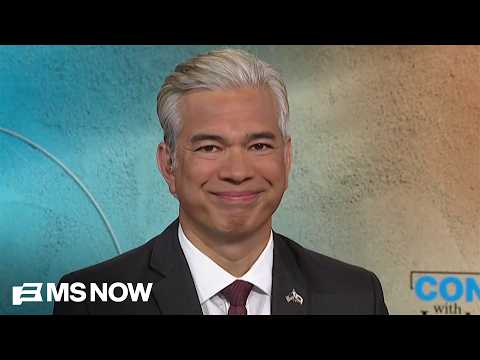
California Attorney General Rob Bonta didn't mince words in his op-ed for Variety explaining the coalition's rationale. This isn't just about two big movie studios shaking hands. His argument centers on the combined scale of what this deal actually represents:
The merger would bring together two of the five largest film distributors and two of the five largest basic cable channel owners under one roof. The resulting media company would control nearly one-third of all theatrical movie distribution, more than 30% of blockbuster film releases, and an astonishing 50 of the most popular cable TV channels — spanning news, sports, entertainment, kids programming, lifestyle content, and more.
Bonta's argument is that this level of consolidation would:
- Wipe out meaningful competition in both film and television
- Drive up prices for consumers
- Reduce the quality and diversity of content
- Shrink the number of journalists informing the public
- Silence independent voices, filmmakers, documentarians, and writers who tell stories that powerful institutions would rather leave untold
In his words, this level of consolidation would be a "death nail for the film and TV industry and for our democracy." Whether you agree or not, it's a powerful framing — and one that is likely to resonate with courts that are increasingly skeptical of mega-mergers in the media space.
How Is This Deal Different From When Disney Bought Fox?
Whenever this topic comes up, someone inevitably asks: "But what about when Disney bought Fox? Nobody stopped that." It's a fair question, but there are several critical differences that make the Paramount-Warner Bros. deal a very different animal.
First, when Disney acquired 20th Century Fox, Fox deliberately carved out massive pieces of its empire before the deal closed. Fox News, the Fox broadcast network, Fox Sports, FS1, and FS2 were all excluded from that transaction. Disney got the movie studio and certain cable channels — not the whole machine. This deal includes everything. There are no carved-out pieces sitting safely on the sideline.
Second, the competitive landscape has changed. When Disney absorbed Fox, there were still more major studios in the market. Each subsequent consolidation makes the next one more dangerous from an antitrust perspective, because the baseline of competition keeps shrinking.
Third — and perhaps most importantly — this deal involves one of the largest streaming platforms in the world plus 50 cable networks. The Disney-Fox deal was primarily a studio acquisition. This one is a full-spectrum media takeover. The scope is simply not comparable.
And yes, for those wondering — there was significant pushback on the Disney-Fox deal too. The DGA, WGA, and actors' unions all raised concerns. It wasn't a quiet, uncontested transaction. It just feels that way in hindsight because the deal eventually closed.
Will This Lawsuit End in a Settlement or Kill the Deal?
Statistically speaking, settlements are far more likely than courtroom victories. Roughly 95% of lawsuits end in settlements; only about 5% go all the way to a final judgment. This case almost certainly follows that pattern.
Here's the realistic scenario: the states get their injunction, the $6.5 million daily penalty starts accruing, Paramount's balance sheet starts groaning under the weight, and both sides look for an off-ramp. The states get to declare a partial victory. Paramount gets to close some version of the deal. Everybody walks away able to spin it as a win.
That doesn't mean the outcome is predetermined or that the states are going through the motions. The Ellison family — who would control this combined company — would be watching millions of dollars evaporate every single day. That is an extraordinary incentive to negotiate seriously and quickly.
What Concessions Could Paramount Make to Save the Deal?
The most likely resolution involves Paramount offering meaningful divestitures or structural commitments to get the states to stand down. Some possibilities being discussed:
- Divesting HBO — keeping the Warner Bros. studio but not the premium cable giant
- Spinning off CNN — removing the news network from the combined entity to address concerns about media consolidation and journalistic independence
- Shedding the television networks — acquiring the film studio assets while leaving broadcast and cable infrastructure behind
None of these would be painless. But compared to bleeding $6.5 million a day while litigation drags on for potentially two or more years, even significant concessions start to look like the rational play.
The bottom line: this deal isn't dead, but it's in intensive care. The 12-state lawsuit is the most serious obstacle the Paramount-Warner Bros. merger has faced, and the financial mechanics of the penalty clause mean that time is working against Paramount in a very direct and very expensive way. How this resolves — whether through settlement, concessions, or a shocking courtroom outcome — will shape the future of Hollywood for decades to come.